Blog
Custom Playground Equipment Supplier: From Brief to Delivery

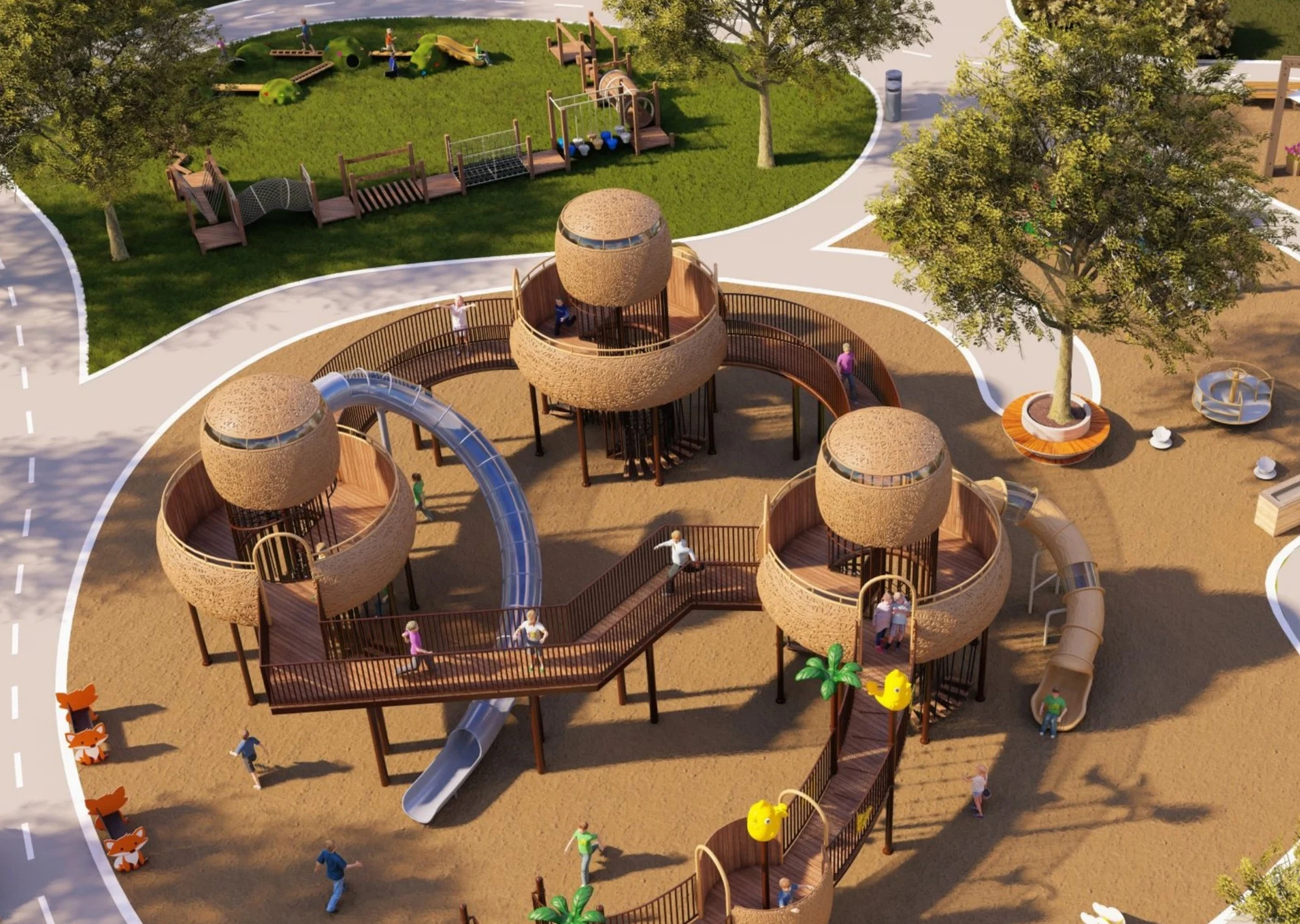
A custom playground equipment supplier is most useful when the project passes through several handovers without losing the original brief. The owner explains the idea, the design team turns it into a layout, the factory turns the layout into equipment, the logistics team prepares the shipment, and the installer receives the final package. If those stages are disconnected, a playground can look correct in an early rendering but arrive with missing context for the people who have to build it.
Xinjiu supplies custom outdoor playground systems from Wenzhou and supports buyers with 2D layouts, 3D visualization, theme and configuration development, OEM/ODM manufacturing, export-document coordination, logistics support, installation manuals and online technical guidance. The custom playground service is designed for contractors, distributors, developers and project teams that need more than a fixed catalog selection.
A custom playground equipment supplier should begin with a brief that can survive the whole project
A useful project brief does not need to be a finished specification. It does need enough information to keep later decisions anchored. Xinjiu asks buyers for site dimensions or plans, target users, project type, preferred theme, product direction, destination, budget range, certification needs and timeline. Those details give the supplier a stable starting point even when the visual concept is still developing.
This is consistent with professional custom-playground practice across the industry: concept, visualization, technical development and manufacturing are treated as connected stages rather than isolated services. The benefit to the buyer is not the sequence itself; it is the ability to check whether each new decision still answers the original project need.
A theme word is not yet a custom playground brief
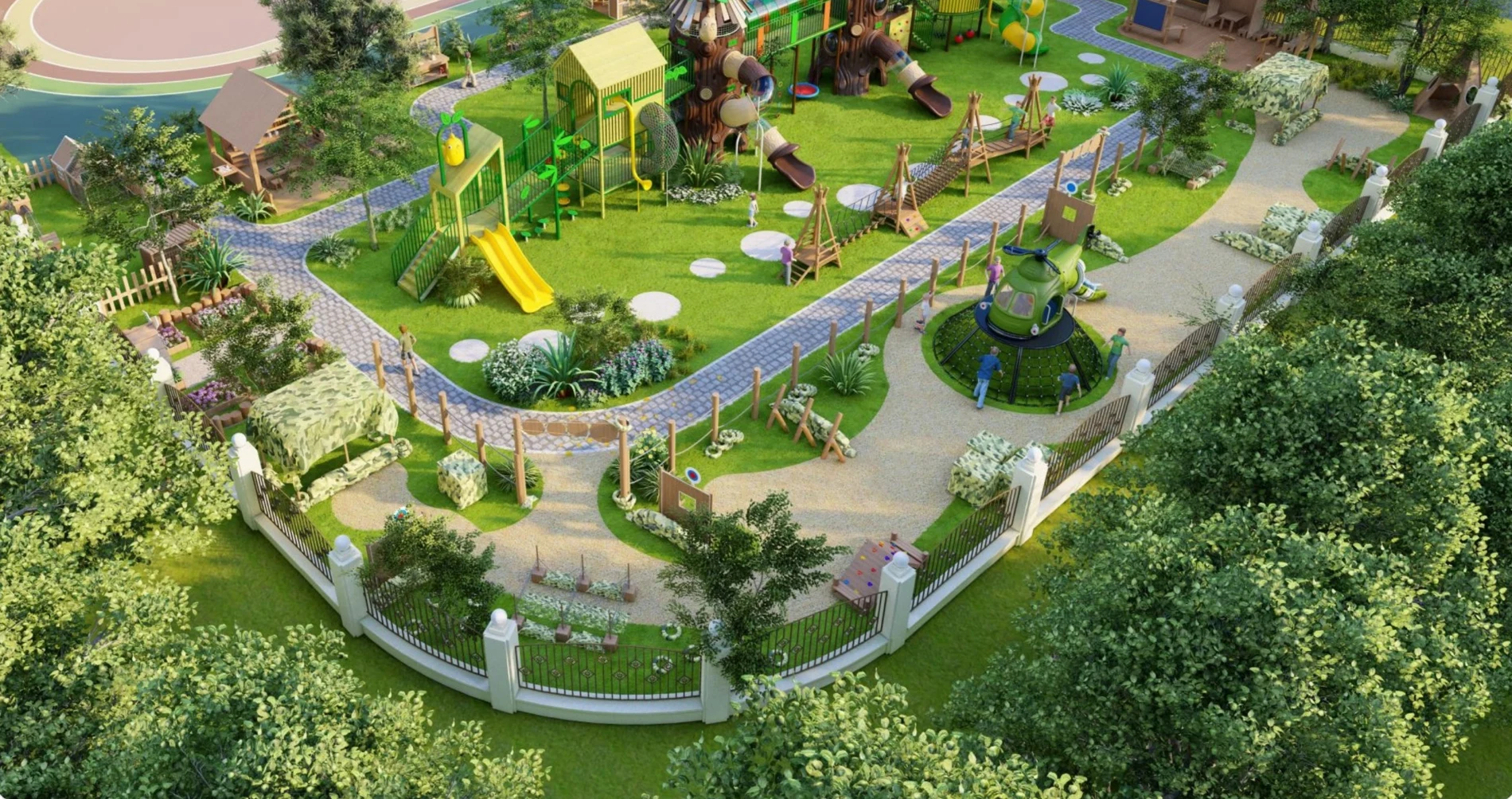
Words such as “forest,” “space” or “castle” are useful for creative direction, but they do not tell the supplier how large the playground should be, who will use it or which activities matter most. A Nature Theme Custom Playground uses leaf-roof towers, themed climbing features and connected walkways. A Bird’s Nest Custom Playground uses sculptural towers, bridges and enclosed slides. Both are themed projects, but their scale and play routes are very different.
A buyer should therefore add practical information to the theme: usable footprint, expected age groups, preferred activity level and whether the project needs one landmark or several smaller zones. That turns a visual idea into a supplier brief that can guide layout development.
Reference images should define intent, not become unverified promises
Project owners often send reference images from other playgrounds. They are useful for discussing mood, scale, color or activity ideas, but the supplier should not imply that another company’s exact structure, certification or technical specification automatically transfers to the new project.
Xinjiu’s own custom process allows reference images, themes, colors and functional requirements to be included in the initial discussion. The correct next step is to reinterpret those references through a project-specific layout and equipment proposal.
Custom playground supply becomes clearer when the buyer separates visual changes from structural changes
Not every customization has the same impact on production. Changing a color palette may be relatively contained. Changing the route between towers or replacing an open slide with a tall enclosed slide can change the entire equipment system.
Visual customization can preserve a familiar play route
A buyer may start with a combination playground and ask for a different color direction, themed panels or decorative forms. The underlying tower and slide arrangement may remain largely familiar. This route can be useful for a school, residential community or branded property project that wants a distinctive appearance without developing every component from zero.
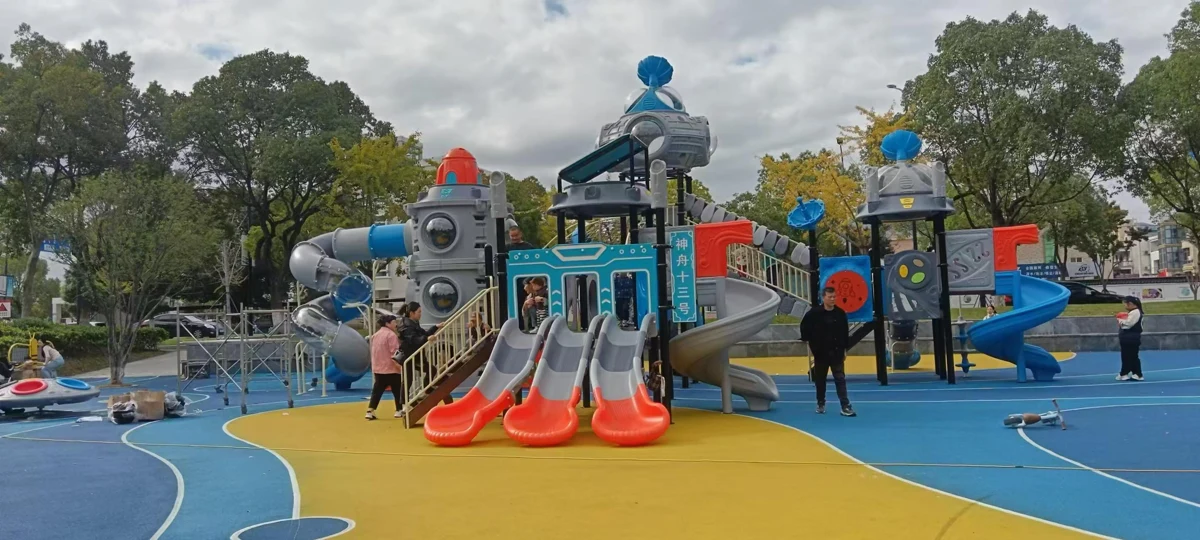
The Robot Theme Combination Playground, Castle Theme Combination Slide and Nature Theme Combination Slide demonstrate how a recognizable theme can change the character of a large combination structure while still keeping the equipment understandable as a coordinated system.
Structural customization needs an earlier manufacturing conversation
The Linear Custom Play Circuit, Architectural Spiral Slide System and sculptural custom playgrounds require a different approach because the arrangement itself is part of the design. The supplier needs enough information to develop a route that fits the site and can later be translated into manufacturing details.
A contractor working on a narrow site may benefit from a linear circuit. A developer with a large open plaza may prefer a taller architectural landmark. A landscape project with curved circulation may need a very different geometry. These decisions should happen before the final commercial scope is frozen.
The supplier should keep the latest layout, product list and factory scope aligned
Custom projects often go through revisions. The owner may change a theme, the contractor may update dimensions, the designer may move a tower, or the purchasing team may remove one supporting product. A supplier should be able to show which version is current.
For the buyer, three project references are especially important: the latest approved layout, the latest confirmed equipment list and the latest agreed material or finish direction. If those references disagree, production should not rely on assumptions.
A drawing change should trigger a commercial check
Suppose a Bird’s Nest project originally includes three connected towers, but the revised site can only support two. That is not simply a visual edit. The bridge route, slide placement and quantity of major components may also change. The quotation and equipment list should therefore be reviewed after the drawing changes.
The same applies to supporting products. If spring riders or a timber playset are removed from the plan, they should not remain in the commercial scope just because an older version of the order still contains them.
A product substitution should trigger a layout check
The process also works in the opposite direction. If the purchasing team replaces one product with another, the supplier should review whether the new product still fits the site. Swapping a compact rider is different from replacing a timber structure with a large rope-climbing system.
This type of cross-check is especially important for mixed commercial orders because the products do not share the same footprint, use pattern or installation logic.
Custom playground equipment supply should distinguish project materials by component
Xinjiu’s range includes PE play panels, molded plastic elements, timber structures, metal frameworks and rope networks. A custom playground may combine several of these within one site. The supplier should therefore attach material decisions to actual components instead of using one broad statement for the entire project.
The Timber Rope Bridge Playset relies on a timber-led structure and rope crossings. PE-panel riders use shaped panels on spring bases. Large custom systems can include metal frameworks, platforms, tubes and rope connections. Xinjiu also states that anti-UV, anti-corrosion and eco-conscious options may be considered according to the product, project environment and confirmed specification.
Material approval should happen before packing information is prepared
For an exported custom order, the packing and shipping stage should reflect the final approved equipment. If a material or configuration changes late, the supplier may also need to update identification, documentation or the way the receiving team interprets the shipment.
This is why final approval should not be limited to the rendering. The buyer should review the equipment list and product-specific specification together with the visual design.
From the factory gate to the project site, the custom handover still needs context
A finished playground can leave the factory as many separate components. The local installer may not have participated in the original design conversation. The supplier therefore needs a handover that helps the receiving team connect the delivered components with the approved project.
Xinjiu’s service information includes export-document coordination, logistics assistance, installation manuals and online technical guidance. Buyers should confirm which of these apply to their order and what responsibilities remain with the contractor or installer at destination.
Destination requirements should be raised while the custom design is still flexible
Different markets can apply different standards and documentation expectations. ASTM F1487 addresses public-use playground equipment within its scope, including areas such as materials, performance, access, layout, installation and maintenance. Soft contained play is outside that scope. The lesson for a custom supplier is that destination requirements should be attached to the product family being supplied, not treated as one universal checklist.
Xinjiu asks for destination and certification needs during the project brief. That allows the buyer and supplier to identify documentation questions before the structure is finalized and packed.
Installation guidance should describe the approved project, not a generic example
A custom landmark may use a site-specific configuration. A generic catalog image is not enough for the installer to understand what was approved. The project handover should therefore reference the actual equipment and layout used for the order.
For a distributor, this also matters when a local contractor performs the installation. The distributor needs enough project information to pass the manufacturer’s intent to the site team without recreating the design conversation from memory.
Two supplier relationships that need different levels of customization support
| Buyer situation | Supplier role | Project information that matters most |
|---|---|---|
| Developer creating a destination landmark | Concept development, 3D visualization, non-standard product coordination and factory handover | Site, theme, scale, activity route, materials and visual identity |
| Distributor adapting a known product family for a customer | Configuration, color/theme adjustment, product identification and export coordination | Selected base product, customization scope, quantity, destination and repeat-order clarity |
The first relationship is design-intensive because the playground itself may be unique. The second may use a known structure with a more controlled set of changes. A custom playground equipment supplier should be able to explain which route the buyer is actually entering.
A custom order is ready when the project can be handed to someone who was not in the first meeting
That is a useful test for a custom supplier. Could an installer, logistics coordinator or new project manager understand the latest version without relying on verbal memory? If the answer is no, the project information is still too dependent on individual conversations.
- The latest site layout should show the approved custom structure and supporting products.
- The equipment list should use the same product names and quantities as the commercial order.
- Material and finish decisions should be attached to the products they describe.
- Destination requirements should be recorded before shipment preparation.
- Installation manuals and remote guidance should relate to the supplied configuration.
Buyers can compare Xinjiu’s custom structures and supporting equipment, then review the company’s design-to-manufacturing background to understand how the project can move from an early brief into production and export support.
A custom playground supplier earns its value when the idea remains recognizable all the way through the project: the site plan still matches the concept, the commercial scope still matches the layout, and the receiving team can understand what the factory has delivered. That continuity is what turns custom supply into a dependable project process. For the design-development side, see the custom playground manufacturer design guide.