Blog
Soft Play Equipment Supplier: Distributor Product Guide

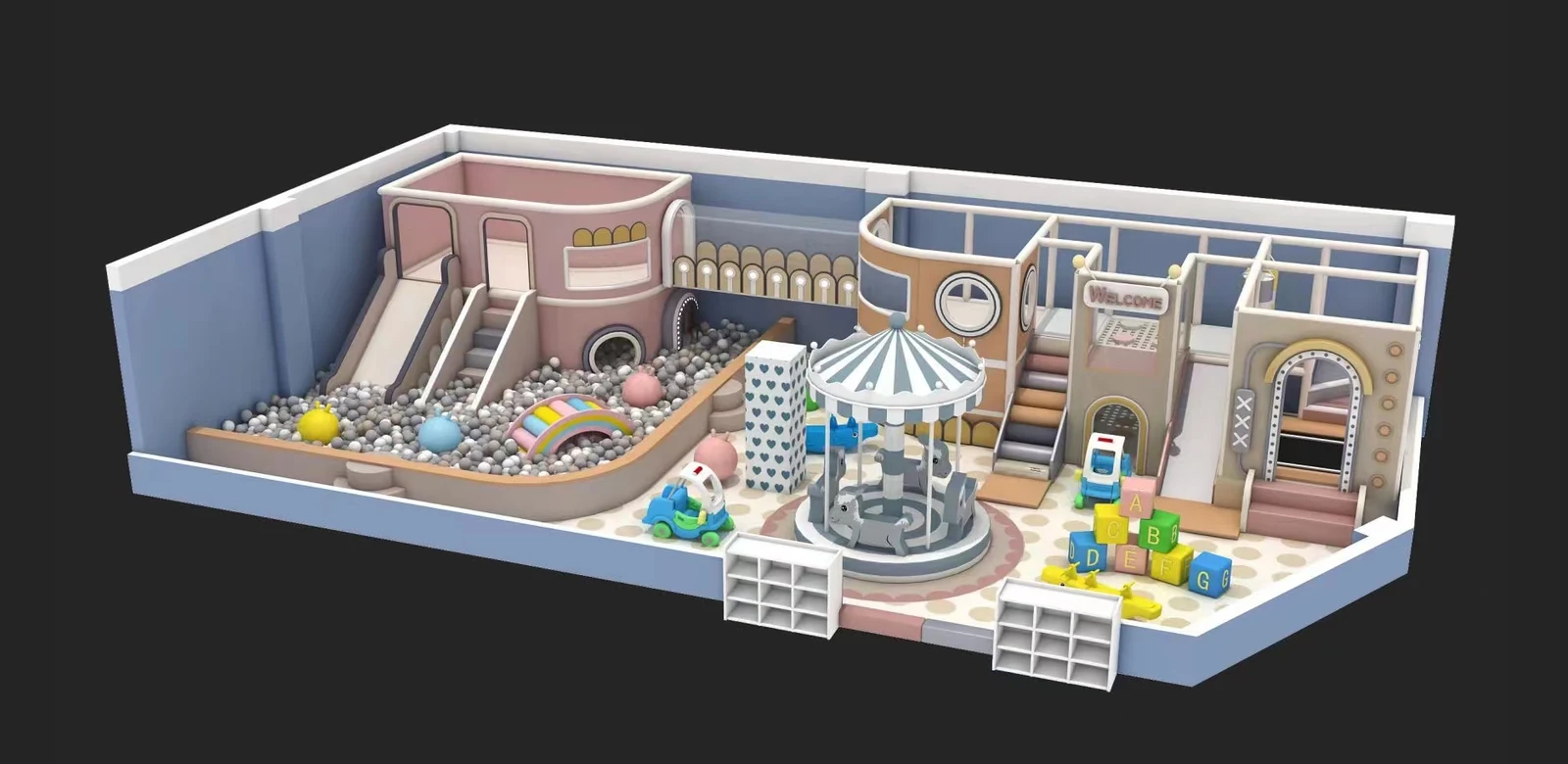
A soft play equipment supplier should help distributors and venue operators separate products that can be repeated from layouts that must be rebuilt around each room. That distinction matters because indoor soft play is highly dependent on floor dimensions, ceiling height, columns and entrances. A compact product reference can be useful for repeat sales, but a larger themed system needs a project brief before the supplier can recommend the right configuration.
Xinjiu supplies indoor soft play from Wenzhou, including Macaron, Castle, Clock and Vintage themes, Twin-Tower systems, compact carousel layouts and larger open-plan play centers. Its project support includes 2D planning, 3D visualization, theme development, manufacturing, export coordination, installation manuals and online technical guidance. Buyers can review the soft-play product range before deciding whether the inquiry is an individual product discussion or a site-specific project.
A soft play equipment supplier should divide the range by how much room information is required
Not every soft-play order needs the same level of design work. A distributor can save time by grouping inquiries according to how strongly the final system depends on the building.
Compact concepts can be easier to adapt, but they still need room dimensions
The Macaron Soft Play Playground combines pastel towers, a tube crawl and a ball pool. The Compact Carousel Soft Play combines a central carousel, twin slides and soft activity pieces. These products give buyers a clear visual and activity direction without the complexity of a very large multi-zone center.
For a distributor, they can be useful starting points when a customer has a smaller venue. But the supplier still needs the usable floor area, clear ceiling height and fixed obstacles before confirming the actual layout. A concept image can guide the sale; it cannot replace the room plan.
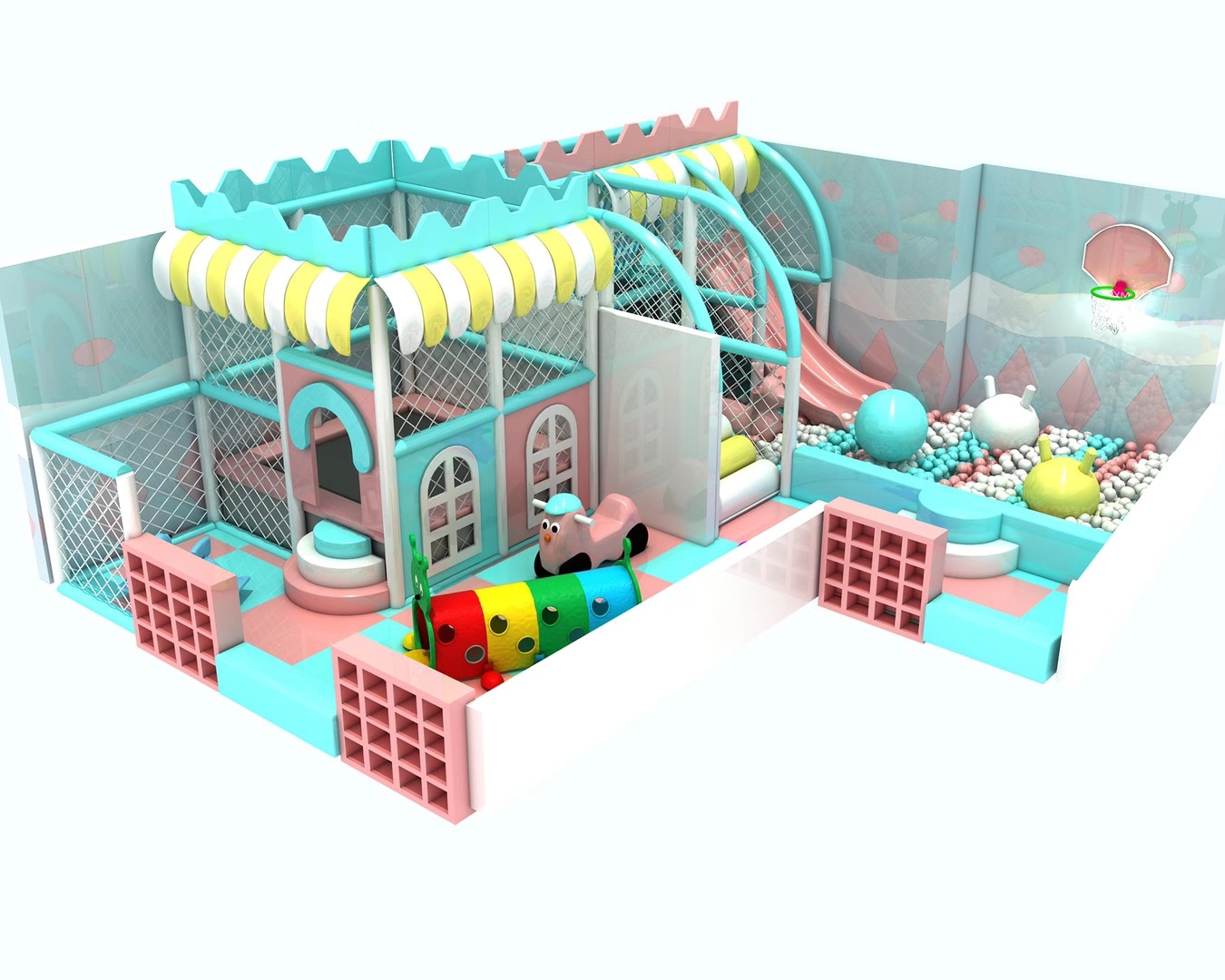
Large themed systems should be treated as projects, not stock items
The Vintage Theme Indoor Playground, Clock Theme Soft Play Playground and Open-Plan Indoor Play Center use multiple towers, tunnels, slides, ball pools and activity zones. Their value comes from the relationships between components.
A distributor should not promise an identical system for every customer. The supplier needs to know how much floor area is usable, where columns stand, what the clear height is and how users enter the venue. Larger layouts should therefore move through a project-development process rather than a simple product reorder.
Soft play suppliers should help distributors sell the activity mix, not only the theme
Theme attracts attention, but buyers ultimately operate an activity system. A castle, clock or pastel concept still needs a useful mix of climbing, crawling, sliding and ball-pool play.
A themed facade should not hide a repetitive route
The Castle Theme Soft Play Playground includes a themed facade, double slide, enclosed climbing routes and a ball pool. The visual identity is clear, but the project should still be judged by how children move through the activities.
A distributor explaining this system to a customer should talk about the relationship between the towers, climbing route, slides and ball pool rather than selling only the castle appearance. That gives the customer a better basis for comparing it with another themed layout.
Twin-tower routes create a different commercial proposition
The Twin-Tower Indoor Soft Play connects two towers through a tube and uses soft stairways and a ball-pool slide. This route can suit a room that has enough width for two linked structures and wants the connection itself to become part of the play.
It may be less suitable for a narrow room where a single compact tower would preserve more circulation. A supplier should help the distributor explain that difference instead of presenting every product as universally suitable.
Soft play equipment supply should distinguish the room problems that cannot be solved later
Some project decisions can be adjusted during visual development. Others become expensive if they are discovered after the structure is already designed.
Clear ceiling height is a hard constraint for elevated soft play
The customer should measure the clear height available in the play area, not simply quote the building’s nominal ceiling height. Beams, ducts or soffits can reduce usable vertical space in only part of the room.
If a supplier does not know this early, an elevated tower or connecting tube may need to be redesigned. For a distributor, collecting accurate height information is one of the easiest ways to prevent a poor first proposal.
Columns and entrances change both layout and sales expectations
A column can interrupt a proposed tower location or split a ball-pool zone. An entrance can limit where a slide returns children to floor level. These conditions should be marked on the plan before the customer approves the visual concept.
A distributor working remotely should request a dimensioned plan rather than relying on photos alone. Photos help the manufacturer understand the room, but they do not show exact positions reliably enough for final layout decisions.
Soft-contained play should be kept separate from outdoor playground and trampoline requirements
ASTM F1918 specifically addresses soft contained play equipment. BS EN 1176-10:2023 provides additional specific requirements for fully enclosed play equipment. These frameworks are different from the public outdoor-playground requirements under ASTM F1487, and trampoline courts follow their own technical route.
A supplier serving multiple product categories should therefore ask the destination market and the exact activity system before discussing documentation. This prevents a distributor from carrying one standard reference across products where it does not apply.
A supplier should make the documentation boundary clear to the distributor
If a customer asks whether a soft-play project meets a particular destination requirement, the distributor should not answer based only on a different outdoor product. The supplier should review the selected soft-play system and the market requirement together.
Xinjiu’s inquiry process asks for destination and certification needs, which gives distributors a clear point to collect that information before production.
A distributor can organize Xinjiu soft play into three sales routes
| Sales route | Suitable Xinjiu examples | Information needed before confirmation |
|---|---|---|
| Compact venue concept | Macaron Soft Play, Compact Carousel Soft Play | Room dimensions, clear height, entrances and intended age groups |
| Themed multi-level project | Castle, Clock and Vintage themed playgrounds, Twin-Tower Soft Play | Detailed room plan, theme direction, columns, height and activity priorities |
| Large family play center | Open-Plan Indoor Play Center and coordinated larger layouts | Master floor plan, zone strategy, user mix and any separate trampoline activity |
This structure helps the distributor avoid two common mistakes: treating every layout as a stock item or treating every inquiry as a fully bespoke design project. The right amount of project work depends on the scale and complexity of the room.
For repeat sales, the distributor can also keep a simple record of which base concept the customer started from and which changes were approved. A Macaron-inspired project with a different color palette is commercially different from an Open-Plan layout redesigned around a new room. Recording that distinction makes later reorders easier to explain and reduces the chance that a sales reference is mistaken for a fixed production specification.
Soft play suppliers should keep commercial revisions connected to the latest layout
Indoor projects change while the customer is still finalizing the venue. A reception desk can move, a column position can be corrected, the ball pool can become smaller, or the operator can change the intended age range. Each change should be checked against the current soft-play plan.
When the customer changes one activity, the supplier should review adjacent activities
If the customer removes a ball pool, the slide exit and surrounding floor activities may need to change. If the customer adds a larger double slide, the return area may need more floor space. If a tower is reduced in height, the connecting tube to another tower may also need review.
This is why a supplier should not update only the product list. The layout and equipment scope should be kept synchronized.
When the customer changes the theme, confirm whether the change is visual or structural
Switching from a pastel Macaron direction to a castle concept may change more than color. The facade, tower shapes and route can also be different. The distributor should ask the supplier whether the customer is choosing a new visual treatment or a different equipment system.
International soft-play supply needs a handover that the local installer can follow
Exported soft play often arrives as many coordinated components. The installer may not be the person who approved the design. Xinjiu’s service information includes export documentation, logistics coordination, installation manuals and online technical guidance.
The distributor should confirm which of these support items applies to the order and make sure the installer receives the latest approved project information rather than an early concept.
- Use the latest room plan when confirming the final equipment scope.
- Keep the selected theme attached to the correct tower and activity configuration.
- Record clear height, columns and entrances before the layout is frozen.
- Identify the destination market before documentation questions are answered.
- Make sure installation information corresponds to the version actually shipped.
Buyers can review Xinjiu’s design and manufacturing background to understand how the supplier supports project development and export coordination. The same process is useful for distributors because it creates a clearer boundary between repeatable concepts and room-specific projects.
How a distributor should qualify a soft-play inquiry before sending it to the supplier
For a compact inquiry, collect the room length and width, clear ceiling height, column positions, entrance location, intended age groups and the customer’s preferred activity mix. If the customer points to Macaron or Compact Carousel as a reference, ask whether they want the same activity logic or only the visual style. That distinction can keep a simple inquiry from becoming an unnecessary redesign.
For a larger Clock, Vintage, Twin-Tower or Open-Plan project, ask for a dimensioned room plan before discussing a final configuration. Mark any low ceilings, fixed walls and building services that reduce the usable volume. Then identify whether the customer expects a single themed soft-play route or several zones. If trampoline activity is requested, treat it as a separate system from the start rather than adding it after the soft-play quotation is nearly finished.
A distributor should also record which version the customer approves. When a later revision changes the ball pool, tower height or theme, the supplier and customer should be able to compare the new version with the previous decision instead of relying on chat history.
A soft play equipment supplier should make the distributor’s sales conversation more accurate. When the customer understands which concepts can be adapted easily, which systems need a full room plan and which project details must be confirmed before manufacturing, the order is less likely to depend on assumptions. The indoor playground supplier planning guide gives distributors another way to compare venue constraints before product selection.