Blog
OEM Playground Equipment Manufacturer: From Visual Changes to Non-Standard Development

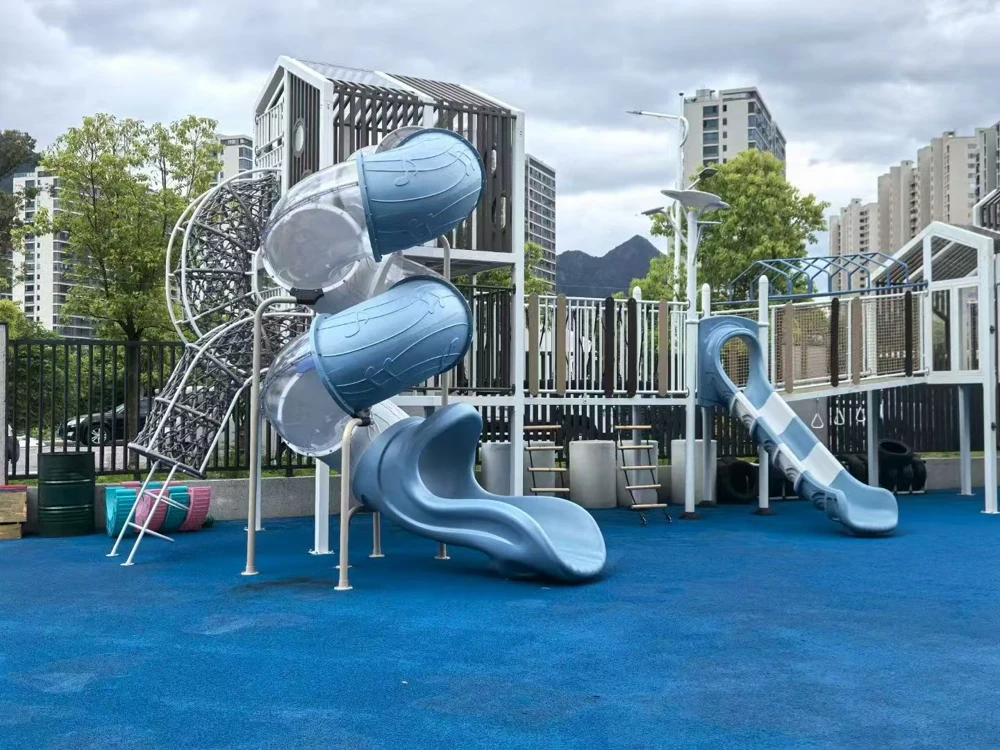
OEM playground equipment is easiest to manage when the buyer and manufacturer agree on what is actually being customized. A new color palette, a themed panel, a changed activity combination and a fully non-standard structure are all “custom” requests, but they do not create the same design, production or approval workload. For distributors, contractors and branded developments, a useful OEM playground equipment manufacturer should separate those levels before quoting the final project.
Xinjiu is a Wenzhou-based playground equipment manufacturer established in 1999. Its current service pages describe support for theme, color, function and configuration development, non-standard product design, 2D layouts, 3D visualization and OEM/ODM manufacturing. The product range includes custom playground systems, combination slides, timber playsets, climbing equipment, spring riders, indoor soft play and early-years products. This breadth makes OEM work practical only when the customization is documented against the real product being changed.
An OEM playground equipment manufacturer should define the customization layer first
Before discussing price or delivery, the buyer should identify whether the request changes appearance, configuration or structure. That single distinction prevents many later misunderstandings.
Level 1: visual OEM changes should stay tied to a known product
A distributor may want a different color palette for a Dolphin PE Panel Spring Rider, new panel graphics on a combination playground or a branded visual direction for a known timber structure. If the underlying activity route and main structure remain unchanged, the manufacturer can treat the project as a controlled visual customization. The buyer should still approve the color, panel or finish decisions in writing so repeat orders remain consistent.
Level 2: configuration changes affect the activity package
A customer may ask to remove one slide, add a climbing element, change a bridge connection or adjust the product combination inside a known system. That is no longer only a visual change. The manufacturer should update the equipment list and layout so the buyer can see what has been added or removed before production.
Level 3: non-standard development needs a site-led design process
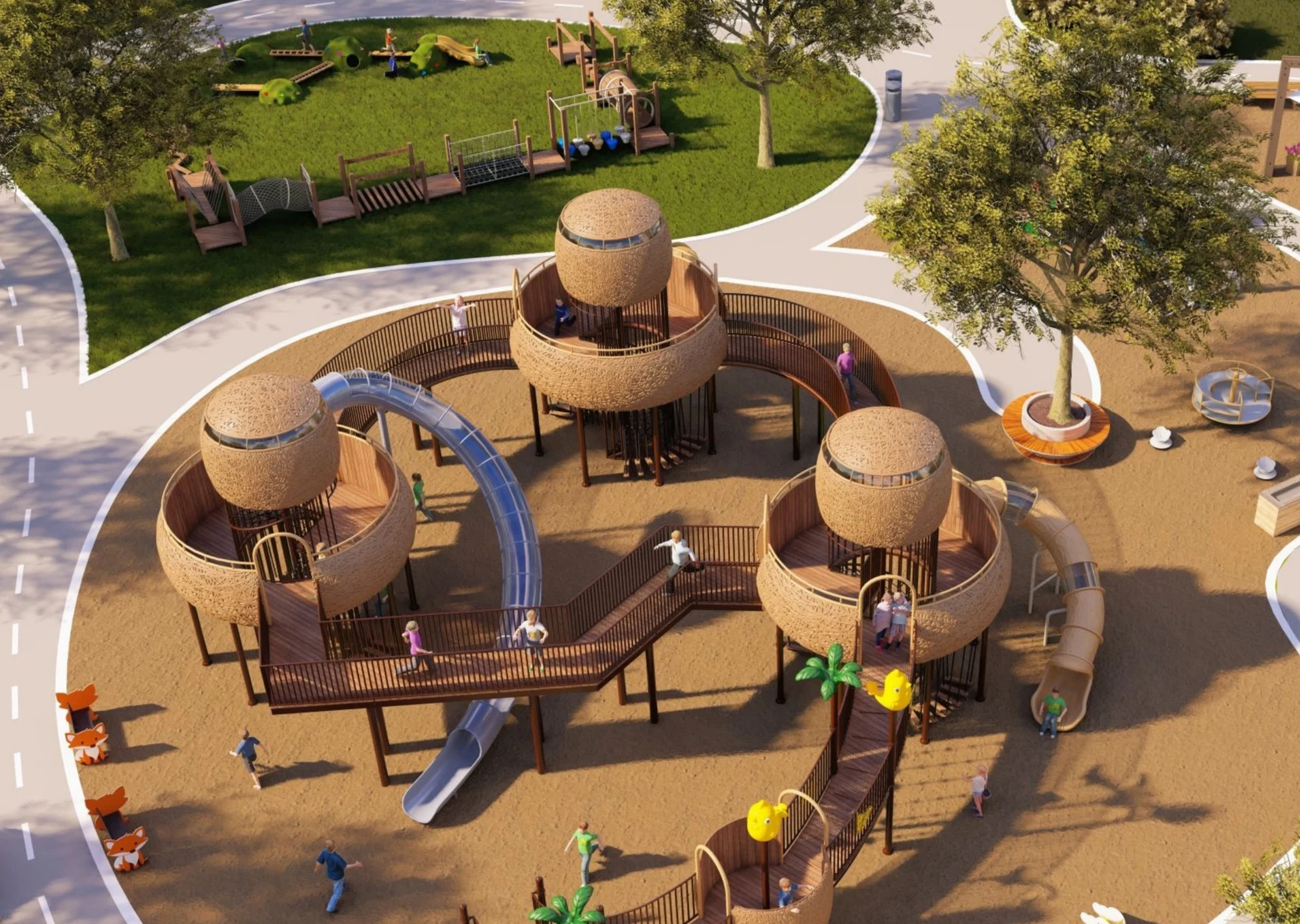
A Bird’s Nest Custom Playground, Linear Custom Play Circuit or Architectural Spiral Slide System can be developed around a particular site, theme and activity route. When the footprint, structure or main movement through the playground is being created specifically for the project, the buyer should expect 2D/3D development and a more formal approval stage. Calling this “OEM” does not make it equivalent to recoloring a standard rider.
OEM playground projects should begin with a base product or a clear site problem
Buyers often send reference images and ask for something “similar.” A manufacturer needs to know whether the reference is being used for color, theme, activity, scale or overall geometry. Without that clarification, the same image can create very different expectations on each side.
A distributor modifying a known product should preserve the base-product identity
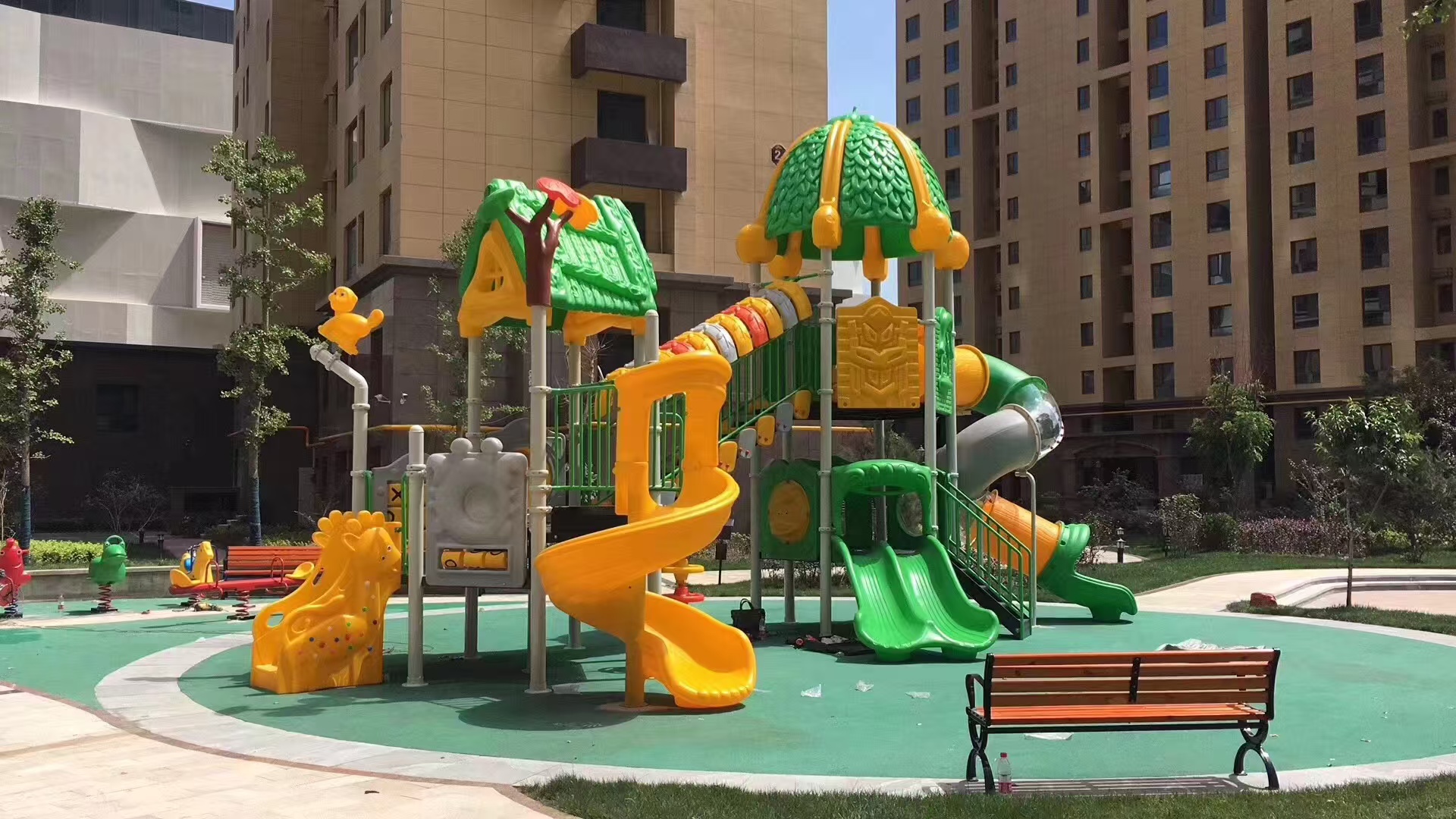
If the distributor starts from a Robot Theme Combination Playground and requests new colors or themed panels, the base structure should remain identifiable in the order. This makes repeat purchasing easier and helps the sales team explain which parts are standard and which are OEM changes.
A project owner with an unusual site should start from the site rather than force a base model
A long narrow footprint may suit the Linear Custom Play Circuit. A large open destination site may justify a Bird’s Nest or Architectural Spiral concept. In these cases, selecting a “base product” too early can constrain the design unnecessarily. The OEM conversation should begin with dimensions, intended users, circulation and the project’s visual goal.
OEM theme development should support the play route
A strong theme is more than decoration. Forest, castle, robot or space directions can influence tower forms, panels, roofs and how the structure reads from a distance. The buyer should decide whether the theme is only visual or whether it is expected to change the equipment geometry.
Nature themes can remain close to a known combination structure
The Nature Theme Combination Slide uses leaf-style roofs, green slides and connected towers. A distributor may adapt colors or visual details while keeping the basic activity relationship familiar. This is a more controlled OEM route than developing a completely new landmark.
Landmark themes can become structural OEM projects
The Bird’s Nest Custom Playground uses sculptural towers and elevated bridges as part of the identity. A large animal, rocket or architectural form can also influence the structural arrangement. In these projects, the theme and the play route need to be developed together, and the final drawing becomes the real product definition.
OEM playground manufacturing should keep revisions visible
Customization creates extra opportunities for project versions to diverge. A buyer changes a color, then changes a slide, then moves a tower, while the factory may still have an older approval. A useful OEM process should make the current version clear before production.
Visual revisions should not accidentally become structural instructions
If the buyer sends a marked-up rendering showing a new color, the manufacturer should not assume nearby geometry has also changed unless that was requested. The approval record should distinguish visual changes from structural changes. This protects the buyer from unintended redesign and protects the factory from interpreting ambiguous comments.
Structural revisions should trigger an equipment-list review
If a bridge is removed or a tower moves, the equipment list and relevant drawings should be checked again. A custom playground should never enter production with a drawing that shows one configuration and an order list that describes another.
OEM material and finish requests should be component-specific
Xinjiu’s product families use PE panels, molded plastic forms, timber, metal frameworks and rope networks. An OEM request can affect one or several of those material routes. The buyer should identify which components are changing.
For example, a PE-panel spring rider may use a custom panel color or shape while retaining the spring-mounted base. A Timber Rope Bridge Playset may use a different visual finish while keeping the timber and rope relationship. A custom metal-framed landmark may involve larger structural and visual changes. Xinjiu states that anti-UV, anti-corrosion and eco-conscious options can be considered according to product type, environment and confirmed specification; OEM buyers should record exactly where those options apply.
OEM playground orders should stay separated by product environment
Outdoor playgrounds and indoor soft play can both be customized, but they are not planned from the same inputs. Outdoor projects depend on site dimensions, circulation and surrounding landscape. Indoor soft-play projects depend on floor area, clear ceiling height, columns and entrances. A manufacturer offering both should not apply one OEM questionnaire to every project.
Indoor soft-play OEM needs room information before theme approval
A Castle Theme Soft Play Playground, Twin-Tower Indoor Soft Play or Open-Plan Indoor Play Center can be visually customized, but the room still sets the boundaries. The buyer should confirm the building constraints before finalizing themed facades or elevated routes.
Outdoor OEM needs the relationship between the main structure and supporting play
A residential project might customize a Nature Theme combination system while keeping Dolphin PE Panel Spring Riders as standard supporting products. The buyer should decide which pieces actually need OEM work. Customizing everything can add complexity without improving the project.
How should distributors structure OEM playground requests?
| OEM request type | Example | Approval evidence |
|---|---|---|
| Visual change | New colors or themed panels on a known rider or combination structure | Color/panel approval tied to the base product |
| Activity configuration | Add or remove a slide, climbing element or bridge | Updated layout and equipment list |
| Footprint adaptation | Adjust a known system to a different site geometry | Site-based 2D layout and revised dimensions |
| Non-standard development | Bird’s Nest, sculptural landmark or new architectural route | Project-specific 2D/3D design and production release |
| Indoor themed OEM | Adapt Macaron, Castle or Clock Theme soft play to a venue | Room plan, clear height, columns, entrances and themed-layout approval |
OEM does not remove the need for destination and export planning
A customized playground still has to arrive at a real project site. Destination requirements should be identified before the final specification is frozen. Public outdoor equipment, soft-contained play and trampoline systems do not use one universal technical framework. The buyer should tell the manufacturer which category is being customized and what the destination market requires.
Xinjiu’s current site also describes export documents, logistics coordination, installation manuals and online technical guidance. OEM buyers should confirm that the final handover relates to the customized version rather than to the unmodified base product.
Before approving an OEM playground order
- Name the base product when one exists.
- Separate color/theme changes from activity and structural changes.
- Use the actual site or room constraints for configuration work.
- Update the equipment list whenever the structure or activity package changes.
- Confirm materials and finishes on the components they actually describe.
- Make sure export and installation information reflects the customized version.
Buyers can review Xinjiu’s custom development workflow, compare the available product families, and use the custom manufacturer design guide when a request moves beyond visual OEM into non-standard development. A capable OEM playground equipment manufacturer should make customization easier to approve because everyone can see exactly what changed, what stayed standard and which version is being manufactured.
How should OEM requirements be framed before the manufacturer designs the solution?
The most useful OEM brief explains the outcome the buyer needs and separates fixed requirements from preferences. A distributor can say that a residential customer needs a nature-led combination structure, a specific brand palette and two distinct age zones without dictating every tower connection before the manufacturer reviews the site. That gives the design team room to use the existing product families intelligently while preserving the customer’s non-negotiable visual and functional goals.
Define what must remain repeatable after the first OEM order
For distributors, the first customized order should also establish what needs to be repeated later. If a PE-panel rider receives a new color palette or branded graphic direction, record the base model and the approved visual change. If a combination playground receives a new configuration, preserve the approved layout and component list. This turns OEM from a one-time conversation into a controlled product route.
The strongest OEM relationship is therefore not the one with the most customization claims. It is the one where the buyer can tell what is standard, what changed, what needs site-specific approval and what information must be preserved for the next order.