Blog
Playground Slide Manufacturer: Choosing the Right Slide Route

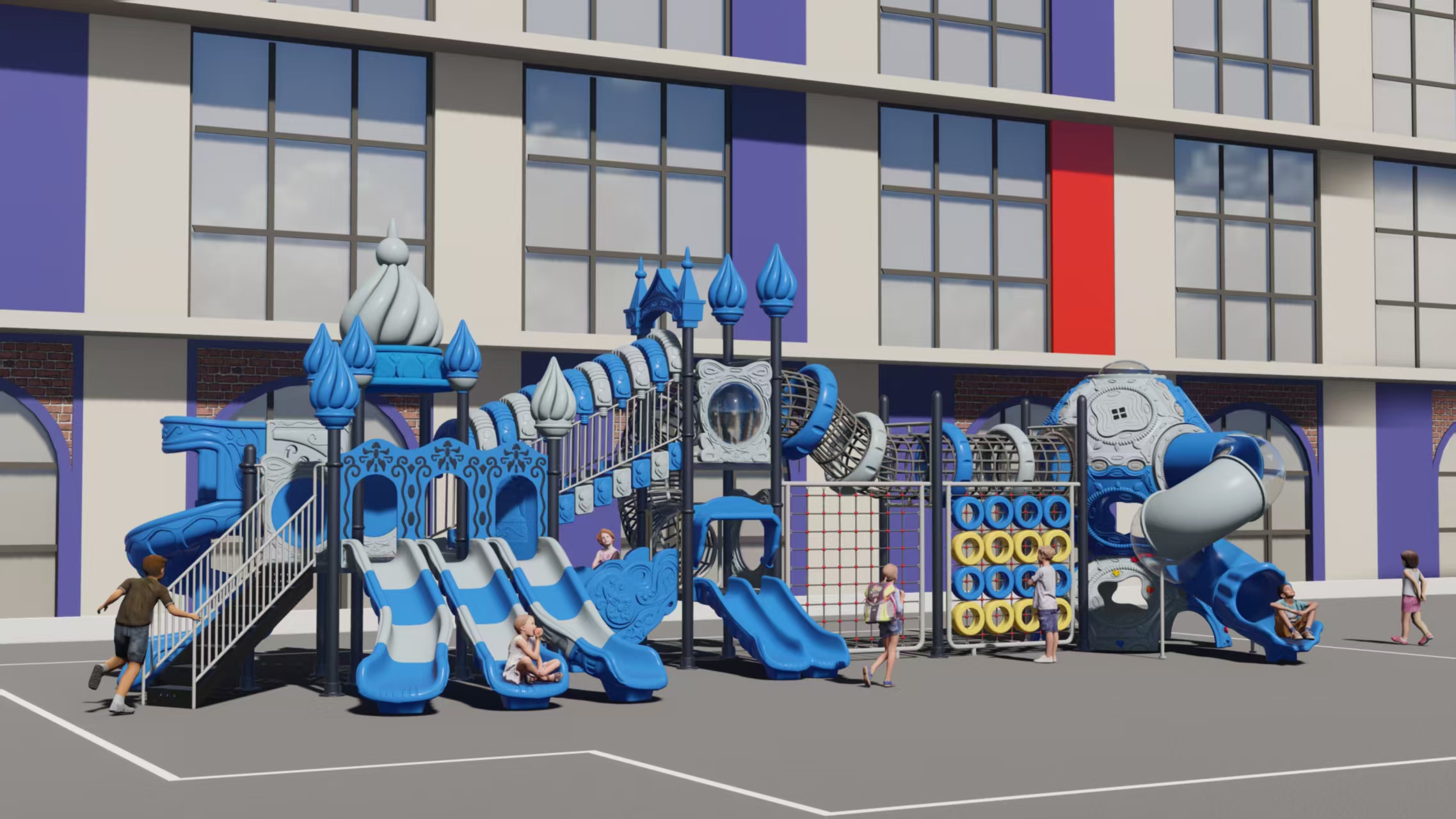
A playground slide manufacturer should help the buyer choose a slide route that fits the tower, the site and the intended play experience. Slides are visually simple products, but they affect more than the final descent. The slide type changes tower height, circulation, exit direction, visual identity and the relationship between climbing routes and the ground-level play area.
Xinjiu’s current playground range includes combination systems with open and enclosed slide routes, timber slide sets, tall architectural spiral-slide concepts and themed playgrounds with multiple exits. Buyers can compare the playground equipment collection and use the company’s 2D layout and 3D visualization support when the slide is part of a larger custom project.
A playground slide manufacturer should begin with the tower and site, not the slide shape alone
A slide cannot be selected in isolation from the platform it connects to. The buyer should consider the height and position of the tower, how users reach the slide entry, where the slide exits and what activity happens around the return area.
Open slides create a direct visual connection between tower and ground
An open slide makes the movement easy to understand from outside the structure. Xinjiu’s Castle Theme Combination Slide uses open and enclosed slide routes, while the Twin-Tower Timber Slide Set uses slide exits as part of a more natural-looking timber structure.
Open slides can work well where the buyer wants a clear, visible descent and a straightforward connection to the ground-level area. The manufacturer should still check the exit direction so the slide does not return users into a main circulation path or directly toward another activity.
Enclosed slides make the descent part of the themed or architectural experience
Enclosed slides can strengthen a tower’s visual identity and create a more contained route. The Bird’s Nest Custom Playground uses enclosed slides with sculptural towers and elevated bridges. The Architectural Spiral Slide System uses tall enclosed slides and geometric frames to create a strong landmark.
These systems should be considered in relation to tower height and site scale. A tall enclosed slide can be appropriate for a destination or public-space landmark, but excessive for a small preschool courtyard. The manufacturer should explain where the form is justified by the project rather than presenting a tall slide as automatically better.
Spiral slide systems need enough site presence to justify their vertical form
A spiral slide becomes a major visual and spatial element. In the Architectural Spiral Slide System, the slide is part of the architectural identity rather than a secondary accessory. That can suit a large public space, destination playground or project where the equipment is expected to be seen from a distance.
For a smaller school or residential site, a lower combination structure may produce a more balanced playground. The buyer should ask whether the vertical landmark supports the project’s goals or simply consumes more budget and space.
Slide selection should follow the activity route before it follows the theme
A themed playground may use castle, robot, nature or other visual language, but the slide still needs to connect logically with the climbing and elevated movement that precede it.
Multiple slide exits are useful when the tower offers more than one route upward
The Robot Theme Combination Playground includes net connections and varied slide exits. The Castle Theme Combination Slide combines connected towers, climbing panels and multiple slide options. These systems create choice because users can reach different exits through different routes.
A buyer should check whether the climbing and bridge arrangement supports the number of slides. Adding extra slide exits to a simple single-route tower may increase cost without adding meaningful play choice.
A slide should complete a route rather than create an isolated attraction
If the slide is the only memorable element in the structure, the playground may encourage repeated queuing at one point while other activities receive little use. The manufacturer should help the buyer compare the complete route: how children climb, cross, choose an exit and return to the ground.
This is especially important in schools and residential communities where the playground may need a balanced flow rather than one dominant thrill feature.
Slide exits should be reviewed as part of the ground-level circulation plan
Once a user leaves the slide, the play route becomes part of the wider site again. The exit zone should therefore be considered with paths, supporting products and other slide routes.
Do not place a high-use slide exit directly into another activity path
A combination playground may sit near spring riders, balance equipment or a climbing zone. If the slide exits directly into the route users take to reach another activity, the site can feel crowded even when the equipment technically fits within the footprint.
A 2D plan is useful because it makes these relationships visible before the structure is manufactured. The buyer can move the supporting products or adjust the slide direction while the project is still flexible.
Two slide exits from the same structure should not compete for one narrow return space
Multiple slides can improve play choice, but the ground-level return area still needs enough room to function. If two exits converge into the same small zone, the buyer should review whether the tower or slide directions can be adjusted.
The manufacturer should treat the slide as part of the site plan rather than as a product that ends at the bottom of the chute.
Playground slide manufacturers should distinguish standard slide selection from custom slide integration
A buyer ordering a standard combination playground can often choose from a known product direction. A custom landmark project may require the slide route to be developed as part of the overall form.
Standard combination slides need clear model and configuration control
Robot, Castle and Nature themed combination systems provide recognizable starting points. The buyer should confirm the selected configuration, tower arrangement and slide routes shown in the latest layout. If the project changes only colors or themed panels, the slide route may remain stable.
Custom landmark slides require a new drawing when the geometry changes
If a Bird’s Nest or architectural system changes tower height, bridge position or slide orientation, the latest drawing should reflect the new geometry before production. A slide that appears to be one component can affect several other parts of the custom structure.
| Slide decision | What should be checked |
|---|---|
| Open slide | Tower connection, visible descent and ground-level exit direction |
| Enclosed slide | Tower height, route length, theme integration and exit area |
| Spiral slide | Vertical scale, structural relationship and whether the site justifies a landmark form |
| Multiple slides | Whether the climbing routes create real choice and whether exits have enough space |
| Custom slide route | Updated 2D/3D geometry, equipment list and site circulation |
Slide material and surrounding structure should be confirmed for the actual product
Xinjiu’s playground range includes molded slide elements, timber-led structures, PE panels, metal frameworks and rope systems. A slide does not define the material of the entire playground. The buyer should confirm the selected slide and the structure that supports it as part of one approved system.
For a timber playset, the slide is one component within a timber-led route. For a custom architectural system, the slide can connect to a metal or sculptural framework. The manufacturer should keep those product-specific relationships clear in the final equipment scope.
Slide choices change by project setting
A school may benefit from lower, visible slide routes with complementary climbing
Schools often need a structure that is easy to understand and can support several activity types. A timber slide set or combination playground can create climbing, crossings and one or more descents without making the site depend on a very tall landmark.
A residential project may prioritize a clear main structure and compact supporting play
A Nature Theme Combination Slide can act as the main structure, while spring riders or balance products serve younger users nearby. The slide exits should be oriented so they do not interfere with the smaller supporting zone.
A destination park can use slides as part of the landmark identity
Bird’s Nest and Architectural Spiral Slide concepts can make the descent itself part of the visual experience. The buyer should review the entire landmark route and supporting site rather than treating the slide as a separate attraction.
When a bigger slide is not the better purchase
A taller or longer slide can look impressive, but it may be wrong for the users, site or project purpose. A compact school court may gain more play value from a second climbing route or balance activity than from increasing the height of the main slide. A preschool-focused site may need lower-scale equipment. A landscaped community may prefer a balanced combination structure over a visually dominant slide tower.
The manufacturer should help the buyer understand these trade-offs rather than using slide size as a simple measure of product value.
Before approving a playground slide order
- Confirm the tower height and the route users take to reach the slide entry.
- Review the slide exit direction against paths and surrounding activities.
- Check whether multiple slides create real route choice or simply duplicate one descent.
- Confirm the selected slide configuration in the latest 2D or 3D project version.
- For custom systems, update drawings whenever the slide geometry or tower relationship changes.
- State the destination and project-documentation requirements before production.
Buyers can compare the outdoor play equipment selection guide and the custom playground design guide when the slide is part of a larger outdoor project.
A playground slide manufacturer adds value when the slide becomes a clear part of the play route and site, not simply a larger feature in a catalog. The right slide should connect logically to the tower, return users to a workable ground-level area and support the activity level the project actually needs.
Slide replacement projects should ask whether the old route is worth preserving
A school or park replacing an older slide does not always need a like-for-like product. If the existing tower and circulation still work well, replacing the descent with a similar slide route may keep the site familiar and reduce unnecessary redesign. If the old playground already concentrates too much activity around one tower, the renewal may be a chance to add a different route instead of simply installing a larger slide.
The buyer should identify what users lose when the old slide is removed: a visible descent, an enclosed route, a high point or simply one way back to the ground. The manufacturer can then compare a standard open slide, enclosed slide, spiral route or a broader combination-system change against that actual need.