Blog
Playground Climbing Equipment Manufacturer: Choosing the Right Challenge Route

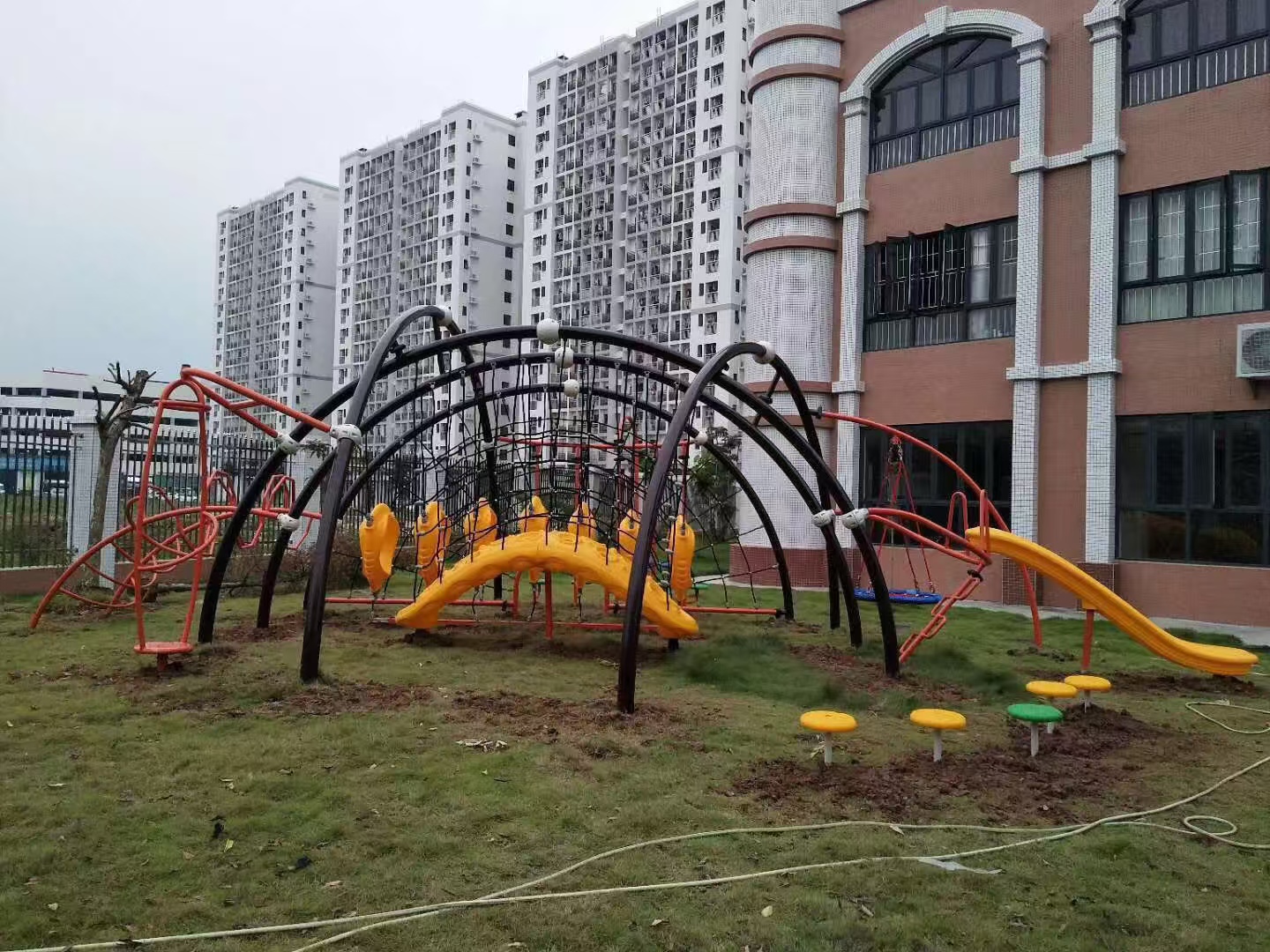
Playground climbing equipment should be chosen by the type of challenge it creates, not by how dramatic the structure looks in a product image. Rope networks, timber climbing courses, obstacle routes and sculptural net systems can all serve outdoor play, but they place different demands on the site and create different movement patterns. A playground climbing equipment manufacturer should help the buyer match the challenge route to the users, the footprint and the role the climbing zone will play in the wider playground.
Xinjiu’s current range includes the Circular Net Climbing System, Spider Web Climbing Course, Timber Climbing and Net Course, Timber Rope Bridge Playset, Modular Activity Training Course and Full Circuit Obstacle Course. The company also offers combination playgrounds and custom landmark systems that include climbing as one part of a larger route. This gives contractors, schools, residential developers and park projects several ways to use climbing without treating every product as the same category.
A playground climbing equipment manufacturer should define the challenge type first
Some climbing products create a single visible challenge. Others organize several obstacles in sequence. Some are part of a timber playset, while others stand alone as a sculptural destination. The buyer should decide which type of challenge belongs in the project before comparing colors or themes.
Three-dimensional rope nets create an open climbing destination
The Circular Net Climbing System uses a ring-shaped frame and a three-dimensional rope network. Children approach it as a climbing object rather than as a tower that leads mainly to a slide. This type of structure can suit open adventure areas and larger parks where climbing is intended to be one of the primary experiences.
Spider Web climbing creates a more sculptural visual identity
The Spider Web Climbing Course uses a net-and-frame form that is highly visible in the landscape. It can work when the client wants a distinct climbing zone with strong visual presence. The buyer should compare that role with a combination playground, because a sculptural climbing feature and a multi-activity tower do not solve the same project problem.
Timber climbing creates a longer landscape-led route
The Timber Climbing and Net Course combines climbing walls, net tunnels and elevated bridge movement. The Timber Rope Bridge Playset provides a more compact route with rope crossings, activity panels and a slide. These systems are useful when the buyer wants climbing to sit within a warmer timber environment rather than inside an exposed metal-and-net sculpture.
Climbing equipment should be placed according to user flow, not leftover space
A climbing zone can become one of the most active parts of a playground. Placing it in leftover space beside a slide exit or younger-user zone can create conflicting activity patterns even when the equipment physically fits.
Higher-challenge climbing should remain legible as its own activity zone
A Circular Net or Spider Web system can attract older or more confident users. A project that also includes spring riders and early-years balance equipment should separate those routes clearly. Public playground guidance emphasizes age separation, conflicting activities, sight lines and supervision, which reinforces the need to treat a high-energy climbing zone as part of the site plan rather than as an accessory.
Linear obstacle routes need enough length to preserve the sequence
The Full Circuit Obstacle Course and Modular Activity Training Course rely on a progression of balance, crawl, step and coordination tasks. If the site compresses the route too tightly, the sequence can lose its logic. A manufacturer should help the buyer decide whether the available footprint is better suited to a longer activity course or a more compact climbing product.
Climbing equipment should be compared with combination playgrounds before the buyer commits
A combination playground can include climbing, but its main role is usually broader. Robot, Castle and Nature themed combination systems mix towers, climbing elements and slide exits. A dedicated climbing system puts more emphasis on challenge and movement.
Choose a combination structure when climbing is only one part of the experience
A residential community may need a central structure that gives children climbing, elevated movement and sliding inside one footprint. In that case, a combination playground may be more efficient than a separate net system plus another tower.
Choose dedicated climbing when the challenge should become the destination
A park, school activity zone or larger adventure area may want climbing to stand on its own. A Circular Net, Spider Web or Timber Climbing Course can create a clearer challenge identity than adding another climbing panel to a combination structure.
A playground climbing manufacturer should make the material route part of the selection
Climbing can be built through rope networks, timber-led structures, climbing panels, metal frames and combinations of these materials. The visual character and activity route change depending on the structure.
Rope networks emphasize movement through open space
Net systems allow a three-dimensional route where the rope geometry itself becomes the activity. This can produce a lighter visual structure than a tower-heavy playground and may suit sites that want a more open adventure feel.
Timber and rope create a more grounded visual character
The Timber Climbing and Net Course and Timber Rope Bridge Playset connect climbing with a natural-look structural language. These products can work well in landscaped parks, schools and family destinations where the equipment should feel integrated with the setting.
Panels and metal frames can support more graphic or sculptural routes
The Spider Web system and other custom climbing concepts can use stronger frame geometry and panel details. A buyer should choose these routes where a more visible contemporary structure supports the project identity.
Climbing equipment customization should begin with the route, not decoration
A buyer may ask for a theme, color or branded visual direction. Those changes are useful, but the most important custom decision is still the route children will use. Adding or removing a climbing element can alter the challenge level and the footprint more significantly than changing a panel color.
A route revision should trigger another site check
If a net tunnel is added to a timber course or a climbing panel is moved within a custom system, the manufacturer should update the layout and equipment list. The buyer should review whether the revised route still fits the surrounding circulation and whether the intended user group remains appropriate.
Visual OEM can remain simpler when the route is unchanged
If a distributor only changes colors on a known climbing structure, the base product can remain identifiable. That creates a more repeatable OEM route and makes future orders easier to compare.
Climbing equipment can serve schools, communities and parks differently
| Setting | Useful climbing direction | Main project question |
|---|---|---|
| School | Modular Activity Training, timber climbing or a compact net challenge | How can the route support progressive movement and supervision? |
| Residential community | Combination play with climbing or a smaller dedicated climbing zone | Does climbing complement the main structure without crowding the courtyard? |
| Public park | Circular Net, Spider Web or larger custom climbing system | Should climbing become a visible destination within the park? |
| Landscape-led destination | Timber Climbing and Net Course or custom route | How should challenge and visual character integrate with the landscape? |
Destination requirements should be discussed against the actual climbing product
Public playground requirements can vary by market, and the buyer should identify the destination before production. The manufacturer should not make a blanket claim that every climbing configuration is covered by one document or one standard. The relevant information depends on the product and project.
Xinjiu’s inquiry process asks for destination and certification needs, and its service pages describe export-document coordination, installation manuals and online technical guidance. These handovers become more important for non-standard climbing systems where the receiving team needs the final approved configuration.
Before approving playground climbing equipment
- Decide whether climbing is a supporting activity or the main destination.
- Separate higher-challenge routes from early-years equipment in the site plan.
- Compare open rope networks, timber routes and obstacle courses by user experience.
- Check that linear courses have enough length to preserve the intended sequence.
- Update the layout whenever the climbing route changes structurally.
- Confirm destination and installation information for the exact system being supplied.
Buyers can compare the Xinjiu climbing and outdoor activity range, review the outdoor product-family guide, and use the custom design guide where the climbing route becomes a non-standard project. A playground climbing equipment manufacturer adds value when the buyer can see why a particular challenge belongs in that site and how it connects to the rest of the playground.
How can a buyer compare climbing difficulty without relying on vague labels?
Instead of asking whether a product is “easy” or “challenging,” trace the actual movement. Does the route involve a three-dimensional net, a wall, a bridge, an overhead element or a sequence of low-level obstacles? The Circular Net system, Spider Web course, Timber Climbing and Net Course and Full Circuit Obstacle Course create different movement demands. The buyer should compare the route itself and then decide which intended users the project is designed to serve.
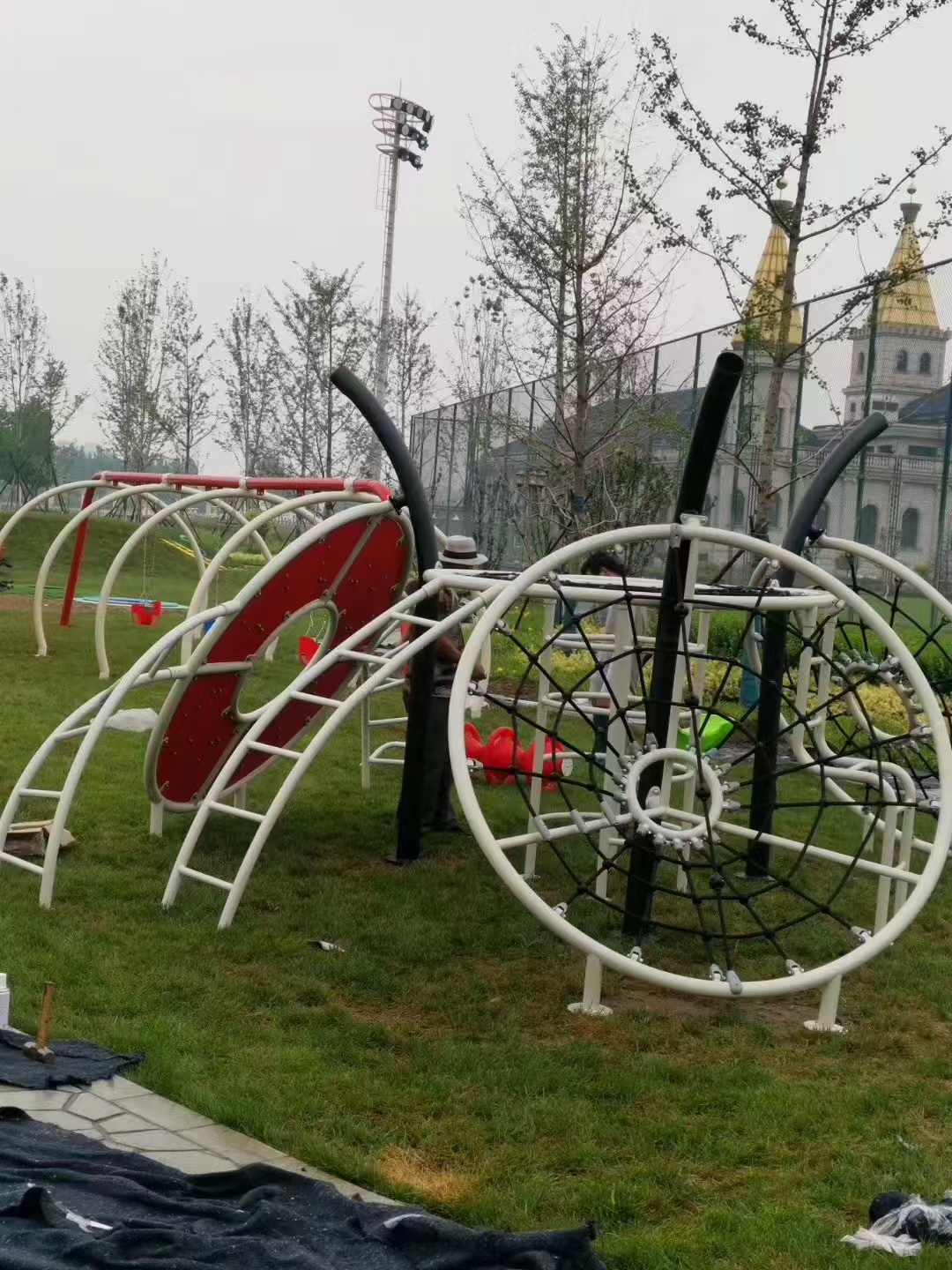
Use timber climbing when challenge and landscape character need to work together
A Timber Climbing and Net Course can add climbing walls, net tunnels and bridges while maintaining a warmer visual presence. A school or park may prefer this direction when the climbing zone should integrate with planting or other natural-look equipment. A Spider Web system may be more appropriate when the climbing structure itself should become a visible contemporary object.
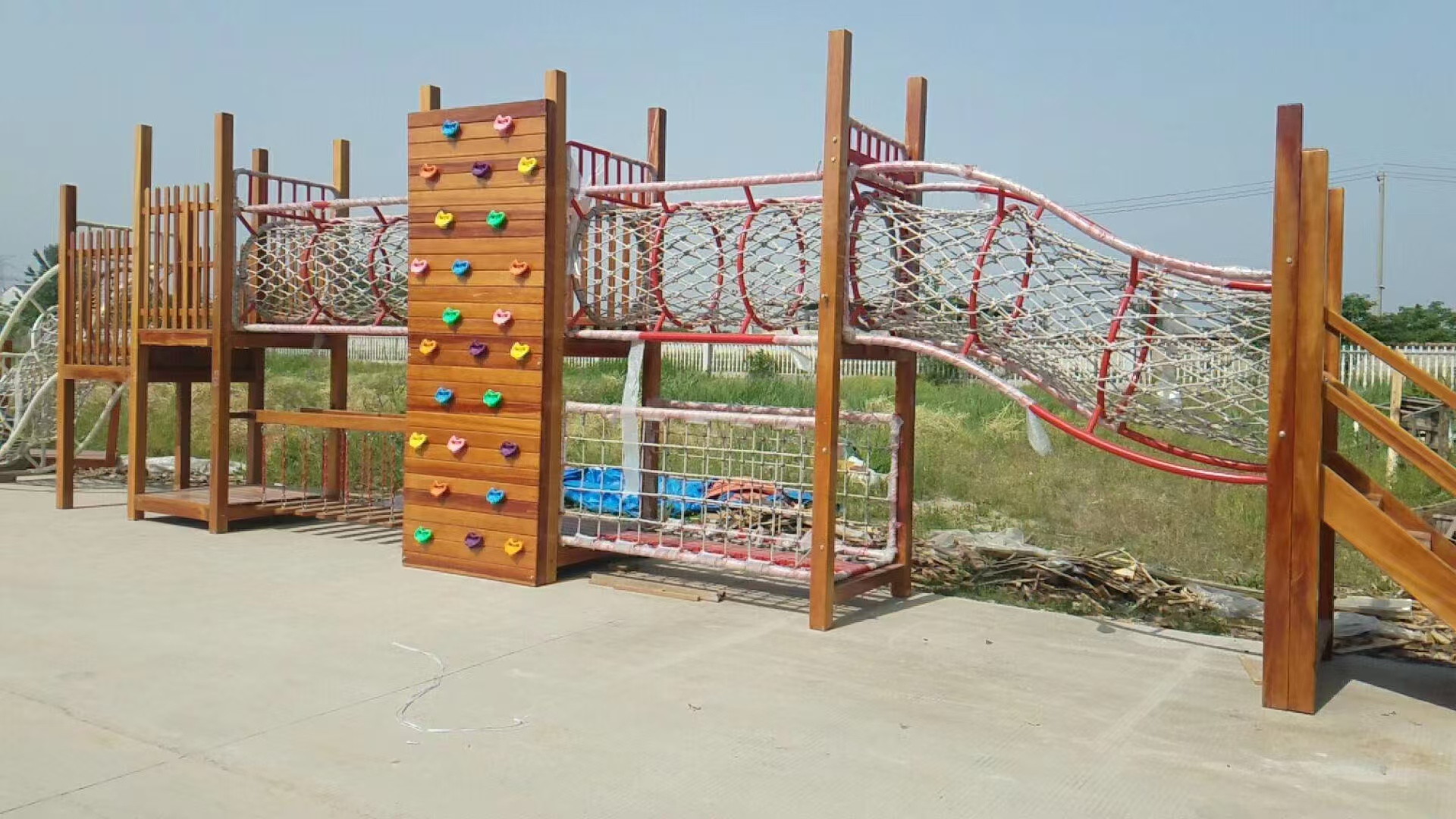
Make the route understandable to the buyer before discussing customization
A color or theme change should come after the buyer understands the challenge sequence. If the project team cannot explain how children move through the climbing system, customization can make a weak selection look more finished without solving the real activity problem. The manufacturer should first establish the route, then refine appearance and site character.
For procurement, this creates a useful standard: a climbing product is ready for approval when the buyer can describe who it is for, how the route works, what space it needs and what distinct activity it adds to the wider playground.