Blog
Park Playground Equipment Supplier: Planning Community and Destination Play Spaces

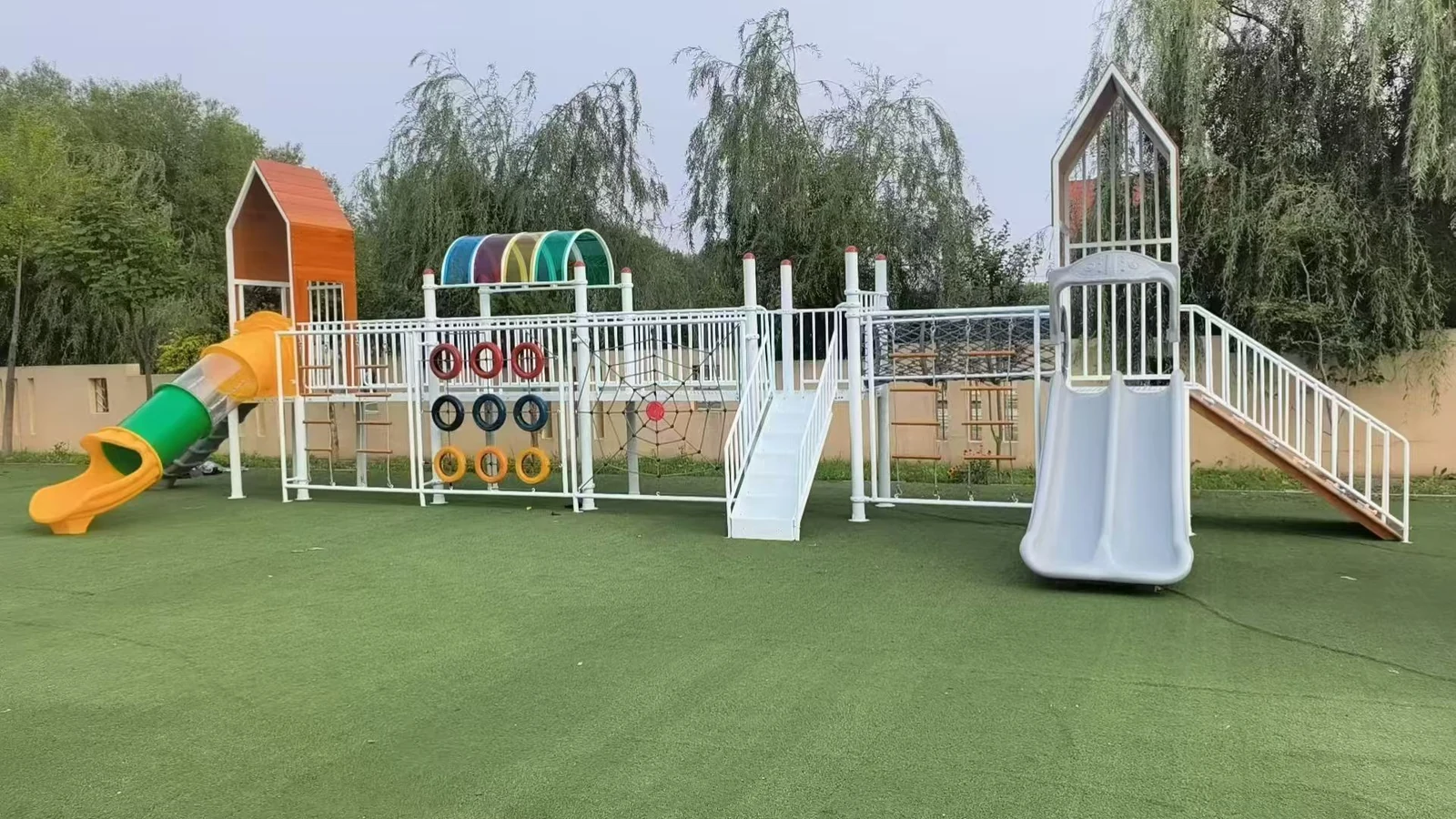
A park playground equipment supplier should help the buyer decide whether the site needs an everyday community playground, a climbing destination, a landscape-led timber route or a custom landmark. Public parks can support more space and more varied user groups than many school or residential sites, but that does not mean every park should receive the largest equipment available. The product mix should follow the park’s role, circulation, landscape character and intended users.
Xinjiu’s outdoor range includes Robot, Castle and Nature themed combination playgrounds, Bird’s Nest and other custom systems, Circular Net and Spider Web climbing structures, timber playsets, outdoor activity courses, spring riders and early-years products. The company also supports 2D layouts, 3D visualization, OEM/ODM development, export coordination, installation manuals and online technical guidance. For park projects, these capabilities are most useful when the equipment is organized into clear zones instead of spread across the site without a hierarchy.
A park playground equipment supplier should begin with the park’s role
A neighborhood park, residential green space and destination leisure park may all use playground equipment, but they serve different expectations. A neighborhood park may need a balanced everyday play area. A larger public park may want a visible climbing feature. A destination project may need a custom landmark that contributes to the identity of the place.
Community parks benefit from one clear main structure plus supporting play
A Nature Theme Combination Slide, Robot Theme Combination Playground or Castle Theme Combination Slide can provide several activities inside one central footprint. Smaller spring riders, balance pieces or early-years equipment can then serve younger users in a separate lower-intensity zone. This creates a clear hierarchy without requiring every product to compete for attention.
Larger parks can justify a dedicated climbing destination
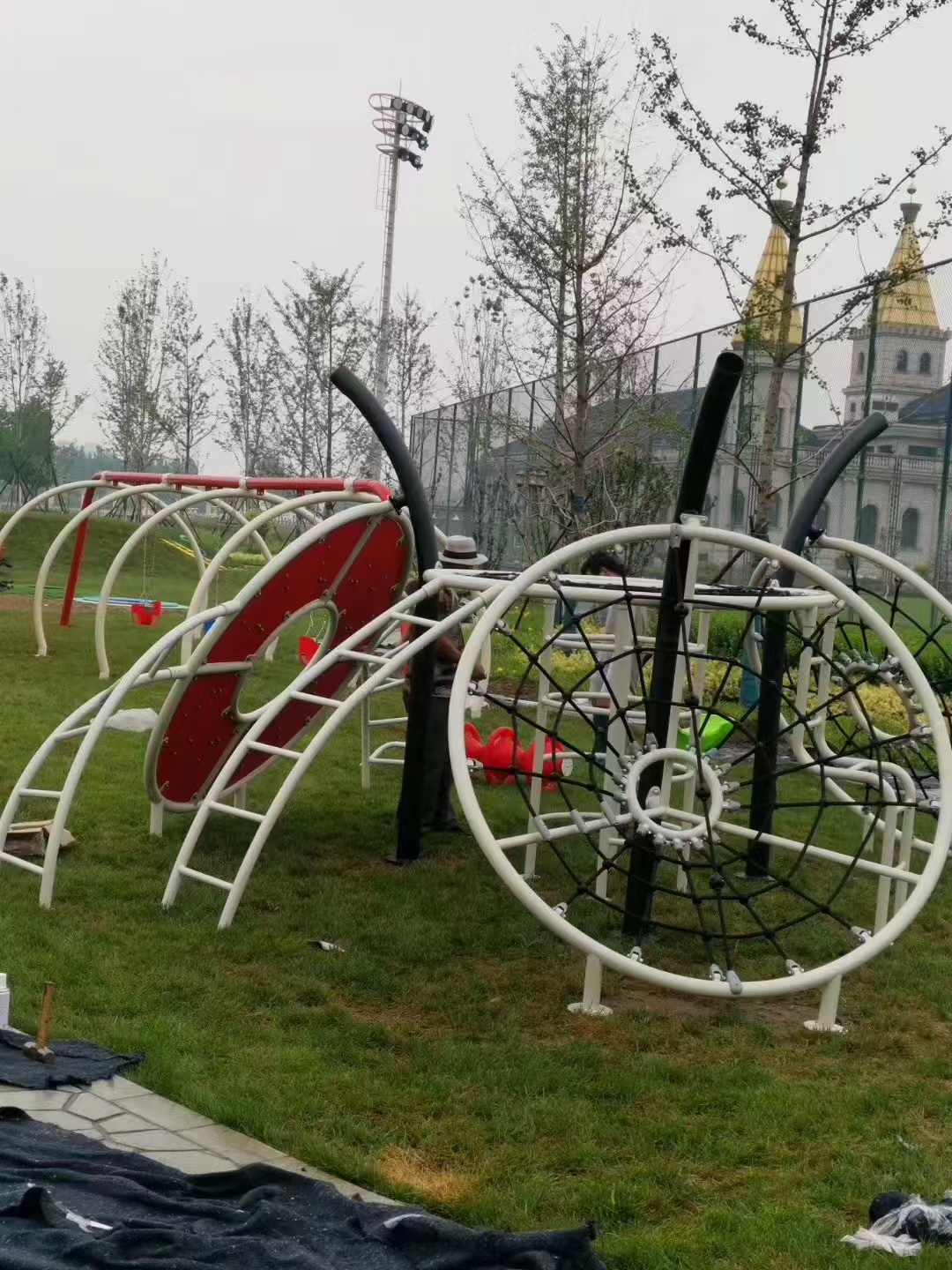
The Circular Net Climbing System and Spider Web Climbing Course can become visible activity zones in an open park. The Timber Climbing and Net Course offers another route with a warmer visual character. These products make sense when the park has enough space to separate higher-challenge activity from smaller early-years play.
Destination parks can use custom structures as part of the landscape identity
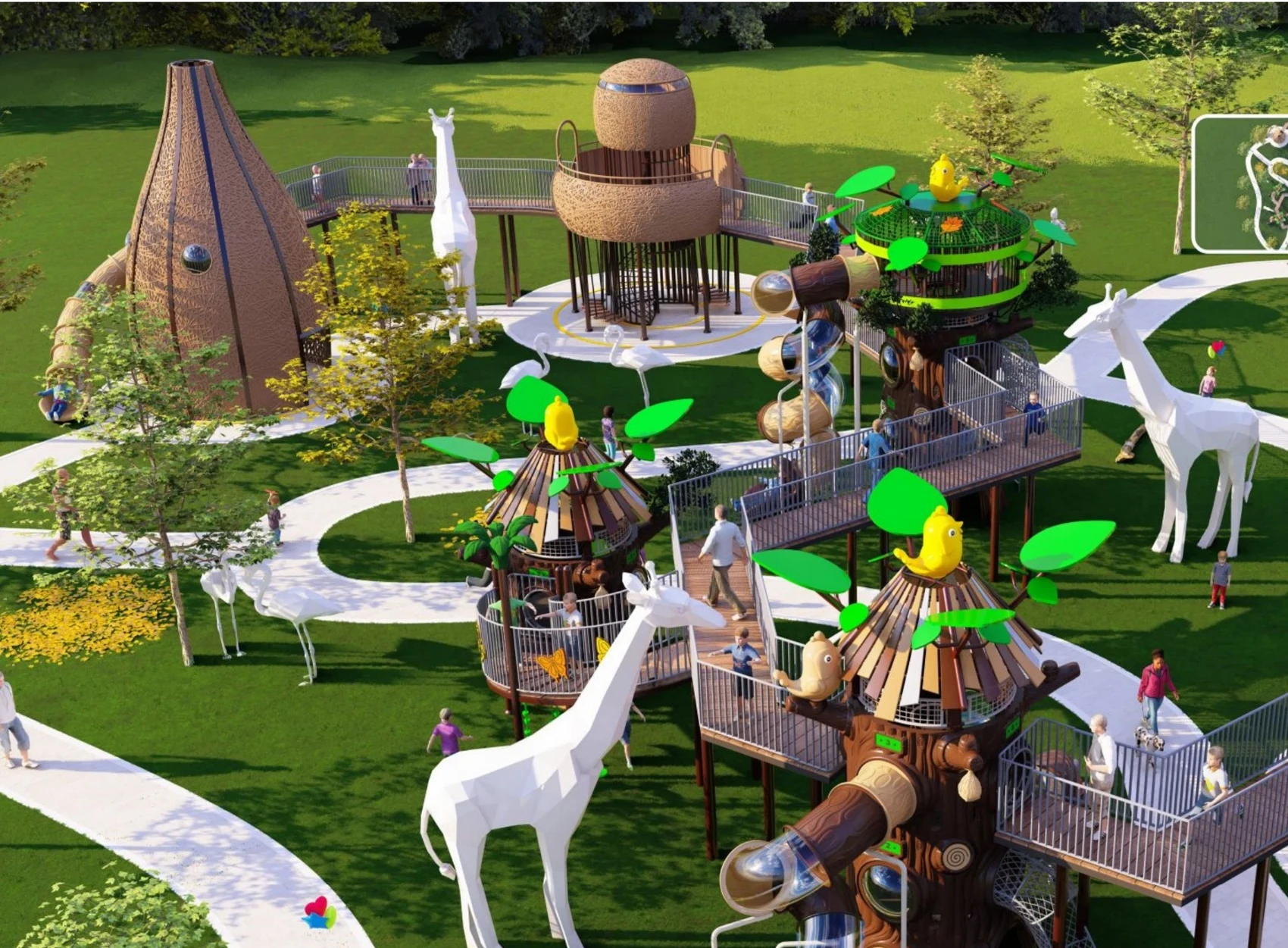
The Bird’s Nest Custom Playground, Nature Theme Custom Playground and Architectural Spiral Slide System can act as landmarks rather than only as equipment. A park or leisure project considering these structures should begin with the site plan, circulation and visual brief because the relationship between the structure and the wider landscape is part of the design.
Park playground equipment should be zoned by activity instead of scattered by product type
A park can accommodate several equipment families, but the site becomes easier to understand when each zone has a reason to exist. One zone may focus on a combination structure, another on climbing, another on early-years play and another on movement courses.
Early-years zones should remain legible and lower in intensity
Molded Horse, Frog and Airplane Spring Riders, PE-panel Deer, Car and Dolphin riders, Ride-On Cars and Modular Balance Path pieces can serve younger children and lower-level movement. These products should not sit directly in the main traffic path between a tall slide and a high-energy climbing structure.
Climbing zones should communicate a clear challenge level
A Circular Net or Spider Web system can attract more confident climbers. Timber climbing can provide a longer progressive route. Public-playground guidance emphasizes age separation, conflicting activities, sight lines and supervision, supporting the idea that higher-challenge equipment should be placed as a deliberate zone rather than an afterthought.
Park playground suppliers should treat circulation as part of equipment selection
A large park can make an equipment footprint look small on a plan, but paths, planting, seating and other park functions still shape how the playground is reached and supervised. The supplier should consider the direction of slide exits, the approach to climbing zones and the relationship between equipment and main pedestrian routes.
Slide exits should not point into the busiest park path
Robot, Castle and Nature combination playgrounds can have several slide exits around the structure. A 2D layout should show those directions so the project team can review the surrounding circulation. The same structure can work very differently depending on how it is rotated inside the site.
A custom landmark should be visible without dominating every park movement
A Bird’s Nest or Architectural Spiral structure may be intentionally visible from a distance. The park team should still decide how users approach it and where supporting activities sit. A landmark works best when it anchors the playground rather than blocking the wider site logic.
Landscape character should influence the equipment family
Parks often have stronger landscape goals than compact playground sites. Timber, nature themes, sculptural metal forms and bright PE-panel equipment create different relationships with planting, paving and surrounding architecture.
Timber systems fit parks seeking a quieter visual presence
The Timber Rope Bridge Playset, Timber Climbing and Net Course and Twin-Tower Timber Slide Set can integrate well with landscaped settings. Rope crossings and climbing routes add activity while the timber-led structure remains visually warmer than a highly graphic themed playground.
Nature-themed combination systems can bridge landscape and bright play
The Nature Theme Combination Slide uses leaf-style roofs and coordinated green slides, creating a more playful visual presence while still referencing the surrounding landscape. It can suit community parks that want a strong central structure without moving into a fully custom landmark.
Sculptural systems fit parks where identity is part of the brief
Bird’s Nest and architectural custom structures are appropriate when the park wants the playground to become part of the destination image. The project team should justify that scale through site role and user experience rather than selecting the most dramatic structure by default.
A park supplier should help the buyer decide when not to use a custom landmark
Custom development adds value when standard equipment cannot express the site geometry or visual goal. It is unnecessary when a combination slide, timber playset or climbing system already solves the project well.
A neighborhood renewal may be better served by standard product families
A community park replacing older equipment may need a reliable central structure, a lower-level early-years zone and some climbing variety. A Nature Theme Combination Slide, Timber Rope Bridge Playset and a few spring riders can create a complete project without the complexity of a one-off landmark.
A destination site may justify custom development when the playground must become memorable
A tourism or major leisure project may expect the play area to contribute to the destination identity. In that case, Bird’s Nest, architectural or other non-standard systems can justify the additional 2D/3D development and configuration work.
Park playground equipment should be reviewed by product role before final quotation
| Park zone | Useful Xinjiu products | Role in the site |
|---|---|---|
| Central family play | Robot, Castle or Nature combination systems | Multi-activity centerpiece |
| Climbing destination | Circular Net, Spider Web, Timber Climbing and Net Course | Higher-challenge movement zone |
| Early-years play | Spring Riders, Ride-On Cars, Balance Path | Lower-intensity supporting zone |
| Landscape-led play | Timber Rope Bridge, Twin-Tower Timber Slide | Warm visual character with climbing and sliding |
| Destination landmark | Bird’s Nest, Nature Theme Custom Playground, Architectural Spiral Slide | Custom identity and large-scale play route |
Park projects should raise destination and public-play requirements before production
Public playground requirements vary by market. ASTM F1487 covers public-use playground equipment within its scope, while the CPSC Public Playground Safety Handbook provides planning and safety guidance in the United States. Other destinations may use different standards or local approval processes. The buyer should state the destination and required project documentation before the final specification is frozen.
Xinjiu’s site asks for destination and certification needs and describes export-document coordination, logistics support, installation manuals and online technical guidance. For public park projects, the buyer should confirm which documents and support are included for the selected equipment rather than rely on generic marketing statements.
Park equipment suppliers should manage revisions at the master-plan level
A park project can change because paths, planting, utilities or adjacent facilities move during design. If the site changes, the equipment layout should be reviewed before production. Moving a custom structure or rotating a combination playground can change slide exits, access and relationships with other zones.
Equipment substitutions should be checked against the zone role
If a Circular Net Climbing System is replaced with a Timber Climbing and Net Course, the park team should review more than the product name. The visual character, route geometry and footprint may change. The replacement should still fulfill the climbing-zone role established in the master plan.
Supporting products should not expand until circulation disappears
Spring riders and balance pieces are easy to add one by one. The park team should stop adding supporting products when they begin to reduce clear movement between zones. Open space can be part of the playground design.
Before approving a park playground equipment order
- Define whether the park is community-focused, climbing-led or destination-oriented.
- Choose one clear role for each major equipment zone.
- Keep early-years and higher-challenge activities legible within the site.
- Review slide exits and climbing approaches against park paths.
- Use timber, nature themes or sculptural systems according to the landscape character.
- Use custom development only when the park role genuinely needs a non-standard identity.
- Confirm destination and public-project documentation before production.
Park buyers can compare the Xinjiu park-suitable equipment range, review the outdoor play equipment selection guide, and use the custom playground manufacturer guide when the project needs a landmark rather than a standard system. A park playground equipment supplier adds value when it helps the buyer turn a large site into a clear hierarchy of play experiences instead of a loose collection of equipment.
How should a park team test whether a proposed landmark is worth the custom route?
Ask what the landmark contributes beyond scale. Does it make the playground visible from key park approaches? Does it create a play route that standard equipment cannot provide? Does its theme belong to the landscape or destination identity? If the answers are weak, a Nature Theme combination system, timber route or dedicated climbing zone may create a better park with less project complexity.
A climbing landmark and a sculptural landmark solve different park problems
A Circular Net Climbing System makes the climbing challenge visible and keeps the structure relatively open. A Bird’s Nest or Architectural Spiral system can create a stronger object-like identity with towers and enclosed routes. The park team should decide whether the destination value comes from challenge, sculpture or a combination before choosing the product family.
Community parks should protect everyday usability when adding visual ambition
A neighborhood park can still have strong design character, but the equipment should remain understandable for regular family use. One themed combination structure, one separate climbing route and one clear early-years area can create more value than several competing landmarks. The supplier should help the buyer keep the hierarchy readable as the proposal develops.
For park procurement, this means custom work should be a deliberate choice rather than the default definition of a “better” playground. The strongest solution is the one that fits the park’s role, landscape, users and available site management—not simply the one with the largest visual statement.