Blog
Choosing a Commercial Soft Play Equipment Supplier for a Range Your Dealers Can Explain

Five attractive soft-play pictures do not necessarily make five commercially different offers. A distributor evaluating a commercial soft play equipment supplier needs to know what each configuration contributes to a customer’s venue, what information is needed to adapt it and which promises should wait for a measured project. Xinjiu’s indoor concepts include pastel towers, clock-led themes, connected towers and a compact carousel arrangement. They make useful conversation starters when their activity differences remain visible.
The first decision is whether you are building a range presentation or purchasing equipment for a defined room. A range presentation explains available directions. A project order confirms a particular arrangement, specification and delivery scope. Confusing the two can make a dealer’s brochure look complete while leaving the operator uncertain about what the proposed equipment actually includes.
Visual direction
Pastel, castle or clock-led appearance helps a buyer describe the venue they want.
Activity arrangement
Tower connections, slide routes and ball-pool relationships explain what the children will do.
Confirmed project
The measured room and agreed configuration determine what the distributor can supply.
Choose a commercial soft play equipment supplier whose range has explainable differences
Start with the Xinjiu indoor soft-play range and identify the decision behind each concept. A dealer should be able to explain why the Compact Carousel Soft Play is being discussed instead of the Twin-Tower Indoor Soft Play. If the explanation is only that the pictures have different colors, the presentation has not yet helped the customer choose.
Macaron soft play gives the dealer a pastel identity and a defined activity mix
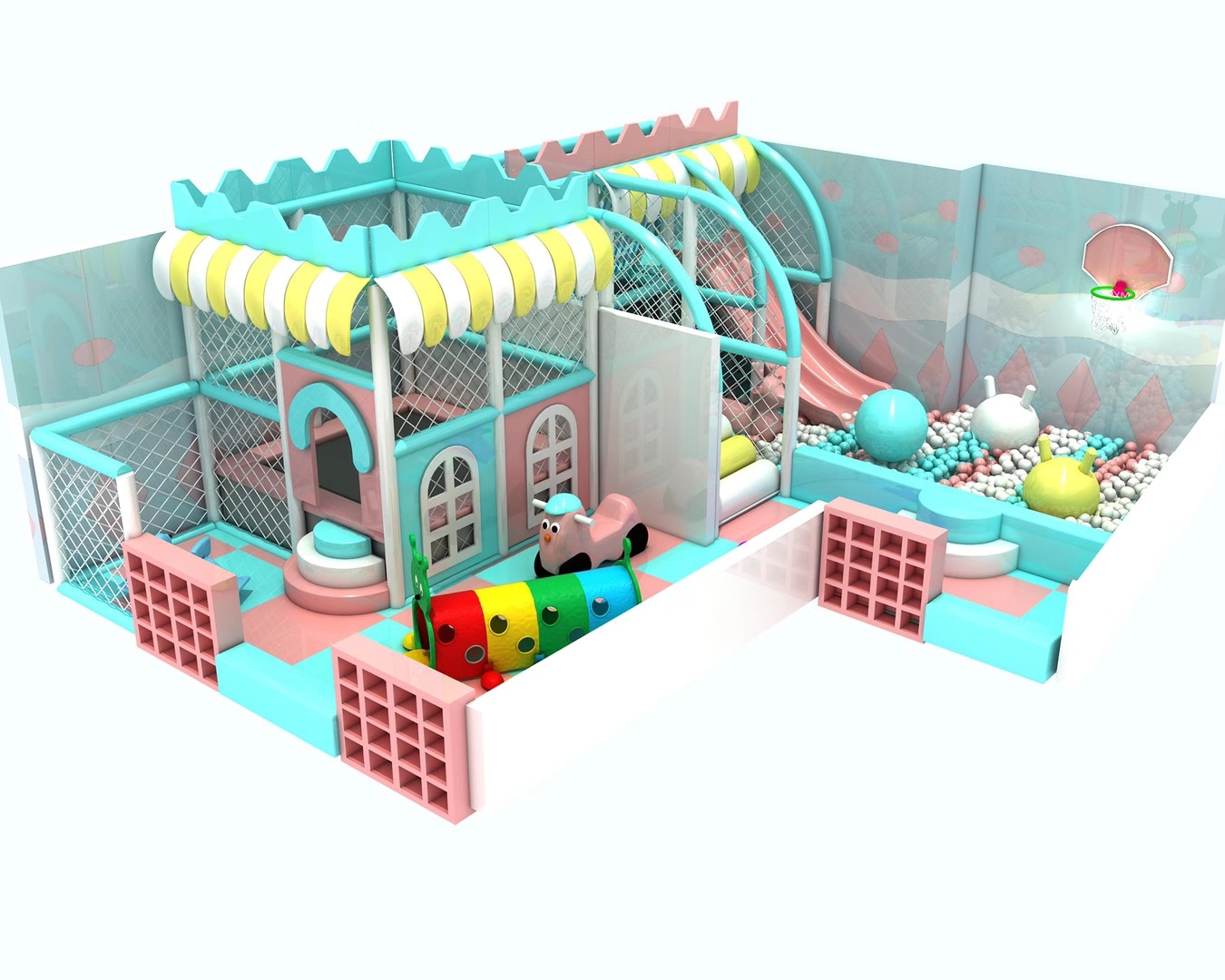
The Macaron Soft Play Playground brings together pastel play towers, a tube crawl and a ball pool. Present those elements together. A customer looking for a softer visual identity may find the concept relevant, but the tube-crawl route still needs to fit the room and connect coherently with the towers. Color preference should not conceal the activity arrangement that makes the concept useful.
For a distributor showing an operator several possible directions before a lease is finalized, this concept can help establish the intended look and core activities. Describe it as a configuration to adapt, rather than a universally fitting package. The eventual room dimensions, clear height, entrances and columns will determine which parts of that initial idea can remain.
Clock and vintage indoor playgrounds should not be sold as interchangeable names
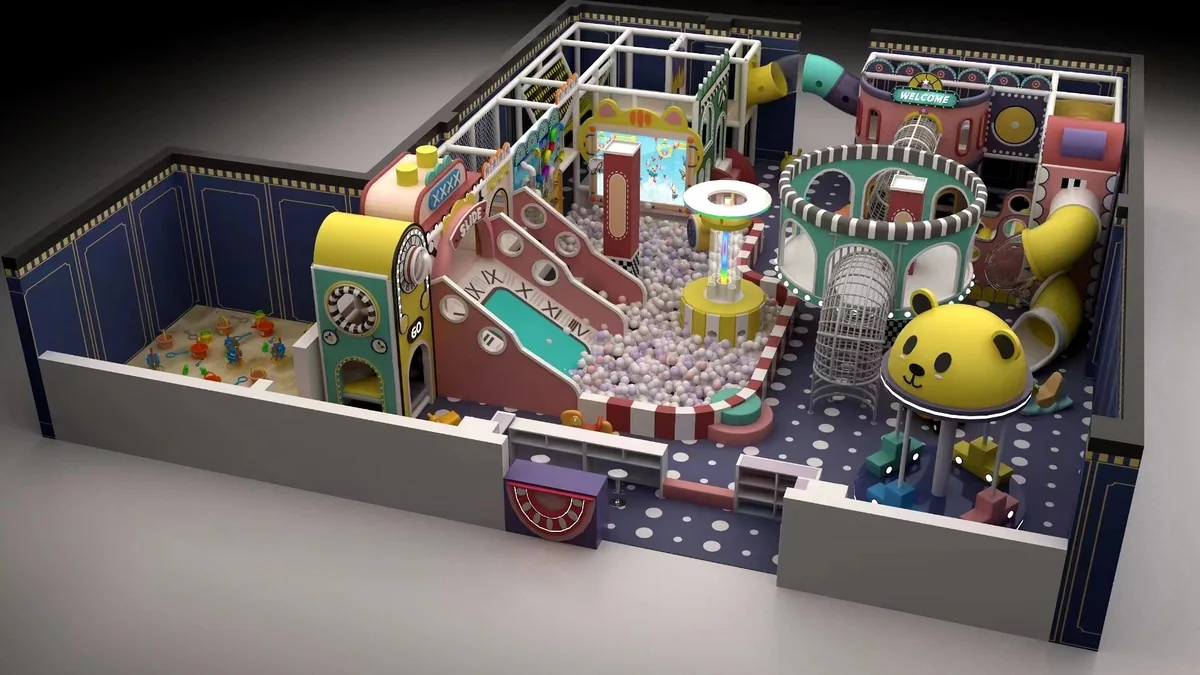
The Clock Theme Soft Play Playground is described with clock-inspired towers, a double slide, climbing obstacles and a ball pool. The Vintage Theme Indoor Playground uses clock-front towers, connected tunnels and varied slide routes. Their visual language overlaps, but the described activity arrangements are not identical. A dealer needs to preserve that distinction when preparing a range sheet.
If a customer likes the clock facade in one image and the tunnel arrangement in another, record both preferences as a request for a revised concept. Do not merge the images into a new standard offer without confirming the combined layout. Xinjiu describes theme and configuration coordination; that service creates a route to discuss changes, rather than a reason to assume that all pictured features are supplied together.
A distributor training new dealers can make this distinction concrete by asking them to describe the Vintage concept without using the word vintage. They should identify its clock-front towers, connected tunnels and slide routes. Then ask them to describe the Clock concept without referring to its palette. The double slide and climbing obstacles should emerge. If both explanations collapse into the same phrase about fun indoor equipment, the range sheet is concealing differences that the operator needs to understand.
That exercise also discourages unsupported substitutions. A tunnel shown in the Vintage concept should not be replaced in a dealer presentation by the Macaron crawl tube simply because both are enclosed passages. Their location and relationship to the surrounding structure are part of their proposed use. Establish the customer’s intended movement first, then have the selected configuration revised and confirmed through the manufacturer’s planning process.
A soft-play distributor range should reveal which room decision comes first
The most useful grouping may be based on the operator’s unresolved room question. Some buyers need a compact starting configuration. Others need an extended journey between towers. Another buyer may already have the footprint but need a visual theme that supports the venue’s identity. These different conversations can sit within one range without pretending that one piece of equipment answers them all.
| Concept to present | Reason to discuss it | Specific elements shown | Question before an order |
|---|---|---|---|
| Compact Carousel | A compact, centrally organized play idea | Carousel, twin slides, soft activity pieces | Can the room support the central feature and its surrounding movement? |
| Twin-Tower | A connected journey between structures | Tube connection, soft stairways, ball-pool slide | Where will the two towers and connecting route sit? |
| Clock Theme | A strong theme with a double-slide arrangement | Clock towers, climbing obstacles, ball pool | How will access and slide returns work in the customer’s room? |
| Vintage Theme | A coordinated themed indoor destination | Clock-front towers, tunnels, varied slides | Which pictured routes belong in the confirmed venue? |
For a dealer comparing a small family venue with a larger themed center, this grouping prevents a common commercial shortcut: offering the same concept twice with a different overall size label. The compact customer’s problem may be circulation around one central activity. The larger customer’s problem may be how several connected activities retain their identity across the room. A scaled picture alone does not explain either decision.
Twin-Tower soft play needs a connection story, not only a tower count
The connecting tube is the reason to discuss the Twin-Tower concept as a route. Soft stairways establish access, and the slide returns the play journey to the ball-pool area. A distributor who presents only the two tower fronts leaves out the relationship that distinguishes the configuration. Use a layout view or clearly identified route description alongside the image.
Also establish what the dealer will do when a customer requests a changed connection. Moving one tower, reversing the entrance or changing the descent may affect the surrounding arrangement. The commercial record should identify the revised configuration and its approval stage. It should not quietly reuse the original concept’s name as if the changed offer had already been confirmed.
Keep commercial soft-play equipment offers honest when a customer combines two concepts
A customer’s wish list often crosses the range: Macaron colors, a Clock double slide and the connected route from Twin-Tower. That combination can be a useful design brief. It is not yet a finished product specification. The dealer’s role is to translate the request into identifiable decisions so the manufacturer can establish whether the arrangement suits the building and intended users.
Xinjiu describes OEM/ODM and site-led planning in its company capability overview. When using those services, keep appearance requests separate from route requests. A palette change has a different effect from adding a tunnel connection. The commercial comparison becomes clearer when a customer can see which decision changes the play journey and which changes its presentation.
External manufacturers also describe commercial soft play as a combination of room-specific activities and layouts; NanPlay’s soft-play range is one example of that industry terminology. Its material specifications, certification claims and delivery terms belong to NanPlay. They should not enter a Xinjiu offer simply because the product category sounds similar.
Before forwarding a proposal, check the promised activity mix against the confirmed equipment list. If the customer selected the Vintage concept for its connected tunnels, a revised offer should not remove those tunnels without explaining the effect. If the Clock concept was chosen for the double slide, the quotation should distinguish that arrangement from a single-slide alternative. These are practical offer differences, not decorative details.
Price comparisons need the same discipline. A Macaron proposal containing towers, the crawl tube and a ball pool cannot be compared directly with an offer that leaves the ball-pool system outside the stated scope. Likewise, a Twin-Tower image may suggest a complete connected journey while a commercial document separately lists tower groups and connecting components. The distributor should establish what each quoted configuration includes before explaining the difference to the customer. No public concept image settles the final price or the contents of the shipment.
For repeat customer discussions, keep the approved project identity distinct from the range identity. A dealer may continue to present the Macaron family while a particular customer’s agreed equipment contains a revised entry or a changed activity arrangement. Retaining that customer’s confirmed drawing alongside the range reference helps avoid treating a later request as an order for the original illustration. The customer receives the agreed configuration, not a loosely remembered color scheme.
The compact carousel should have its own commercial boundary
The Compact Carousel Soft Play combines a central carousel with twin slides and soft activity pieces. Establish the exact mechanism, controls, access arrangements and operating requirements with the supplier for the selected configuration; the concept description alone does not settle them. This is particularly relevant when a dealer presents the carousel to an operator accustomed to a simpler tower-and-slide system.
Do not promise the compact concept as a shortcut around every building constraint. A centrally organized arrangement may be attractive in a small room, but it still needs usable surrounding space and an agreed access route. The distributor should explain why it has been shortlisted, then let the measured layout determine whether that reason survives the actual venue.
Prepare a dealer presentation that makes the next project discussion more precise
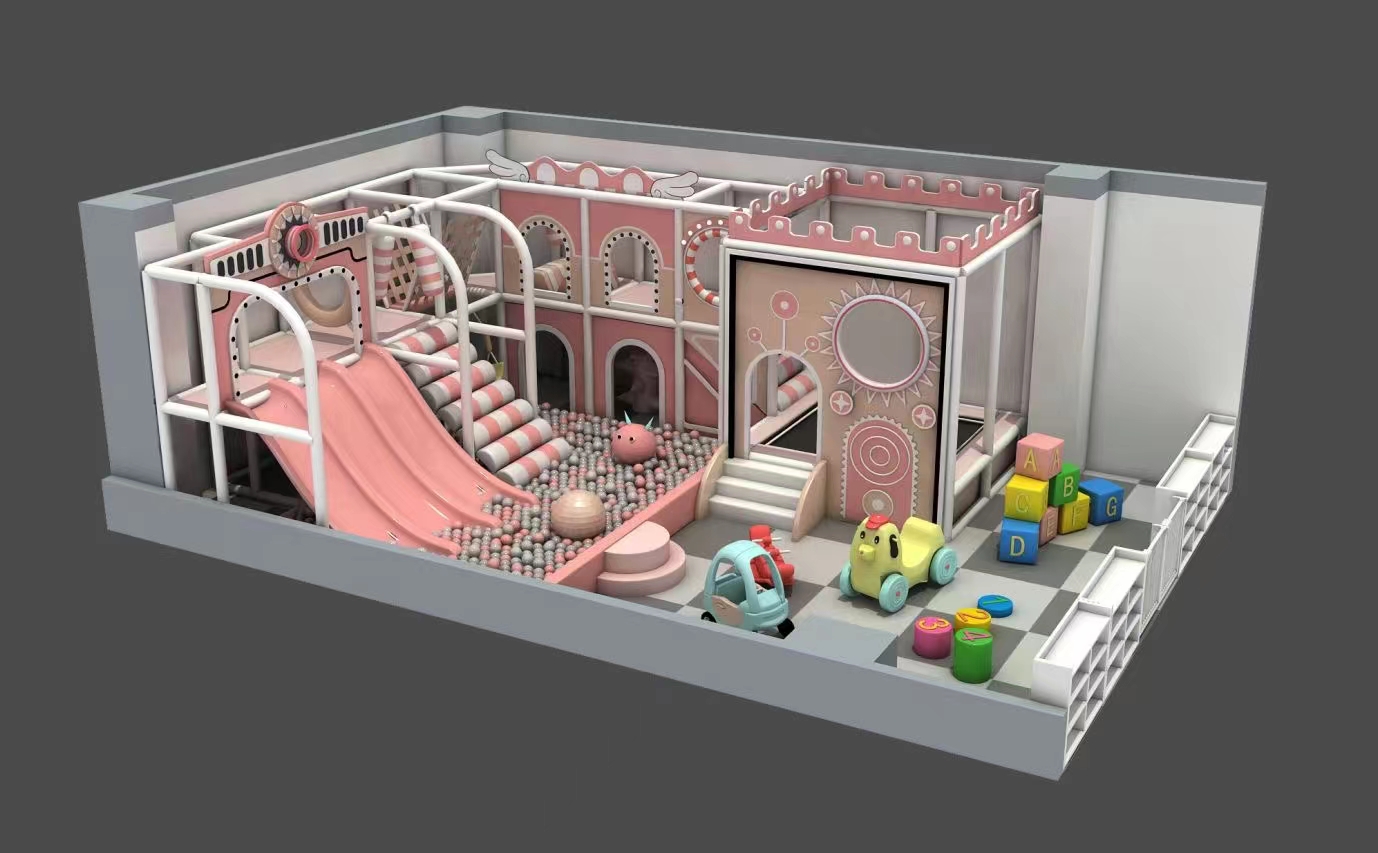
A dealer presentation should identify the configuration name, pictured activities and information needed from the eventual room. For Macaron, keep the pastel towers, crawl tube and ball pool together in that description. For Vintage, name the tunnels and varied slide routes. For Twin-Tower, show the connection. The range becomes more useful when its commercial explanation follows the equipment rather than a repeated marketing sentence.
Delivery information also needs to remain configuration-specific. For a Twin-Tower order, component identification should distinguish the tower groups and connecting sections. For a Clock or Vintage order, agree how themed facade pieces and route components will be protected and matched to the approved arrangement. Ask for the actual packing breakdown; the published range does not establish a universal crate, pallet or shipping schedule.
A distributor supplying several venues should agree how the manufacturer will separate the components of those orders. Two Clock-themed projects may use different slide orientations or enclosure layouts even when their front views resemble each other. Each package group should be traceable to its own approved configuration. For a Macaron project and a Vintage project moving together, decorated elements and route components should not become a mixed collection that the receiving dealers must identify from brochure photographs.
The CPSC soft-contained play checklist highlights the condition of enclosures and floor surfaces. A dealer can use that general context to explain why access for inspection belongs in the room discussion. Do not convert a public checklist into a certification statement or claim that a pictured configuration meets every destination requirement.
Xinjiu’s distributor and project-partner support provides a relevant place to begin a scope discussion. Its existing soft-play supply guide also addresses the broader relationship between a distributor and a project order. The useful next conversation is about the dealer’s actual customer types and the named configurations that serve them.
Put two proposals beside each other before adding a third to the range. Your dealer should be able to explain which room problem each proposal addresses, which activities differ and what still needs confirmation. If the answer is only a theme name and a price, improve those two offers first. A smaller, understandable range gives the customer a better decision than a larger collection of uncertain pictures.