Blog
Working with a Modular Soft Play Equipment Manufacturer: Where the Connections Matter

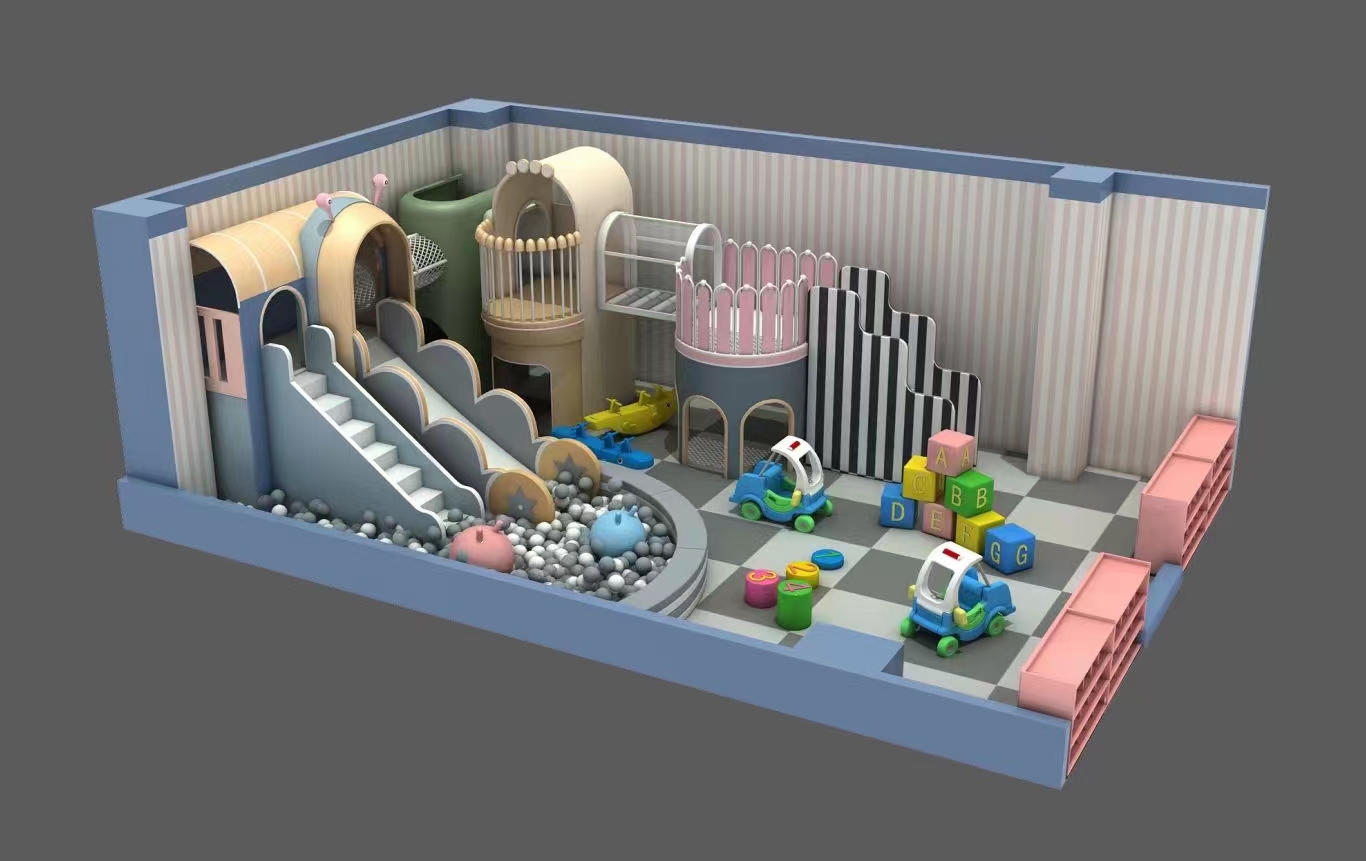
A connecting tunnel can make two towers look like one complete attraction. It does not prove that either tower can be moved, replaced or extended independently. When working with a modular soft play equipment manufacturer, venue owners and distributors should first define the connections they need and the changes they expect to make later. Xinjiu’s indoor soft-play range offers tower, tube, stairway, slide and ball-pool configurations that help start that discussion. The approved arrangement, rather than the word “modular,” must establish what can actually be supplied.
How children reach the tower02 / Crossing
How activities connect03 / Return
Where children leave the route
What a modular soft play equipment manufacturer should mean by a connected system
The Twin-Tower Indoor Soft Play configuration shows two towers connected by a tube, with soft stairways and a slide into a ball pool. These are recognizable parts of a play journey: climb, cross and descend. A buyer can use those parts to describe the desired arrangement, but the illustration does not publish connection dimensions or an interchangeable component standard. Treat the concept as a starting configuration. Request confirmation of its actual frame connections, access openings and supporting arrangement before assuming a future tower will fit.
This distinction matters when comparing quotations. One offer might describe a complete tower-and-tube system; another might describe individual activities without the same connecting structure. An apparently similar activity list can therefore represent different equipment boundaries. For the Twin-Tower arrangement, identify whether the connecting tube, both access points, soft stairs, slide and ball-pool enclosure belong to the same approved scope. The buyer should be able to follow the route without filling in an unpriced or undescribed connection from the concept image.
Xinjiu describes custom indoor planning, including layouts and visual development. Those services are useful precisely because the final combination must respond to a particular venue. They do not establish universal compatibility with an older installation or with another manufacturer’s equipment. A request to “add one module” should name the component and show its intended relationship to the existing route. That wording gives the supplier a defined engineering question instead of an open-ended promise of easy expansion.
Tower openings, crawl tubes and soft stairs need separate decisions
A connected route can fail commercially even when its theme is attractive: children may enter from the wrong side, a climb may lead to a bottleneck, or an operator may have difficulty reaching an enclosed section. The useful review is component by component. Start with the Twin-Tower route, then examine how Macaron and Clock Theme concepts arrange their activities. Their visible structures provide concrete alternatives; they are not evidence that the same tube or stair unit can be exchanged between all three.
The Twin-Tower connecting tube establishes a crossing, not a spare doorway
For an operator adding a second tower, the connecting tube is the main change to the play route. Its two ends need compatible access points, and its position influences what children can reach next. Have the supplier distinguish the opening used for this crossing from other tower openings intended for stairs or slides. If the new tower is positioned differently, the crossing may require a revised arrangement rather than simply a longer tunnel. Do not purchase the added tower first and leave that connection for an installer to improvise.
The adult access question belongs beside the tube decision. An enclosed crawl section can reduce direct visibility compared with an open activity platform. The supplier and operator should review access for the exact arrangement, including how a child can be reached without relying on a slide as the only route. The concept does not specify that procedure. An approval should therefore describe the access solution, not claim that an enclosed tunnel is manageable merely because it looks short in a rendering.
Macaron tube crawls and ball pools change the destination of the route
The Macaron Soft Play Playground combines pastel towers, a tube crawl and a ball pool. Its palette is a visual distinction, but the crawl-to-play relationship is the functional question. A venue that wants a quiet-looking entrance may still need active circulation around the ball pool. Compare where the tube brings children relative to where they enter the pool or return to the tower. The arrival point should be shown in the proposed configuration; the pastel finish does not resolve competing movements.
For a distributor explaining this option, separate what is visible from what remains project-specific. Pastel towers and a tube crawl can be discussed as concept features. An exact number of children, a permitted height or a guaranteed fitting area cannot be taken from the picture. When the operator changes the ball-pool outline, ask whether that change also alters the stair approach or slide destination. The change may affect several connected activities even if only one enclosure appears different in the revised visual.
Clock Theme climbing obstacles should not be treated as decorative inserts
The Clock Theme Soft Play Playground includes clock towers, a double slide, climbing obstacles and a ball pool. The obstacles help define how children move through the system; they are not simply accessories to fill empty space. Review their placement against the double-slide return. If an operator requests another climb near that return, the question is whether children waiting to climb will intersect those leaving the slide. Keep the movement review attached to the exact Clock configuration instead of borrowing an activity count from a different concept.
Changing a castle facade is different from changing a modular soft-play route
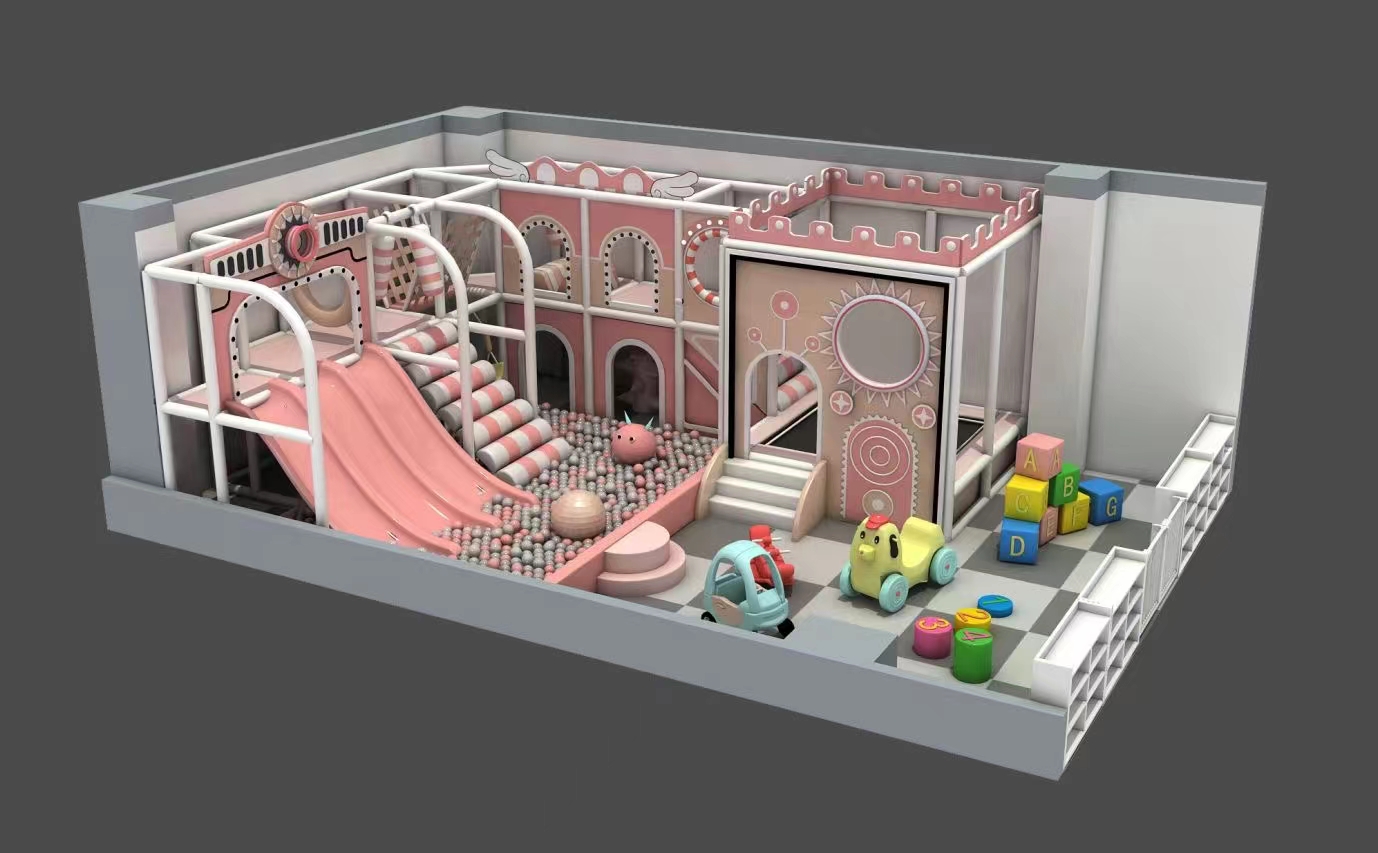
The Castle Theme Soft Play Playground combines a pastel facade, a double slide, enclosed climbing routes and a ball pool. A distributor may want this appearance on a tower-and-tube arrangement already discussed with an operator. That request contains two separate decisions: which visual elements should look like a castle, and which activities should remain connected in the proposed way. A revised facade should not silently change access openings or make the operator believe the original route has been preserved.
Ask for the revised visual and equipment description to identify the enclosed climbing route and both slide exits. If the tower faces change, check whether any illustrated opening now serves a different purpose. The operator needs a clear route through the structure, not merely matching colors across successive drawings. Xinjiu’s published customization process can be used to coordinate these choices, while the approved scope should establish the exact supplied arrangement. A theme change is not a substitute for reviewing its functional consequences.
Neither the Castle nor Macaron concept establishes a particular material grade, fire performance or certification. Those details must belong to the actual supplied components and the destination requirements. ASTM F1918 addresses soft-contained play equipment; its scope should not be read as proof that any pictured system complies. For a castle configuration, ask how the relevant information applies to the frame, soft components and enclosures actually included, rather than accepting a standard name without a matching equipment description.
A ball-pool slide and an activity-table zone require different returns
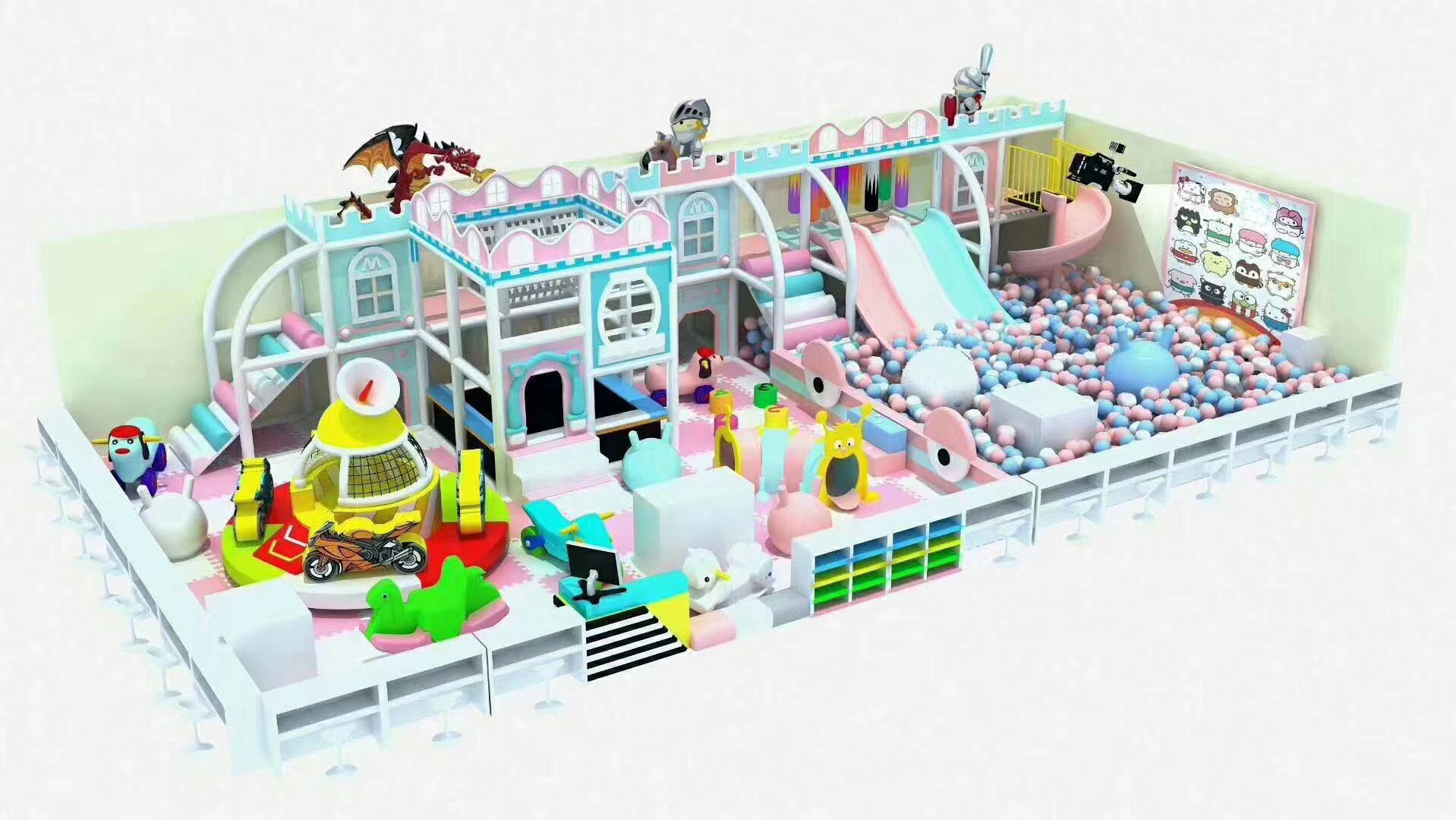
The Open-Plan Indoor Play Center shows multilevel towers, ball pools and activity tables. This creates a useful comparison with the Twin-Tower ball-pool slide: one configuration emphasizes a connected crossing and descent, while the larger concept includes several activities around the tower route. A buyer should not assume that adding tables to a connected system creates the same open-plan experience. The floor-level activities need usable space and circulation of their own, alongside the tower supports and slide destinations.
Consider a venue owner extending a play center after adding a second tower. Keeping the original slide destination may be sensible, but a new activity-table area could attract children across the same return path. The proposed extension should show where those children stand and how they rejoin play. Review the table zone as a distinct activity relationship, not as the leftover rectangle after the tower arrangement has been approved. The published Open-Plan concept helps communicate that difference without claiming a fixed floor-area requirement.
A ball pool also needs a clear scope description. In the Macaron, Clock and Castle concepts, it forms part of the illustrated play arrangement, yet its final enclosure and relationship to slide exits remain project decisions. Confirm what the equipment offer includes and which adjacent floor work belongs to the venue. When comparing a ball-pool slide with an activity-table route, compare the destination and access conditions as well as the visible attractions. The two arrangements do not solve the same circulation problem.
Future soft-play expansion starts with today’s component identity
If later expansion matters, raise it before approving the initial connected system. For a Twin-Tower order, ask which drawings identify the crossing and its attachment points, and what information would be needed to evaluate a future third tower. The answer may be a review process rather than a promise of plug-in additions. That is a useful commercial boundary. A supplier cannot responsibly confirm compatibility with an unspecified future component solely from the word “modular.”
Published industry ranges also use modular language; NanPlay’s soft-play range is one example of that terminology. The practical purchasing question remains specific to the system being offered. Xinjiu’s concept names help distinguish arrangements, but they are not published interface codes. Keep the approved component description with the drawing revision so a later request can identify which tower, tube, soft stair and slide connection is under discussion. Do not assign another company’s compatibility claims to this range.
Clock and Castle components need labels that survive a mixed shipment
A project combining a Clock-style tower with a Castle-style facade needs component identification that follows the approved arrangement. Similar-looking panels should not leave the installer guessing which tower opening they belong around. Before dispatch, request a correspondence between the packing list and the relevant drawing references for towers, tubes, stair sections and slides. This is a project-specific requirement, not a claim that Xinjiu uses a particular crate system. Packaging construction, shipment sequence and access constraints still need confirmation for the order.
Xinjiu describes installation manuals and remote guidance. For connected soft play, use that support to clarify the sequence at the tube ends, stair approaches and slide destinations before assembly begins. An installer should not be asked to resolve a missing interface by changing the approved play route on site. Read the company’s custom project process alongside its soft-play manufacturing overview, then place the connection questions in the actual order scope.
The most useful sign-off is a route that can be followed in both directions: from the stair to the tower, through the crossing, down the chosen slide and back toward another activity. Keep the named components and the agreed connection drawings together. If the future extension has not been evaluated, record it as an open design decision rather than buying today’s system on an assumed promise of interchangeability.