Blog
China Playground Equipment Manufacturer: A Practical Guide for Overseas Buyers


Choosing a China playground equipment manufacturer should begin with the project the buyer needs to deliver, not with the country label alone. Overseas contractors, distributors, developers and school or park buyers need to know whether the manufacturer can translate a site brief into a controlled equipment package, keep customization decisions visible, separate different product categories correctly and support the handover from production to export and installation.
Xinjiu is based in Wenzhou, China and states that it has worked in playground equipment since 1999. Its current website shows a range covering custom outdoor playgrounds, combination slides, timber playsets, rope and net climbing systems, activity courses, spring riders, early-years equipment, indoor soft play and trampoline products. Project support includes 2D layouts, 3D visualization, non-standard development, OEM/ODM manufacturing, export-document coordination, logistics support, installation manuals and online technical guidance.
A China playground equipment manufacturer should be evaluated by project fit, not geography
“Made in China” does not tell the buyer whether a supplier understands a school renovation, residential courtyard, destination park or family entertainment center. Those projects need different equipment, different drawings and different handovers. A useful evaluation therefore starts with how the manufacturer responds to the site and user brief.
Ask how the manufacturer changes its recommendation when the site changes
A compact residential courtyard may suit a Nature Theme Combination Slide or Robot Theme Combination Playground with smaller spring riders nearby. A destination park may justify a Bird’s Nest Custom Playground or Architectural Spiral Slide System. A narrow school edge may be better served by a Linear Custom Play Circuit or Modular Activity Training Course. If the manufacturer recommends the same equipment regardless of the site, the buyer is not seeing real project selection.
Ask whether indoor and outdoor projects follow different planning inputs
Indoor soft play depends on floor area, clear ceiling height, columns and entrances. Outdoor equipment depends more strongly on site circulation, surrounding landscape and the relationship between activity zones. Xinjiu’s current project pages distinguish these inputs and ask indoor buyers for clear height and architectural constraints. Overseas buyers should expect that difference from any manufacturer supplying both categories.
Product breadth matters only when the manufacturer can explain the role of each family
A broad catalog is useful for distributors and mixed projects, but only if the products are not treated as interchangeable. Xinjiu’s categories show clear differences between compact spring riders, timber climbing routes, large combination structures, custom landmarks and indoor systems.
Spring riders and early-years products support smaller or repeat orders
The Horse, Frog and Airplane molded spring riders and the Deer, Car and Dolphin PE-panel riders have clear individual identities. Ride-On Cars, Caterpillar Balance Walkers and Modular Balance Path elements can support preschool and early-years movement. These products are easier to discuss as individual items and can be useful for distributors that need repeatable products alongside larger project systems.
Combination and custom systems need a site-led conversation
Robot, Castle and Nature themed combination playgrounds contain several activities in one main structure. Bird’s Nest, Circular Net and Architectural Spiral concepts are even more dependent on site scale and design intent. A China manufacturer should not treat these products like stock items. The buyer should expect a discussion about footprint, intended users, circulation and destination before final configuration.
Overseas buyers should make customization specific enough to verify
“OEM/ODM available” can mean anything from changing a color to developing a non-standard playground. Xinjiu states that it supports theme, color, function and configuration development as well as non-standard products. The buyer should define which level is required before comparing manufacturers.
A visual change should remain separate from a structural change
If the buyer changes the color palette of a known combination system, the tower and slide route may remain familiar. If the buyer moves a bridge, replaces a tower, adds a tall enclosed slide or changes the footprint, the manufacturing scope has changed. A strong project process should make that distinction visible in the drawing and order.
Use 2D and 3D work as project documents, not just sales visuals
Xinjiu’s site describes 2D layout and 3D rendering support. Overseas buyers can use these tools to check scale, activity relationships and circulation before production. A rendering is most useful when it helps the contractor, owner and manufacturer approve the same version—not when it functions only as an attractive image for a presentation.
Material decisions should be tied to the selected playground products
Xinjiu’s current range uses PE panels, molded plastic forms, timber structures, metal frameworks and rope networks. A buyer should not assume the same material specification applies across the entire order. The Timber Rope Bridge Playset and Timber Climbing and Net Course rely on timber and rope relationships, while PE-panel riders use shaped panels and custom systems may combine metal framing, platforms, tubes and nets.
The company states that anti-UV, anti-corrosion and eco-conscious options can be considered according to the equipment type, project environment and confirmed specification. For an overseas buyer, the important step is to record which option applies to which component instead of carrying a general claim from one product family into another.
A China playground manufacturer should support the transition from factory to destination
International purchasing creates a handover between the manufacturing team and people who may never have attended the design meetings. Xinjiu’s service information includes export documents, logistics coordination, installation manuals and online technical guidance. Buyers should confirm the exact scope for their order and destination.
Custom projects need version control at the export stage
If a Bird’s Nest or Nature Theme Custom Playground was revised after the first rendering, the final export and installation information should follow the approved version. The receiving team should not need to decide which drawing is correct after the shipment arrives.
Repeat orders need stable identification rather than a full redesign
A distributor reordering PE-panel spring riders may not need a new 3D site plan, but still benefits from clear product naming, quantity, specification and destination information. Good international support adapts the process to the product rather than forcing every order through the same workflow.
Destination requirements should be defined by product category
Public outdoor playground equipment, soft-contained play and trampoline systems do not sit under one universal technical framework. ASTM F1487 covers public-use playground equipment within its scope, while ASTM F1918 addresses soft-contained play. Trampoline courts have separate requirements. An overseas buyer should tell the manufacturer which products are included and what the destination project expects.
This is also why buyers should avoid asking only “Do you have ASTM?” or “Do you have EN?” without naming the product and destination need. A more useful question is: what documentation can be provided for this selected equipment and what still requires local project review?
How should an overseas buyer compare two China playground manufacturers?
| Comparison area | Evidence to request or review | What it reveals |
|---|---|---|
| Site understanding | 2D layout based on real dimensions and users | Whether selection is project-specific |
| Visualization | 3D view tied to the approved layout | Whether stakeholders can review the same concept |
| Product breadth | Clear roles for combination play, climbing, timber, riders and indoor systems | Whether the catalog can support mixed projects without confusion |
| Customization | Documented theme, color, activity and configuration changes | Whether OEM/ODM is concrete rather than generic |
| Production handover | Final equipment list matched to the released design | Whether the factory is building the version the buyer approved |
| Export support | Defined packing, documentation, logistics and installation-support scope | Whether the project can move beyond the factory coherently |
Three overseas buyer scenarios need different manufacturer behavior
A playground contractor should prioritize site planning, revision control and installation handover. A distributor should separate repeat products from site-led structures and preserve stable product identity across orders. A developer or landscape team should test whether the manufacturer can carry visual intent into a buildable custom system without losing the relationship between equipment and site.
- Start with the real site or room, not a generic catalog shortlist.
- Separate simple visual customization from structural custom development.
- Keep product-specific materials and finishes attached to actual items.
- State the destination before the equipment scope is frozen.
- Confirm what export and installation support is included in the order.
Buyers can review Xinjiu’s Wenzhou manufacturing background, compare the indoor and outdoor product families, and use the custom playground design guide for a closer look at non-standard project development. A China playground equipment manufacturer should be selected because its process fits the buyer’s project and destination—not because a country label is treated as a substitute for project evidence.
How should overseas buyers use factory location in their sourcing decision?
Knowing that Xinjiu is based in Wenzhou, China is useful for identifying the manufacturer and understanding where production coordination takes place, but location should not become a shortcut for judging quality, price or compliance. Those questions need project evidence. A buyer can verify whether the manufacturer understands the site, whether the selected product family is appropriate, whether customization is documented and whether export responsibilities are clear.
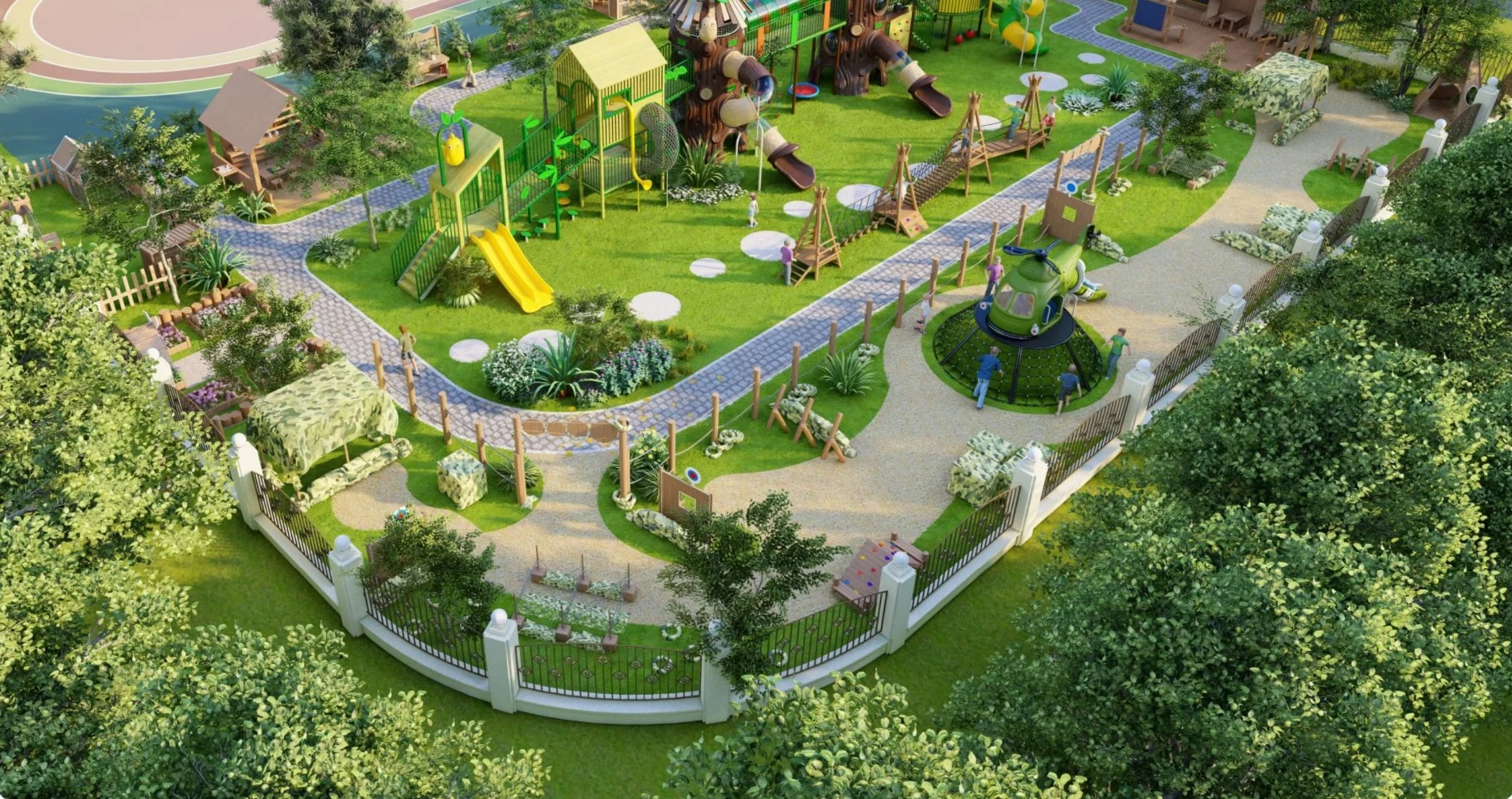
Compare the manufacturer’s response to two different briefs
An effective test is to send two genuinely different project scenarios. A compact residential courtyard should not receive the same recommendation as a destination park, and an indoor family venue should not receive the same information request as an outdoor school project. The difference in response reveals whether the manufacturer is using the site brief or simply sending the same catalog shortlist to every buyer.
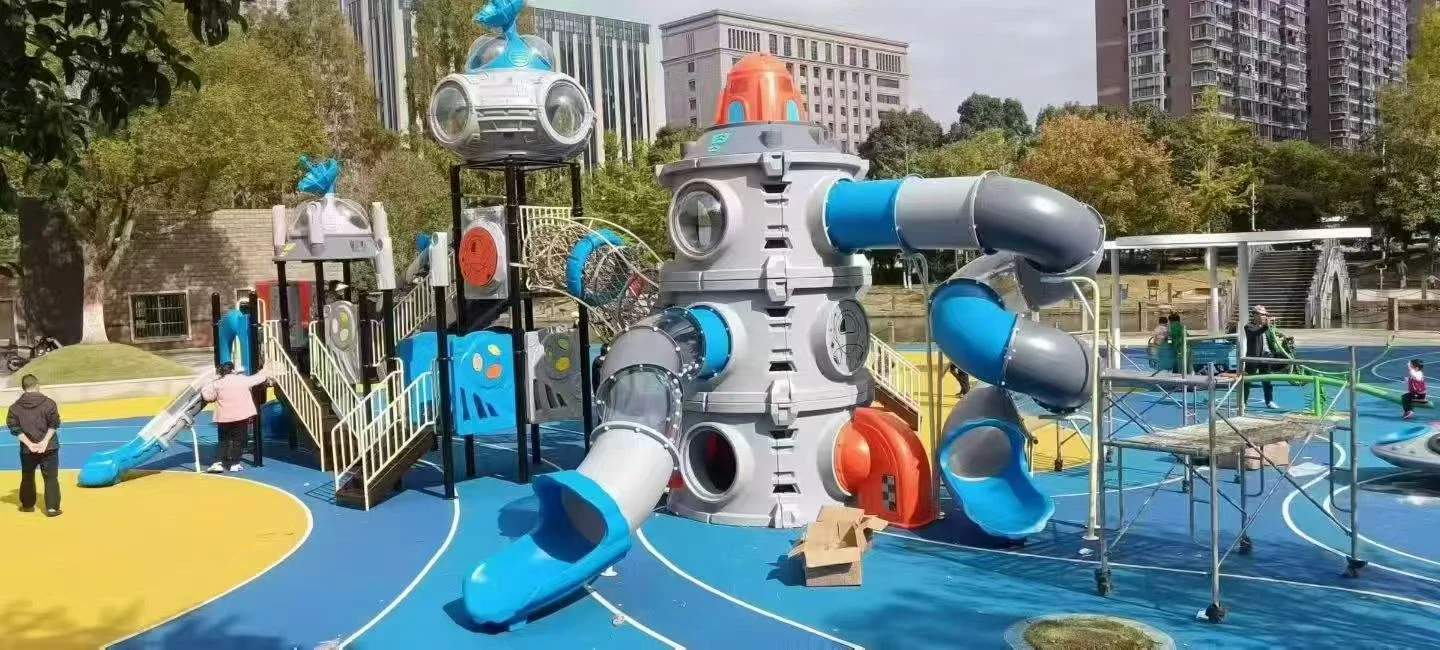
This approach also keeps sourcing discussions neutral and practical. The buyer does not need to assume that every China factory is cheap, large, fast or export-ready. Instead, the buyer can review the actual Xinjiu product range, project workflow and handover support and decide whether those capabilities match the purchasing task.
A practical sourcing decision can therefore be made without exaggerated claims. Review whether Xinjiu’s actual products match the site, whether drawings stay connected to the order, whether different categories are treated correctly, and whether the export handover is defined. Those project-level checks are more reliable than assumptions based only on geography, factory photographs or general claims about Chinese manufacturing.