Blog
Playground Equipment Factory: What B2B Buyers Should Verify


A playground equipment factory is valuable to a B2B buyer when it can keep the approved project stable from drawing release through packing and installation handover. Contractors, distributors, developers and school or park project teams do not benefit from “factory direct” as a slogan alone. The practical advantage appears when the factory can connect the site brief, final layout, equipment list, materials, production decisions, destination requirements and receiving documents without forcing the buyer to rebuild the project at every stage.
Xinjiu is a Wenzhou-based playground equipment manufacturer established in 1999. Its current site describes support for 2D planning, 3D visualization, non-standard development, OEM/ODM manufacturing, production coordination, export preparation, logistics support, installation manuals and online technical guidance. The product range includes custom outdoor systems, combination slides, timber structures, climbing equipment, spring riders, early-years pieces, indoor soft play and trampoline zones. For a buyer evaluating the factory, the important question is how these capabilities are applied to the exact order rather than how many capabilities can be listed on one page.
A playground equipment factory should receive one approved production scope
Reference photos are useful during the early conversation, but they are not manufacturing instructions. Before a custom or mixed playground order enters production, the factory should have a current layout and a current equipment list that describe the same project. A Bird’s Nest Custom Playground, Nature Theme Custom Playground or Architectural Spiral Slide System can change materially when a tower, bridge, slide or climbing route is moved. If the visual plan changes but the commercial scope does not, the factory can manufacture exactly what an outdated document tells it to make.
Custom systems need drawing control because the route is part of the product
The Bird’s Nest system uses sculptural towers, elevated bridges and enclosed slides. The Linear Custom Play Circuit organizes bridges, panels and slides along a longer route. The Architectural Spiral Slide System emphasizes tall enclosed slides and geometric framing. These are not simple stand-alone items that can be described only by a product name. The buyer should know which approved drawing version is being released and which major activities are included in that version.
Repeat products still need model-level identification
Spring riders and early-years pieces are more repeatable, but informal descriptions can still create confusion. Xinjiu shows molded Horse, Frog and Airplane Spring Riders as well as PE-panel Deer, Car and Dolphin riders. A distributor placing repeat orders should preserve the exact product identity, quantity and confirmed specification instead of using broad terms such as “animal rider” or “small rocker.” That makes later orders easier to compare and gives the packing stage a clearer reference.
Factory material discussions should stay attached to real products
Xinjiu’s current range uses PE play panels, molded plastic forms, timber structures, metal frameworks and rope networks. These materials serve different structural and visual purposes. The Timber Rope Bridge Playset combines a timber-led structure with rope crossings. The Timber Climbing and Net Course uses timber, walls, net tunnels and bridge movement. PE-panel riders rely on shaped layered panels, while large custom systems can combine metal frames, platforms, tubes and rope components. A buyer should therefore ask which material and finish is confirmed for each selected product rather than accept one blanket specification for the entire order.
Anti-UV and anti-corrosion options should be confirmed component by component
Xinjiu states that anti-UV, anti-corrosion and eco-conscious options can be considered according to the equipment type, project environment and confirmed specification. The procurement implication is precise: an option discussed for one outdoor structure should not automatically be assumed for every item in the shipment. The buyer should tie the selected finish to the product where it is required and retain that decision in the final order information.
A factory review is stronger when it follows the real handovers
Generic factory checklists can become very long without helping the project. A more useful approach is to review the moments where project information can be lost: design release, production review, pre-dispatch preparation and installation handover. Each checkpoint should use the actual equipment in the order.
At design release, compare the layout with the equipment list
A school project might combine a Modular Activity Training Course, a Timber Rope Bridge Playset and a combination slide. A destination project might use the Bird’s Nest custom system plus a separate Circular Net Climbing System and smaller spring riders. Before production, the buyer should confirm that every major item in the latest layout is present in the order and that products removed from the design are no longer carried forward simply because they appeared in an earlier quotation.
During production review, check whether changes stayed local to the correct product
If the buyer changes the color or finish of one product family, the factory should not treat the change as universal unless that was agreed. If a custom structure changes configuration, the factory should know whether supporting products were also affected. This is especially important in mixed orders where timber, PE panels, molded forms, metal and rope systems are being produced under one commercial project.
Before dispatch, make sure the packing reference matches the final order
A custom playground can arrive as many coordinated components that do not resemble the final installed structure while still packed. The receiving team therefore needs a shipment that can be traced back to the approved equipment list. For a repeat order of compact riders, clear product identification and quantity records may matter most. For a one-off custom system, drawings, manuals and package identification have to make the relationship between components easier to understand.
Factory-direct sourcing should work differently for contractors and distributors
A contractor delivering one known site needs continuity. The factory should understand how the chosen equipment fits the layout and what the local installation team will receive. A distributor may need repeatability across many customers. In that case, spring riders, early-years items and selected standard structures can follow a more repeatable route, while large combination systems and custom landmarks still need project-specific drawings. Treating both buyers with one identical process wastes time and increases the chance that important project information is missed.
A contractor should test whether the factory can follow a revision without losing scope
If the developer removes one tower from a Nature Theme Custom Playground or changes a slide route after site review, the contractor should be able to see the same change reflected in the drawing, order and production release. This is a stronger proof of project control than a general claim that the factory has custom capability.
A wholesaler should test whether repeat orders remain identifiable
For a wholesaler ordering Dolphin PE Panel Spring Riders, Horse Spring Riders or Modular Balance Path elements repeatedly, the risk is different. The product may not require a full new site layout, but the order still needs stable naming, quantities and the agreed specification. Good factory-direct communication should make a repeat order easier, not force the wholesaler to reconstruct the product from old images.
A playground equipment factory should separate destination requirements by product category
Public outdoor playground equipment, soft-contained play and trampoline systems do not share one universal technical framework. ASTM F1487 covers public-use playground equipment within its scope, while ASTM F1918 addresses soft contained play, and commercial trampoline systems have their own requirements. A factory can manufacture several categories, but a buyer should still state the destination market and the documentation or review needed for the actual products being ordered.
Xinjiu’s inquiry process already asks for destination and certification needs. That is the correct stage to identify whether the order contains public outdoor equipment, indoor soft play, trampoline products or a mixture, and to avoid transferring a statement from one product family to another where it may not apply.
What can a buyer verify about a playground equipment factory?
| Factory capability | Project evidence to review | Why it matters |
|---|---|---|
| Custom design support | 2D layouts and 3D views tied to the buyer’s site information | Shows whether the design process is project-specific |
| Factory-direct production | Latest equipment list matched to the released design | Reduces mismatch between approval and manufacture |
| Material options | Product-specific materials and finishes | Avoids broad claims being applied to the wrong item |
| OEM/ODM capability | Recorded theme, color, activity or configuration changes | Makes customization traceable |
| Export support | Packing, documentation and logistics responsibilities | Connects factory completion with the destination project |
| After-sales guidance | Installation manuals and remote technical support for the supplied configuration | Helps the receiving team interpret the shipment |
Five checkpoints before a playground factory releases an order
- Compare the latest site brief with the latest layout.
- Compare the latest layout with the final equipment list.
- Confirm material and finish choices on the specific products they describe.
- Check that packing and shipment preparation refer to the same production scope.
- Make sure installation information relates to the version that is actually being shipped.
Buyers can review Xinjiu’s factory and company background, compare the playground product families, and use the contractor manufacturing guide for a site-led view of the same process. A playground equipment factory should make the buyer’s approved decisions more stable as the project moves forward. That continuity—not the phrase “factory direct” by itself—is the strongest practical reason to buy from the manufacturer.
What factory evidence matters when the buyer cannot visit in person?
Many overseas buyers evaluate a factory remotely before a project is large enough to justify a visit. In that situation, the useful evidence is not a staged factory photograph by itself. The buyer can compare the 2D layout, 3D project view, final equipment list, product-detail images and the way revisions are carried forward. A manufacturer that can keep those records consistent gives the buyer something concrete to review even when the factory and project site are in different countries.
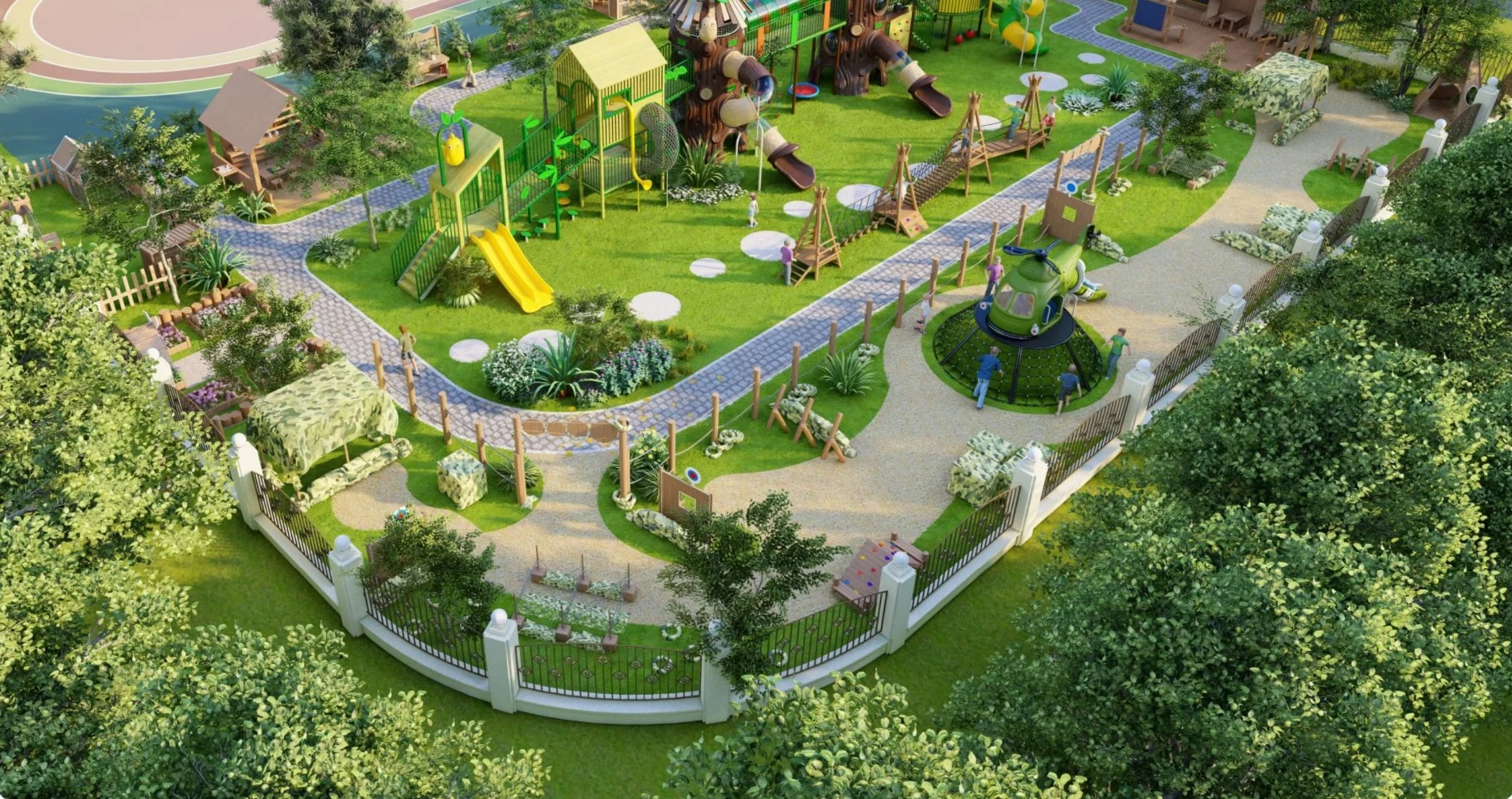
Use detail images to verify the product family, not to invent unseen specifications
Close-up images of play panels, timber structures, rope connections and finished projects can help a buyer understand which material family is being discussed. They should not be used to infer unlisted thicknesses, coatings or test data. The factory should confirm the specification for the selected order, while the buyer uses images to keep the discussion anchored to real products shown on the site.
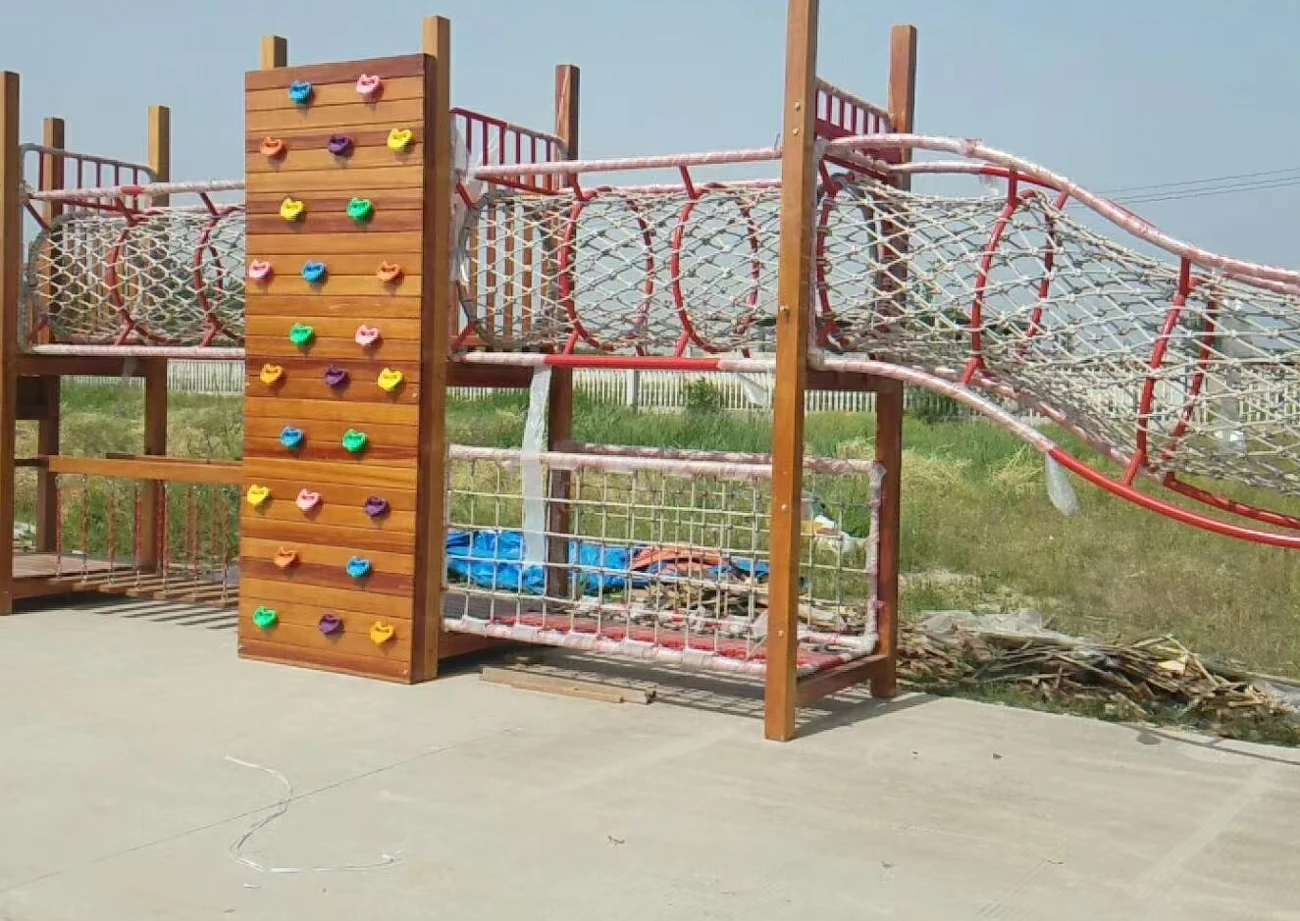
For remote B2B sourcing, this creates a practical rule: ask the factory to make the approved project easier to trace, not to overwhelm the buyer with unrelated factory claims. The more clearly a drawing, product family, revision and shipment can be connected, the easier it becomes to evaluate whether the manufacturer is controlling the order.