Blog
Playground Slide Manufacturer: Choosing Slide Systems for Real Sites

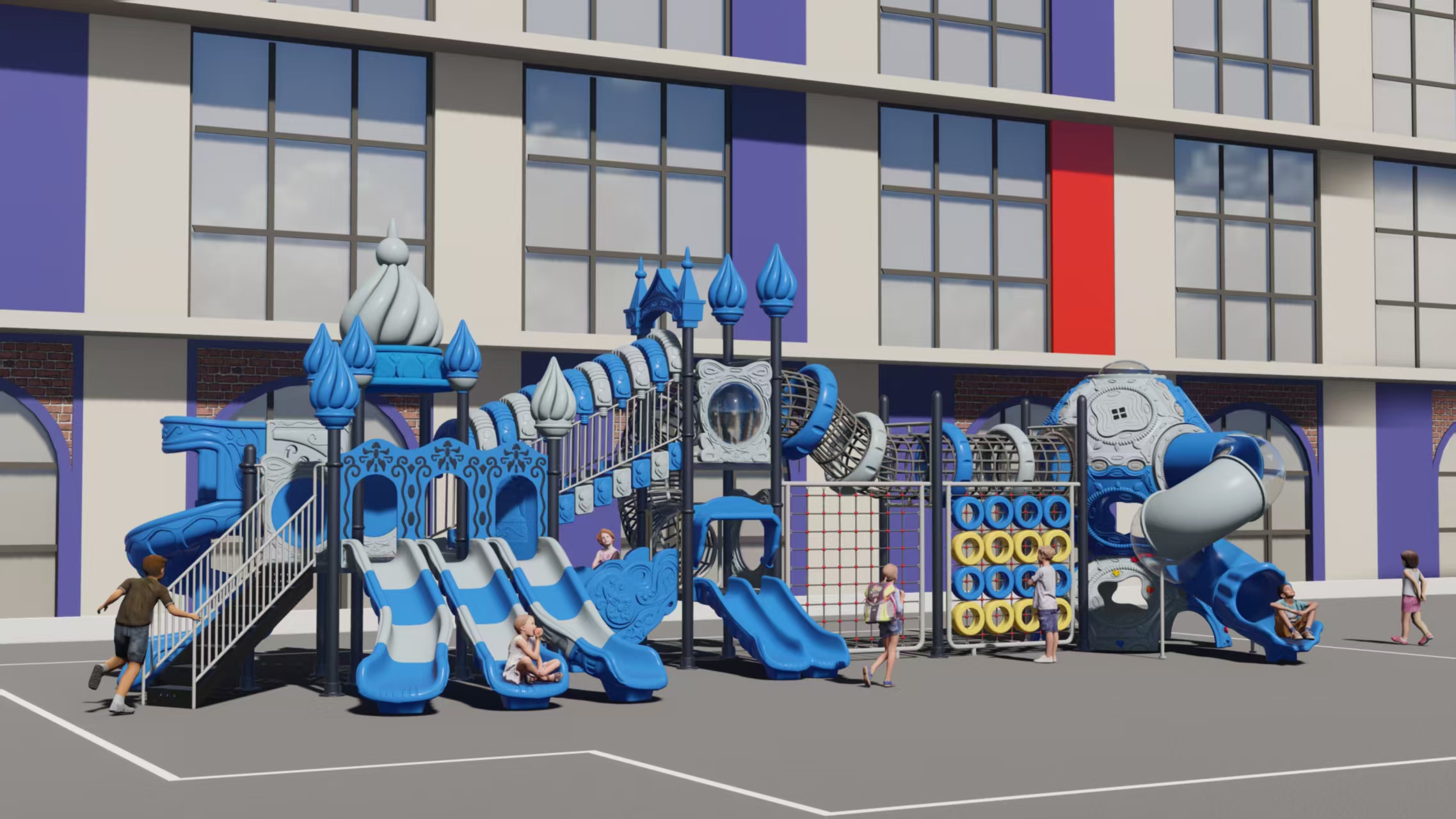
A playground slide should be selected as part of the whole play route, not as an isolated feature. For schools, residential communities, parks and destination projects, the slide position affects circulation, the tower layout, how children return to ground level and how the structure reads within the site. A playground slide manufacturer should therefore help the buyer compare slide systems against the actual footprint and activity plan before production begins.
Xinjiu’s current range includes combination playgrounds with open and enclosed slides, tall architectural spiral-slide concepts, timber slide sets and themed outdoor structures. The Robot Theme Combination Playground, Castle Theme Combination Slide, Nature Theme Combination Slide, Twin-Tower Timber Slide Set and Architectural Spiral Slide System show several different ways a slide can function inside a project. The company also supports 2D layouts, 3D visualization, custom development, OEM/ODM manufacturing and export coordination.
A playground slide manufacturer should start with the route into and out of the slide
The slide itself is only one part of the experience. Children reach it through stairs, climbing routes, towers or bridges and return to the wider playground at the exit. The buyer should therefore review the approach and return path as one system.
Open slides can work well where visibility and direct circulation matter
Open slide exits can make the route easy to understand and can suit combination systems where several activities are visible from the surrounding site. The Castle Theme Combination Slide includes both open and enclosed slide experiences, allowing the structure to provide more than one type of descent. The buyer should check how those exits sit around the tower and whether they leave enough usable space for circulation.
Enclosed slides can support longer or more sculptural routes
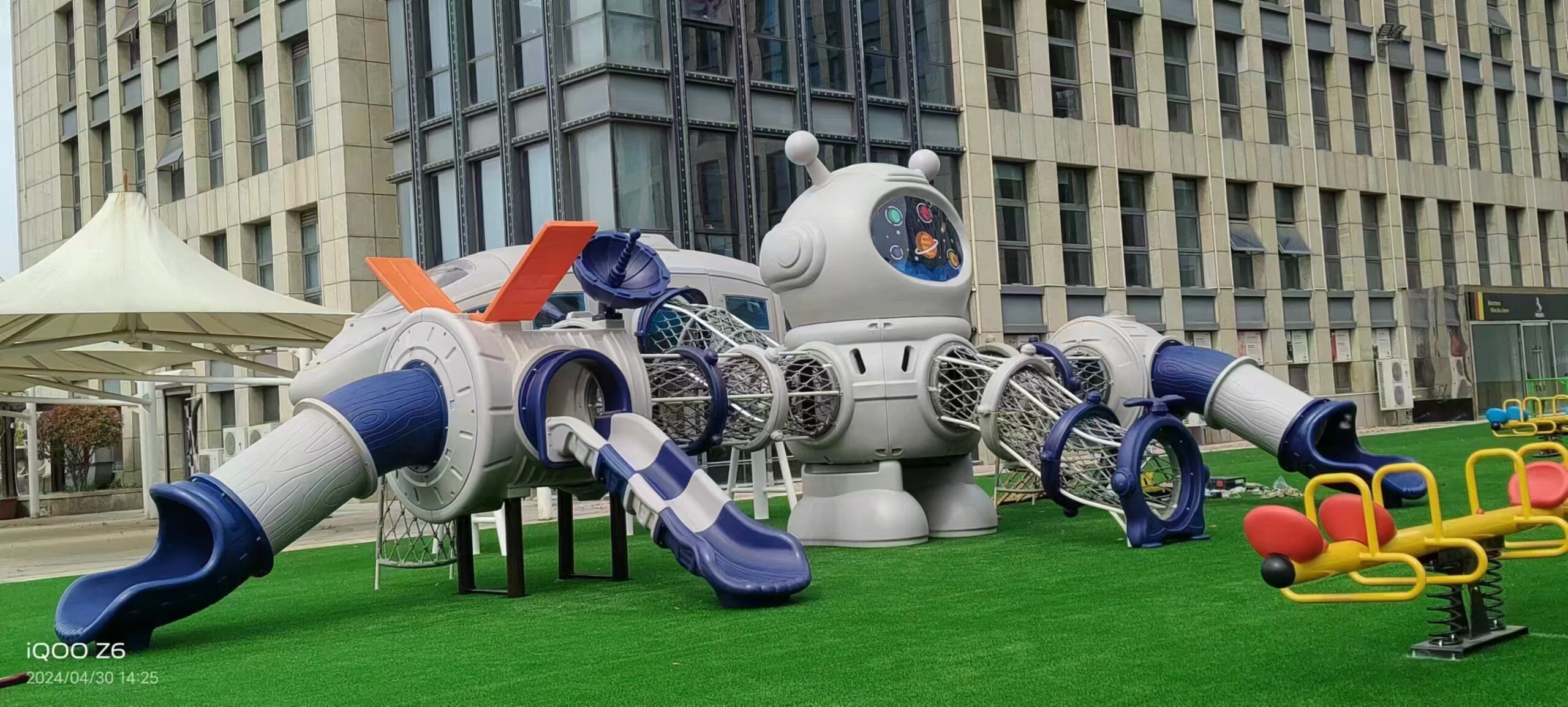
The Robot Theme Combination Playground and custom landmark concepts use enclosed slide forms as part of a stronger visual structure. The Architectural Spiral Slide System places tall enclosed slides at the center of the identity. These systems make sense where the site can support the scale and where a more dramatic vertical route is appropriate. They are less suitable for every compact playground simply because they look distinctive.
Slide height should be discussed with the tower and site, not by itself
A buyer may ask for a “taller slide,” but the manufacturer needs to understand what supports that height. The tower, access route, surrounding space and intended user group all influence whether the request makes sense.
A taller slide can change the visual and structural role of the whole playground
In an Architectural Spiral Slide System, height is part of the landmark effect. In a school courtyard, the same emphasis may be unnecessary or difficult to integrate. A manufacturer should help the buyer decide whether the project genuinely needs a vertical destination or would benefit more from a lower combination of activities.
Slide exits should not be treated as leftover space
The return area matters because it reconnects children to the ground-level circulation. If several slides exit into the same congested zone, the structure may technically fit while the playground still operates poorly. The 2D layout should show the slide direction and enough surrounding space for the project team to review.
Combination slides should be compared by the activities around the slide
The word “combination slide” can hide major differences in the rest of the structure. Xinjiu’s Robot, Castle and Nature themed systems all include slide routes, but they create different visual and activity experiences.
Robot Theme combination play uses the slide as part of a modern multi-route structure
Robot-inspired towers, net connections and varied slide exits create a stronger futuristic identity. This can suit a residential or public playground where the client wants a visible centerpiece. The buyer should compare the climbing and bridge activity with the slide routes instead of evaluating the slide count alone.
Castle Theme combination play uses towers and facade character to frame the slide experience
Connected castle towers, climbing panels and open and enclosed slides create a more architectural fantasy route. The buyer should review whether the castle identity fits the wider landscape and whether the multiple slide exits can be accommodated around the site.
Nature Theme combination play uses landscape-friendly forms around the slide route
Leaf-style roofs and coordinated green slides create a softer relationship with residential landscaping and parks. The play function remains multi-activity, but the visual direction is different. A manufacturer should help the buyer compare that character with brighter or more sculptural alternatives.
Timber slide systems offer a different project character
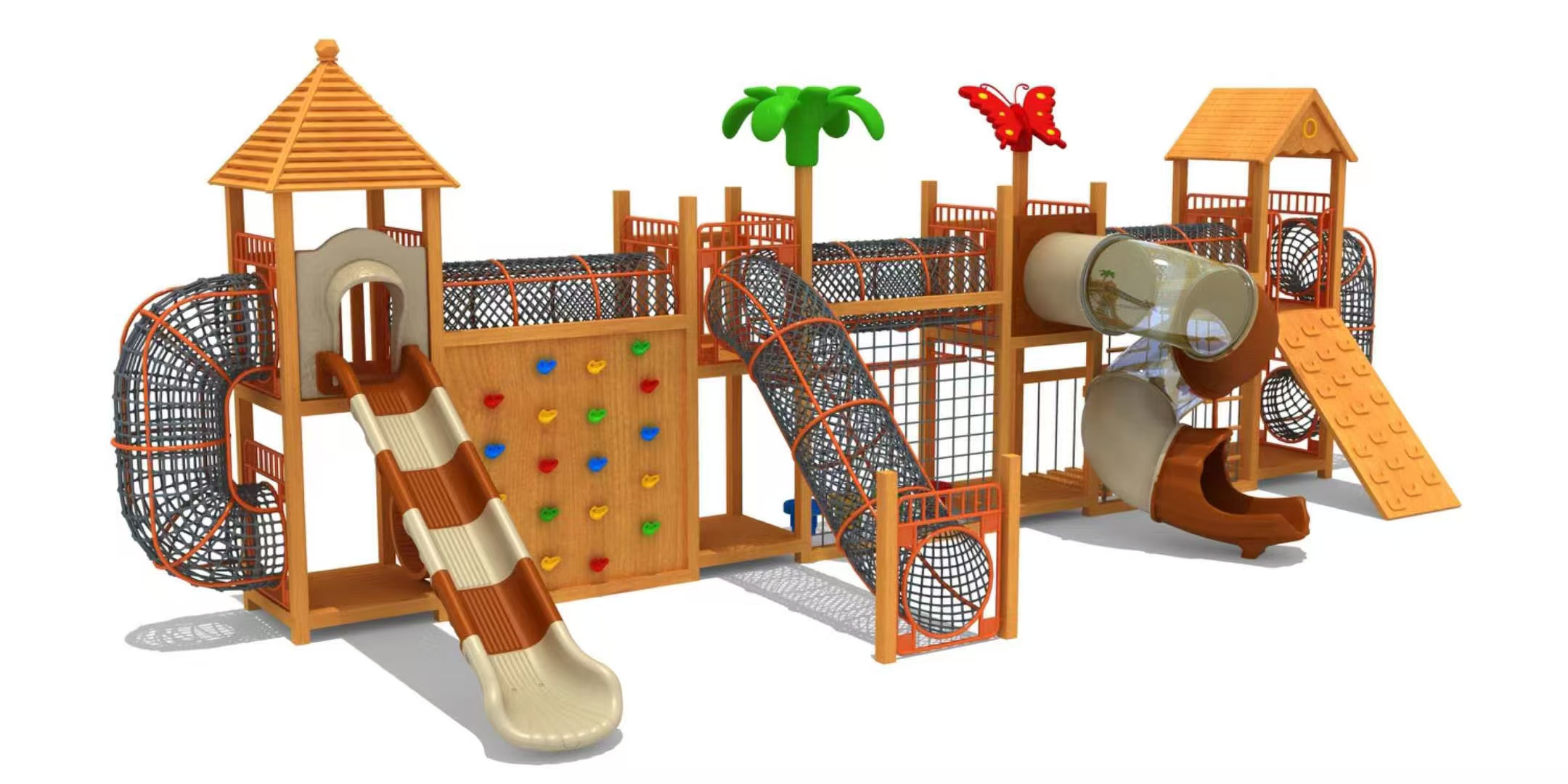
The Twin-Tower Timber Slide Set combines connected timber towers with slides and activity panels. It can suit a school, park or family destination that wants a warmer landscape relationship rather than a highly graphic themed structure.
Choose timber when the slide should belong to a climbing-led playset
In a timber system, the slide is often one stage in a route that also includes rope crossings, bridges and climbing. The buyer should evaluate the entire route rather than compare the slide to a molded or metal-framed landmark on appearance alone.
A playground slide manufacturer should separate standard adaptation from true custom work
A buyer may want to change colors on a known slide system, adjust a product combination or develop a completely new structure. These requests should not be treated as the same type of customization.
Color and theme changes can keep the slide route familiar
If a Nature Theme or Castle Theme system keeps the same tower and slide arrangement but uses a different color palette or visual treatment, the project may remain close to the known structure. The manufacturer should document the visual changes so the order is repeatable.
Moving a slide or changing tower geometry is a structural project decision
If the buyer moves an enclosed slide to another tower, changes the height of the route or creates a different connection between towers, the 2D layout and equipment list should be updated. The change can affect footprint, circulation and production scope. A “custom slide” request should therefore be translated into a specific drawing rather than left as a verbal instruction.
Slide selection should account for the project setting
| Project setting | Useful slide direction | Main question |
|---|---|---|
| School or community | Combination structure with clear open and/or enclosed slide routes | Does the structure deliver enough activity without crowding circulation? |
| Residential landscape | Nature or Robot themed combination play | Does the visual identity fit the landscape and user mix? |
| Park or destination project | Custom landmark or Architectural Spiral Slide System | Does the site support the scale and vertical emphasis? |
| Landscape-led timber project | Twin-Tower Timber Slide Set | Should sliding be part of a warmer climbing-and-bridge route? |
Destination requirements should be tied to the actual slide system
Public playground requirements vary by market, and the buyer should state the destination before the equipment specification is frozen. The manufacturer should avoid broad claims that every slide configuration automatically meets every market requirement. Instead, the buyer should identify which documentation or review is needed for the selected public playground system.
Xinjiu’s current inquiry process asks for destination and certification needs, and the company describes export-document coordination, logistics support and installation guidance. These handovers are especially important for larger slide structures because the receiving team needs the final project information rather than an early concept image.
Before approving a playground slide order
- Review how users reach the slide, not only how they descend.
- Check the slide exit against ground-level circulation.
- Compare open, enclosed and spiral slide routes by site role rather than appearance alone.
- Evaluate the surrounding climbing, bridge and tower activities in a combination system.
- Use timber slide systems when the project benefits from a warmer climbing-led character.
- Update drawings and the equipment list whenever slide position, height or tower geometry changes.
Buyers can compare the Robot, Castle, Nature and timber playground systems, review the outdoor play equipment selection guide, and use the custom manufacturer guide when a slide request becomes a non-standard structure. A playground slide manufacturer adds value when the slide, the approach route, the tower and the exit all make sense as one project—not when a dramatic slide is added without enough context.
How should a buyer review a slide system from the ground level?
Standards and technical drawings matter, but the project team can also make a practical spatial review by tracing the ground-level experience. Identify where children approach the tower, where each slide returns them, where another child may cross that path and how the route connects to the rest of the playground. A slide that looks balanced in elevation can still create a poor ground plan if several exits compete for the same area.
Use timber slides when the descent belongs inside a broader climbing story
The Twin-Tower Timber Slide Set connects sliding to timber towers, crossings and activity panels. The buyer should not compare its slide count directly with an Architectural Spiral Slide System because the two products serve different project stories. One emphasizes a landscape-led play journey; the other can become a strong vertical landmark.
Ask what the project loses if the requested slide is removed
This is a useful way to test whether a slide request is essential or decorative. If removing the tall enclosed slide removes the main landmark and a major play route, the feature is central. If removing a second similar open slide changes very little, the project may gain more from a different activity. A manufacturer can use that discussion to keep the structure purposeful rather than adding slide count for its own sake.
Slide selection is therefore a balance between route, scale, site character and return space. The strongest proposal explains all four, not just the appearance of the slide itself.
For a final slide review, compare the latest site plan with the actual slide directions one more time. Rotating a combination structure or moving a tower can change the relationship between an exit and a path even when the product itself has not changed. The manufacturer and buyer should therefore approve the slide system in its final site orientation, not only as an isolated product drawing.
A final approval should also record the selected slide system by name and site orientation so later revisions do not rely on memory.