Blog
School Playground Equipment Supplier: Building a Balanced Activity Mix

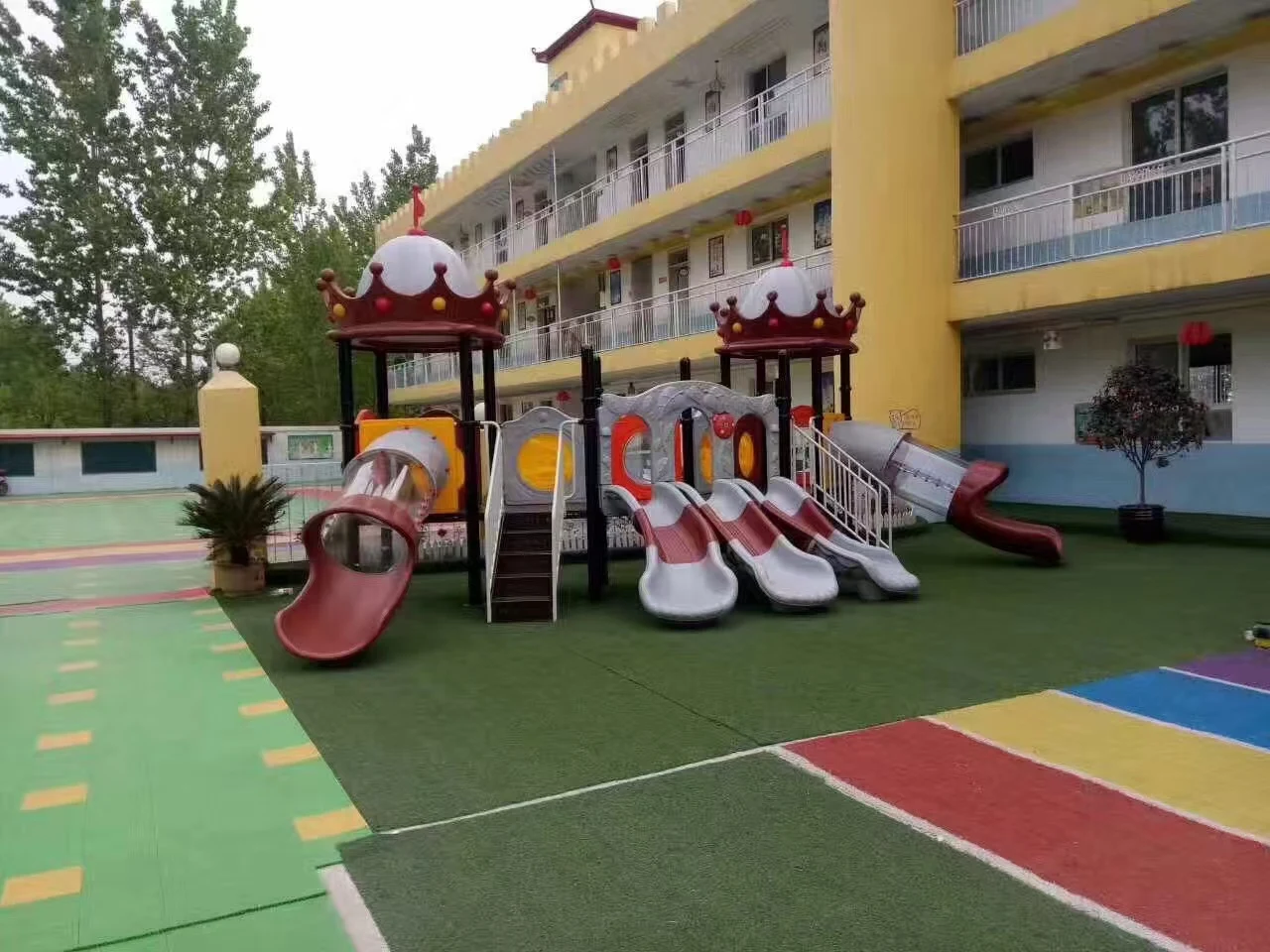
A school playground equipment supplier should help the buyer build a balanced activity mix rather than simply fill the available court with products. Schools need equipment that fits the intended age groups, supervision pattern, site dimensions and the kind of movement the project wants to encourage. A useful supplier should therefore distinguish between structured activity courses, timber climbing, combination play, early-years equipment and supporting spring riders before the order is assembled.
Xinjiu’s current range includes the Modular Activity Training Course, Full Circuit Obstacle Course, Outdoor Fitness Skills Course, Timber Rope Bridge Playset, Timber Climbing and Net Course, combination playgrounds, spring riders and early-years balance equipment. The company also supports 2D layouts, 3D visualization, OEM/ODM development, manufacturing, export coordination and installation guidance. That mix gives schools several routes, but the site should determine which route is used.
A school playground equipment supplier should begin with the intended movement experience
Schools can use playgrounds for free play, imaginative play, climbing, balance, coordination and supervised movement. If the buyer does not define the main experience, the order can become a list of attractive products that repeat the same activity.
Activity courses suit schools that want a clear movement sequence
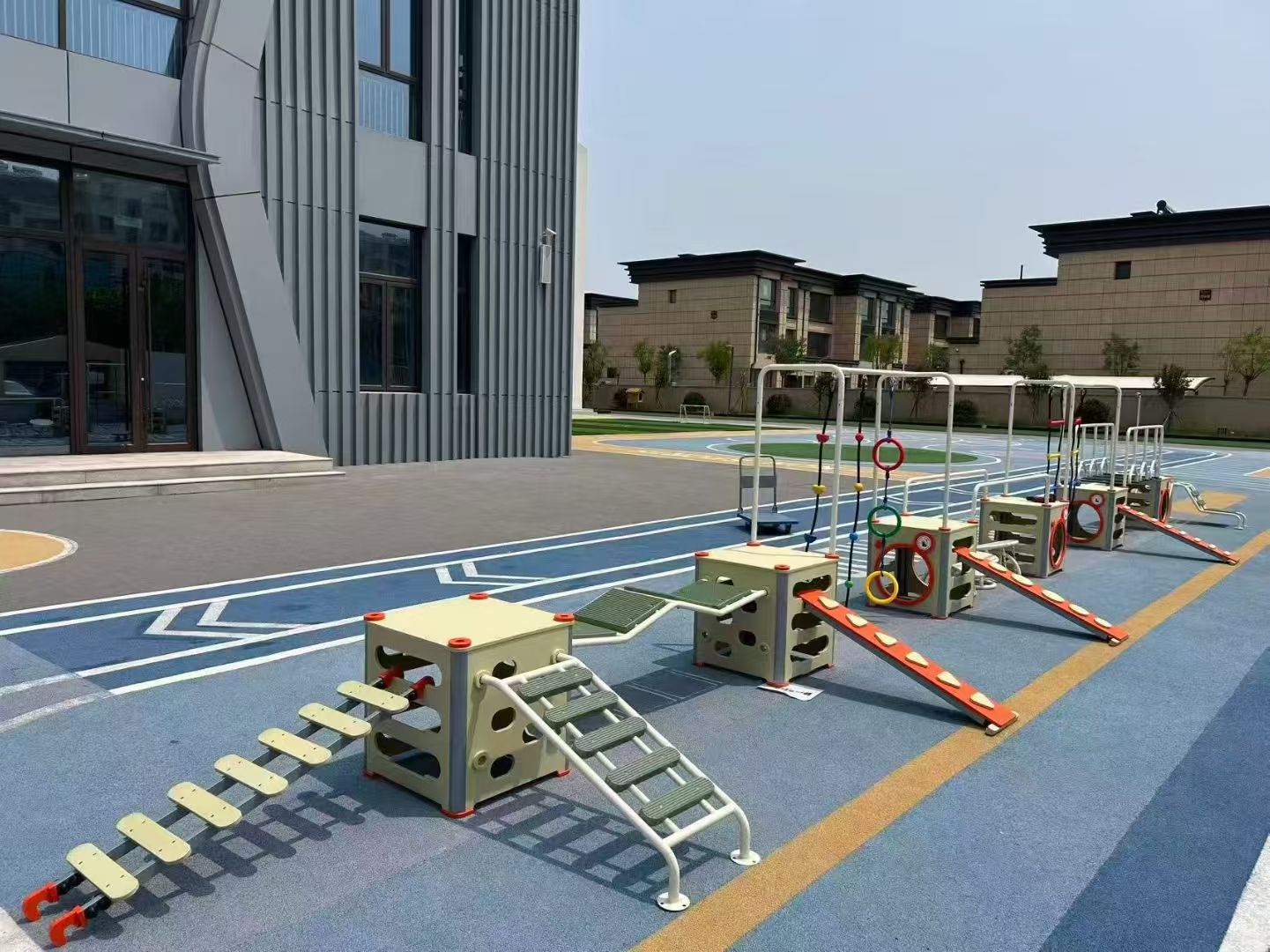
The Modular Activity Training Course combines balance, stepping and crawl challenges in a practical layout. The Full Circuit Obstacle Course extends the sequence with linked stations and overhead movement. These systems can suit schools that want a route children can move through progressively rather than one central themed structure.
Timber playsets add climbing and imaginative character
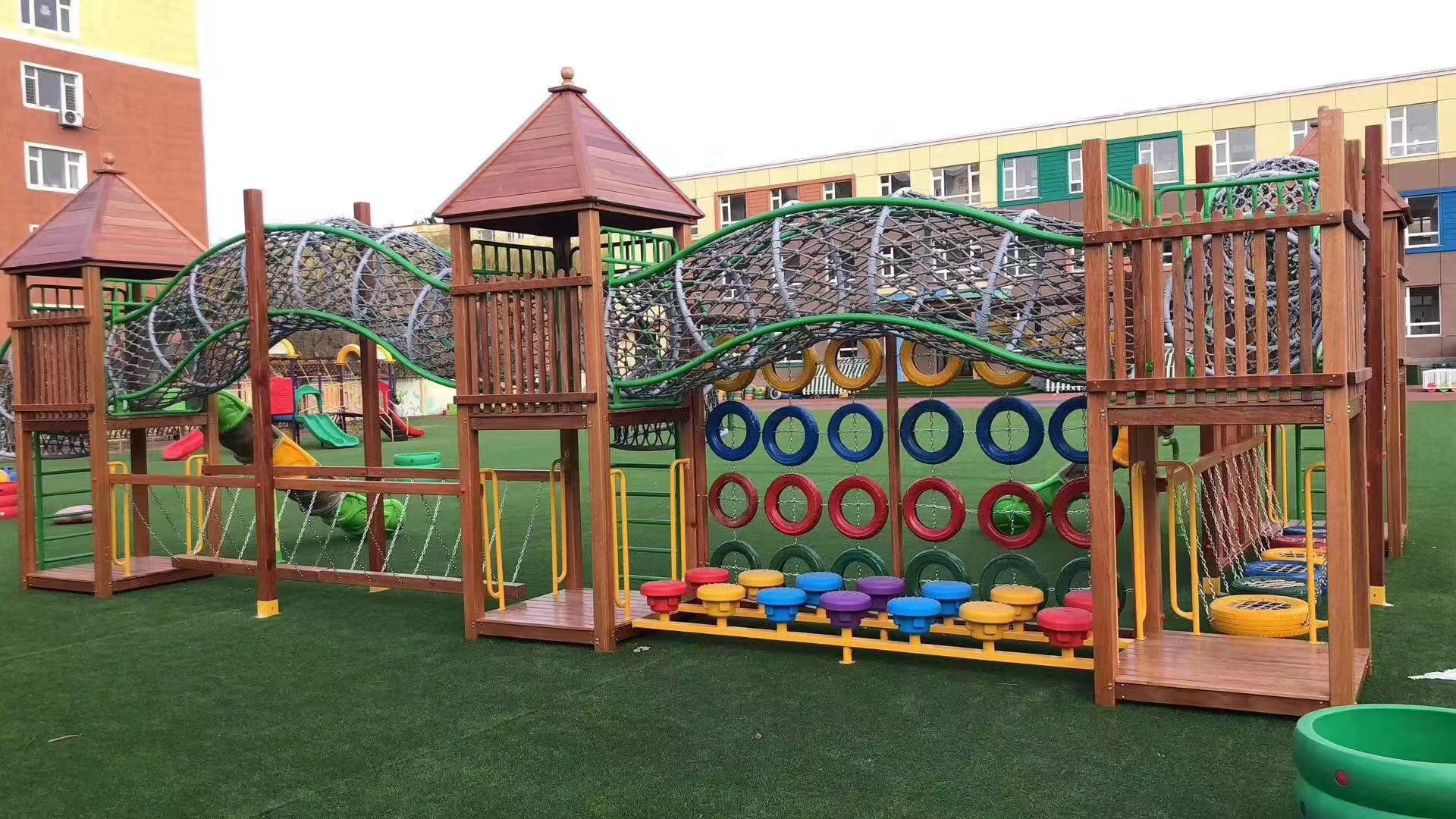
The Timber Rope Bridge Playset and Timber Climbing and Net Course use timber, rope crossings, climbing walls and bridge movement. They can create a warmer visual character than a highly graphic combination playground and can work well beside landscaped school grounds.
Combination playgrounds work when the school needs several activities inside one centerpiece
The Robot Theme Combination Playground, Castle Theme Combination Slide and Nature Theme Combination Slide combine towers, climbing routes and multiple slide exits. They can anchor a school play area when the footprint needs one central multi-activity structure rather than several separate pieces.
School playground planning should separate age and activity levels
A school can serve children at different developmental stages. Early-years balance pieces and spring riders should not automatically share the same circulation as higher-challenge climbing or obstacle routes.
Early-years equipment should remain easy to approach and supervise
The Ride-On Car Fleet, Caterpillar Balance Walker Set, Modular Balance Path and compact spring riders can support lower-level movement. These products can form a separate zone where younger children do not need to pass through a larger climbing structure to reach their activities.
Higher-challenge climbing should be visible as a separate route
The Circular Net Climbing System, Spider Web Climbing Course and Timber Climbing and Net Course create a different level of challenge. A school should decide whether these products belong in the same playground or in a separate activity zone, depending on the intended users and available supervision.
A school equipment supplier should help the buyer avoid redundant activity
More products do not always mean more play value. If a combination structure already contains several climbing routes and slides, adding another large climbing frame beside it may repeat the same experience. The supplier should help the school identify what the playground is missing.
Use supporting equipment to add a new movement type
If the main structure already provides climbing and sliding, a Modular Balance Path or spring rider can add balance or rocking. If the school already has several lower-level activities, a timber climbing route may add more challenge. This approach creates variety instead of simply increasing equipment count.
Leave enough open space for circulation and supervision
A school court can feel empty on a plan, but open space may be valuable for movement between zones and for adult sight lines. Products should not be added only to fill gaps. Public playground guidance emphasizes age separation, conflicting activities, sight lines and supervision, which supports treating open circulation as part of the design.
School playground equipment should be matched to the site geometry
School grounds can range from compact courtyards to long perimeter strips and larger open fields. The equipment family should follow that geometry.
A compact courtyard may benefit from one combination structure
A Castle, Robot or Nature combination system can concentrate several activities into one footprint. Smaller early-years products can sit in a separate supporting area if space allows. The supplier should check slide exits and circulation around the main structure before additional products are added.
A long school edge may work better with a linear activity route
The Modular Activity Training Course, Full Circuit Obstacle Course or Linear Custom Play Circuit can use a longer narrow area more effectively than a broad central tower. The school should not force a square playground solution into a strip-shaped site.
A landscaped school can use timber to soften the visual character
The Timber Rope Bridge Playset or Twin-Tower Timber Slide Set can fit school grounds where the equipment should feel integrated with planting and outdoor learning spaces. The buyer should compare that character with brighter PE-panel or themed combination systems.
School playground buyers should keep public-play requirements in the project conversation
Destination and local project requirements should be identified before final production. ASTM F1487 covers public-use playground equipment within its scope, and the CPSC Public Playground Safety Handbook provides guidance on public playground planning and safety. The supplier should not make broad promises for every market; the school or contractor should state what documentation the destination project requires.
Xinjiu’s inquiry process asks for destination and certification needs, and its project pages describe export-document coordination, installation manuals and online technical guidance. These support items are particularly relevant for overseas school projects where the receiving contractor may be separate from the buyer.
School projects often need clearer approval records than residential play
Schools may have administrators, contractors, designers and procurement staff reviewing the same project. A supplier should help keep one current version of the layout and equipment list so internal approvals do not create several conflicting orders.
Changes to age allocation should trigger another product review
If a zone originally intended for older children becomes an early-years area, the school should not simply keep the same climbing equipment and change the label. The supplier should review the activity level and suggest a more appropriate mix if needed.
Changes to the school site should trigger a layout review
A new path, sports boundary or building access route can reduce the usable playground area. If the site changes, slide exits, obstacle routes and supporting equipment should be rechecked before manufacturing.
How to build a school playground equipment mix
| School objective | Useful Xinjiu products | What to check |
|---|---|---|
| Balance and coordination | Modular Activity Training, Balance Path, Full Circuit Obstacle Course | Route length, age group and supervision |
| Climbing and crossing | Timber Climbing and Net Course, Circular Net, Spider Web | Challenge level and separation from younger zones |
| Multi-activity centerpiece | Robot, Castle or Nature combination systems | Footprint, slide exits and supporting activities |
| Early-years play | Ride-On Cars, Caterpillar Balance Walker, Spring Riders | Approachability, lower-level movement and zone clarity |
| Landscape-led play | Timber Rope Bridge Playset, Twin-Tower Timber Slide Set | Site character and relationship to outdoor learning spaces |
Before a school playground order is approved
- Define the age groups and main movement goals.
- Choose whether the playground needs a sequence, a centerpiece or several separate zones.
- Keep early-years products separate from higher-challenge routes where appropriate.
- Check slide exits and obstacle routes against school circulation.
- Use open space intentionally rather than filling every gap.
- State destination and project-documentation needs before production.
School buyers can compare the Xinjiu school-suitable product families, review the kids playground selection guide, and use the outdoor play equipment guide to compare combination, climbing, timber and early-years routes. A school playground equipment supplier adds value when the final playground gives children different ways to move and explore while remaining understandable for the adults responsible for the site.
How should a school phase a playground project when the whole site cannot be completed at once?
A school may need to renovate in stages because of budget, construction timing or the need to keep part of the outdoor area open. The supplier can help by identifying which equipment forms the first complete activity zone and which products can be added later without undermining the original plan. A Modular Activity Training Course or compact combination structure can establish a usable first phase, while timber climbing or early-years equipment can be added when the next area becomes available.
Use timber routes where the school wants outdoor play to connect with landscape or learning areas
A Timber Rope Bridge Playset can sit more naturally beside planted areas or outdoor-learning spaces than a strongly themed graphic structure. The school should still review climbing, crossing and slide activity carefully, but the visual character can support a different campus environment.
Write the next phase into the master plan before buying the first phase
If the school expects a future early-years zone or larger climbing area, reserve the circulation and footprint now. Otherwise, the first installation may occupy the only practical location for the second. The supplier does not need to manufacture every phase immediately, but the 2D plan should protect the project logic so later equipment can be added deliberately.
This phased approach also helps internal approval: administrators can understand what the school receives now, what remains planned and how the final playground will avoid repeating the same activity across each purchasing cycle.
Schools should also preserve a simple record of why each zone was selected. If the activity course was chosen for balance and coordination, later purchasing should not replace it with another slide simply because a new catalog image looks more exciting. Recording the intended role of each zone gives future administrators and contractors a clearer basis for maintenance, phased expansion or replacement decisions.
That record is also useful when the school changes staff or contractors, because the design intent remains attached to the equipment instead of disappearing with the original purchasing team.