Blog
Playground Equipment Manufacturer: Contractor Project Guide

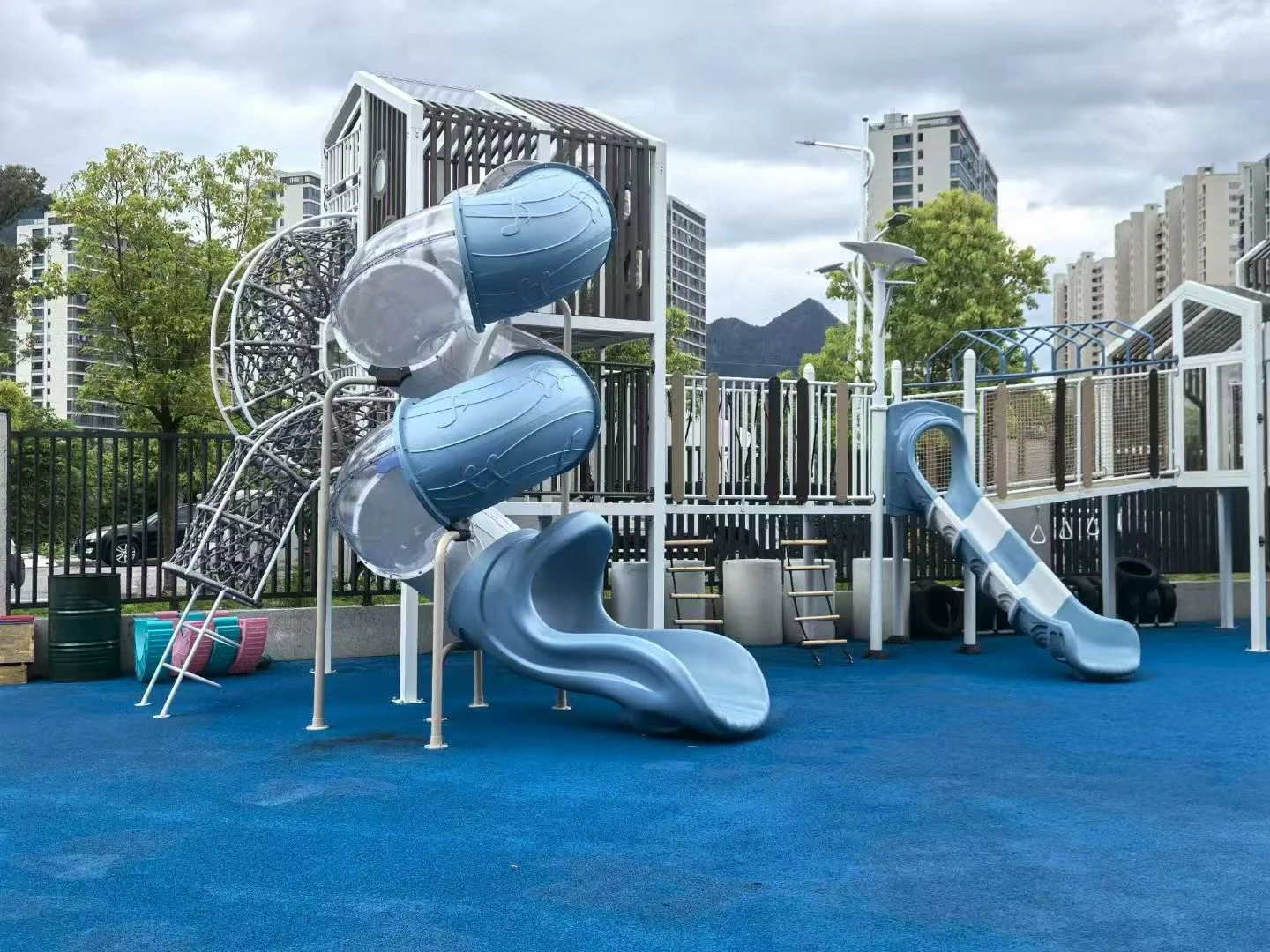
If you are sourcing playground equipment for a school, residential development, public park, family entertainment venue or destination project, the first decision is not the color of the slide. It is whether the playground equipment manufacturer can turn your site information into a coordinated, buildable equipment package. Before you approve a supplier, confirm the available footprint, intended age groups, destination market, preferred play style, installation responsibility and the documents needed at handover. At Xinjiu, buyers can begin with the indoor and outdoor playground equipment range or with a custom playground project when the site requires a non-standard layout.
For contractors and distributors, this matters because a playground order is rarely one isolated product. A project can combine towers, slides, climbing routes, rope elements, spring riders, early-years pieces and indoor activity zones. A useful manufacturer should help the buyer understand how those pieces fit the site and how the project moves from drawing to production and delivery.
What a playground equipment manufacturer should clarify before production
A product catalog is useful for exploring styles, but a commercial project normally needs more information before manufacturing starts. Xinjiu’s current project workflow begins with the site, intended users, project type, preferred theme and practical requirements. The company provides 2D layout support and 3D visualization so a contractor, designer or owner can review the proposed direction before the equipment package is confirmed.
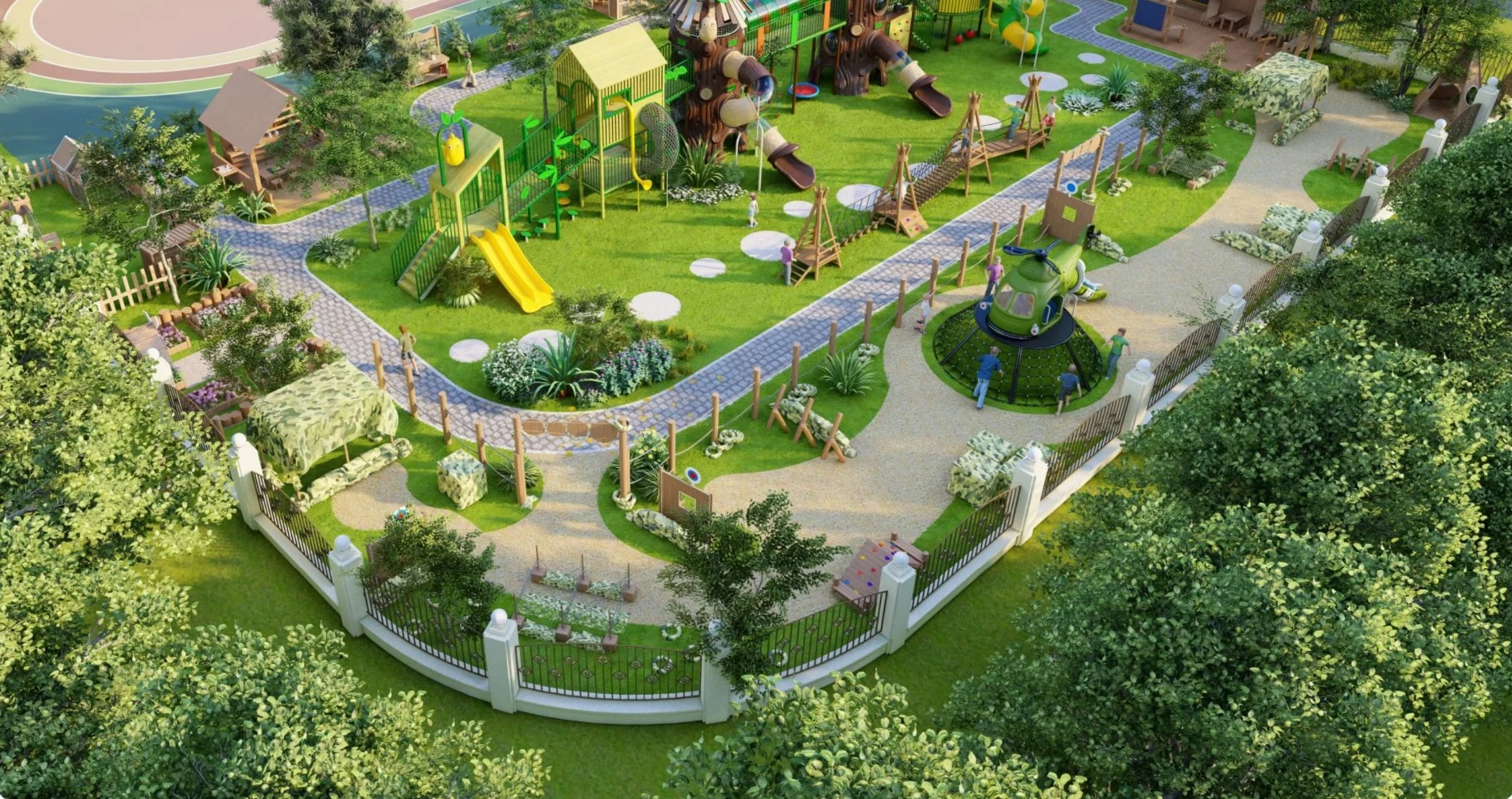
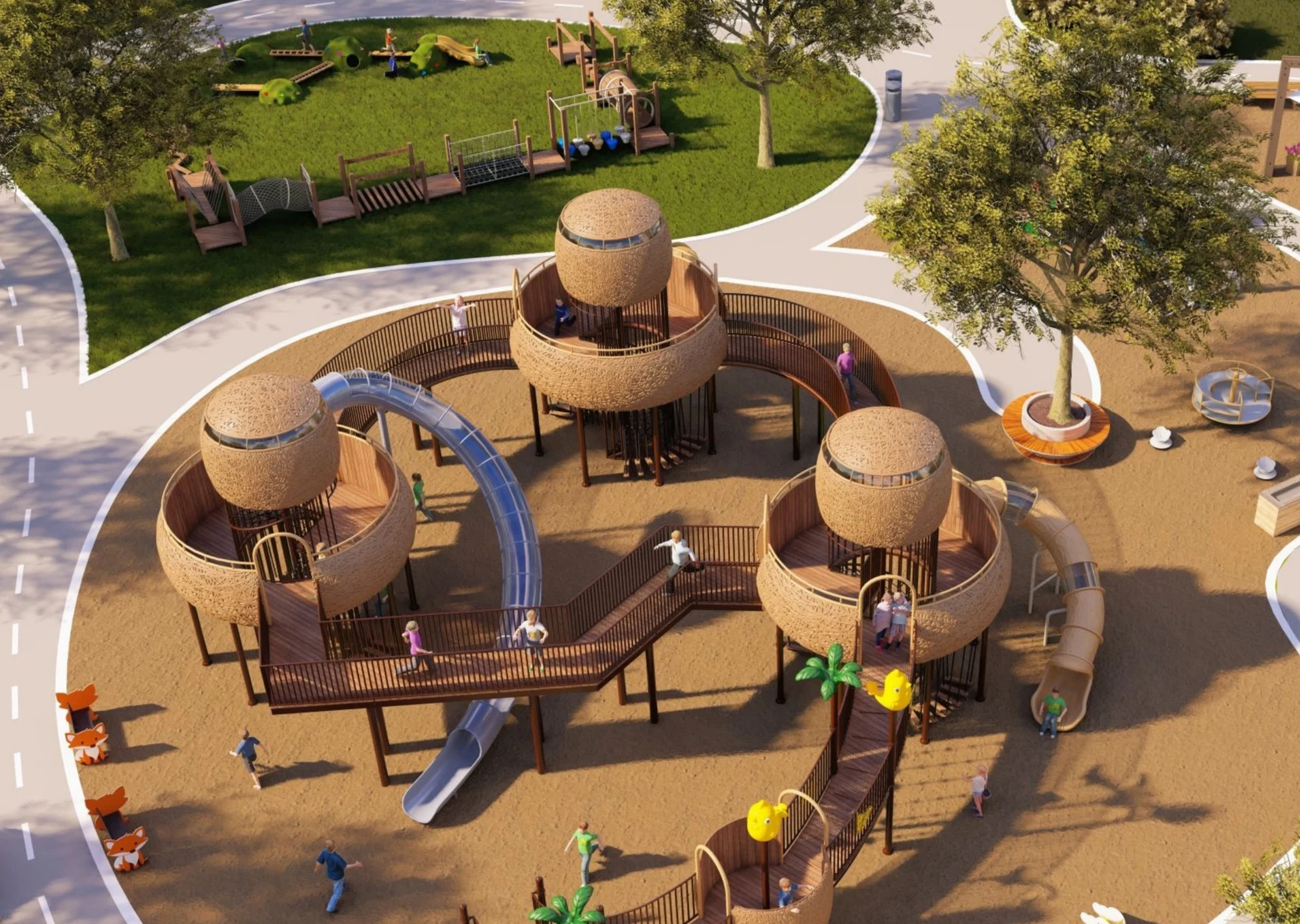
This is especially important when the project contains custom structures. The Bird’s Nest Custom Playground, for example, uses sculptural nest-shaped towers, elevated bridges and enclosed slides. The Nature Theme Custom Playground uses leaf-roof towers, themed climbing features and linked walkways. These are not products that should simply be dropped onto any empty rectangle. The scale, circulation and relationship between activities need to be reviewed against the actual site.
Site dimensions should shape the equipment package
A contractor renovating a compact residential courtyard may need a very different equipment mix from a park developer creating a destination feature. In a constrained courtyard, a Twin-Tower Timber Slide Set or a compact combination structure may keep the route understandable while preserving circulation around the equipment. In a larger landscaped park, a custom system such as the Bird’s Nest structure or an architectural spiral-slide system may be used as a visual landmark with supporting climbing and smaller play pieces around it.
The same principle applies indoors. Xinjiu’s Macaron Soft Play Playground combines pastel towers, a tube crawl and a ball pool, while the Open-Plan Indoor Play Center brings multi-level towers, ball pools and activity tables into a larger venue concept. For an indoor family entertainment center, floor area alone is not enough; the clear ceiling height, columns, entrances, intended age groups and circulation routes should also be included in the initial brief.
Age groups and activity types change the right product mix
Early-years equipment and higher-challenge climbing systems solve different problems. Xinjiu’s current range includes ride-on cars, modular balance paths, PE-panel spring riders, molded plastic spring riders, timber climbing courses and three-dimensional net systems. A buyer should not treat all of these as interchangeable simply because they appear under the broad label of children’s play equipment.
For example, the Dolphin PE Panel Spring Rider is a compact spring-mounted activity piece suited to smaller play zones, while a Circular Net Climbing System creates a three-dimensional rope-climbing challenge for an open adventure area. The selection should follow the intended users, the surrounding activities and the project environment rather than a generic equipment count.
A playground equipment manufacturer is also part of the project handover
For B2B buyers, the real test begins when the project passes from concept to production. Xinjiu describes its process as one coordinated route covering planning, custom development, manufacturing, export preparation and project support. The practical value is continuity: the equipment list, visual direction, material choices and delivery information can be checked against the same approved project scope.
Material families should match the product and the site
The website shows several material families rather than one universal construction method. PE play panels are used for shaped characters and activity details. Molded plastic elements create smooth, recognizable forms for products such as horse, frog and airplane spring riders. Timber is used in structures such as the Timber Rope Bridge Playset and Timber Climbing and Net Course. Larger play structures also use metal frameworks and rope networks to connect platforms, crossings and climbing activities.
Xinjiu also states that anti-UV, anti-corrosion and eco-conscious options can be considered according to the equipment type, project environment and confirmed specification. That wording is important for procurement: buyers should confirm the exact material and finish for the selected model instead of assuming that every option applies to every product.
For a distributor supplying several project types, this creates a practical stocking distinction. Compact spring riders and early-years pieces can support smaller repeat orders, while timber systems, combination slides and custom landmarks are more project-specific and usually need the final layout and configuration settled before production.
Destination requirements should be discussed before drawings are frozen
Different markets can apply different playground standards and documentation expectations. In the United States, the CPSC Public Playground Safety Handbook is widely used as guidance for public playground planning, installation and maintenance, while ASTM F1487 covers public-use playground equipment within its defined scope. Soft contained play is outside the scope of ASTM F1487, so indoor soft-play buyers should not assume that one public-playground standard automatically covers every indoor system.
In European markets, the EN 1176 series separates general requirements from product-specific areas such as slides, rocking equipment, fully enclosed play equipment and spatial networks. Commercial trampoline courts have their own considerations; ASTM F2970 addresses the design, manufacture, installation, operation, maintenance and inspection of institutional trampoline courts.
This does not mean that every Xinjiu product should be described as certified to every standard. It means the buyer should state the destination market and required documentation before the final specification is approved. Xinjiu’s project brief already asks for destination and certification needs, which is the correct point in the process to identify those requirements.
How to evaluate factory-direct playground manufacturing beyond price
Factory-direct sourcing can reduce unnecessary layers between the buyer and the production team, but “factory direct” only becomes useful when communication is structured. A contractor needs drawings that match the agreed concept, an equipment list that matches the order, material and color decisions that can be traced to the approved scope, and a clear handover for shipping and installation.
Xinjiu states that it has operated since 1999 and is based in Wenzhou, China. Its current service pages describe an internal design capability for 2D planning, 3D visualization and non-standard product development, together with OEM/ODM support, production coordination, export documentation, logistics coordination, installation manuals and online technical guidance. Those are more useful evaluation points than broad claims such as “high quality” without a process behind them.

A contractor should compare the approved scope, not just catalog pictures
Consider a contractor preparing a school playground. The project may combine a Modular Activity Training Course for balance and coordination with a timber playset or a combination slide. If two quotations contain different quantities, materials, layouts or supporting components, comparing only the final price will not show which proposal actually matches the site.
A stronger comparison starts with the same inputs: usable site dimensions, age groups, preferred activities, destination, material direction, quantity and target timeline. Then the contractor can compare drawings, equipment lists and included support on the same basis. Xinjiu’s current pages specifically recommend agreeing the final drawings, equipment list, model dimensions, materials, finishes, packing, delivery schedule and installation responsibilities before the project moves into the next phase.
Distributors need repeatable communication as well as product variety
A distributor often has a different problem. Instead of one large site, the distributor may need a mix of products for different customers. Xinjiu’s range spans indoor soft play, custom playground systems, outdoor fitness and obstacle courses, wooden playgrounds, molded spring riders, PE-panel riders, early-years pieces and large combination slides. That breadth can be useful, but repeat orders still need consistent product naming, confirmed specifications and clear destination requirements.
For example, a distributor may keep compact rocking products such as the Horse Spring Rider or Dolphin PE Panel Spring Rider in a different sales route from project-led products such as the Robot Theme Combination Playground. The first group is easier to discuss as individual items; the second should be tied to site dimensions, access, activity mix and installation planning.
Where Xinjiu’s playground equipment range fits different project types
The current catalog is broad enough to support several common B2B project routes:
| Project setting | Useful starting products | What to confirm first |
|---|---|---|
| School or kindergarten | Modular Activity Training Course, timber playsets, early-years equipment | Age groups, available footprint, supervision and activity level |
| Residential community | Combination slides, spring riders, compact climbing activities | Circulation, surrounding landscape and intended user mix |
| Public park or destination | Bird’s Nest Custom Playground, Nature Theme Custom Playground, large climbing systems | Site scale, visual identity, circulation and project-specific requirements |
| Indoor family entertainment venue | Macaron Soft Play, Open-Plan Indoor Play Center, trampoline zones | Floor area, clear height, columns, entrances and activity mix |
| Distributor / wholesaler | Spring riders, early-years pieces, selected combination systems | Product mix, repeat-order specifications and destination documentation |
No single equipment family is the right answer for all five settings. A landmark custom structure can be excessive for a compact preschool corner, while a few small spring riders would not create the activity depth expected from a destination playground. The manufacturer’s job is to help the buyer narrow the range to what the site can actually use.
Before the playground equipment order is frozen, verify these six points
- Site information: usable dimensions, access conditions and the areas that must remain clear.
- User profile: intended age groups and the activity level expected from the play space.
- Equipment scope: the exact mix of slides, climbing, soft play, spring riders or custom structures included in the order.
- Materials and finishes: confirm the specification for the selected models instead of assuming one finish applies to the whole catalog.
- Destination requirements: tell the manufacturer which market the equipment is going to and which documentation or standards the project team needs reviewed.
- Handover responsibility: agree what is included for packing, shipping coordination, installation manuals and remote technical guidance.
Questions worth sending with your first playground project brief
A useful first brief does not need to be a finished technical specification. It should give the manufacturer enough information to avoid designing the wrong project. Xinjiu’s own project pages ask buyers to share the site size or plan, project location, target users, preferred theme, product category, quantity, budget range, destination, certification needs and target timeline. Indoor buyers should also include clear ceiling height, columns and entrances.
That information allows a manufacturer to respond with a more relevant equipment direction instead of a generic catalog dump. It also makes later quotation comparisons more meaningful because the equipment is being discussed against a defined project.
For a buyer who is still deciding where to start, the most practical route is to compare the full playground equipment range, then review custom playground design and factory-direct manufacturing if the site needs a tailored system. Buyers who want to understand the company behind the equipment can also review Xinjiu’s manufacturing and project-support background.
A reliable purchasing decision is easier when the site plan, product scope and delivery responsibilities are all visible before production begins. For contractors, distributors and project owners, that clarity is often more valuable than adding one more product to the quotation. Buyers comparing the supply side of the same decision can also review the playground equipment supplier project-order guide.