Blog
Kids Playground Equipment Manufacturer: Buyer Selection Guide

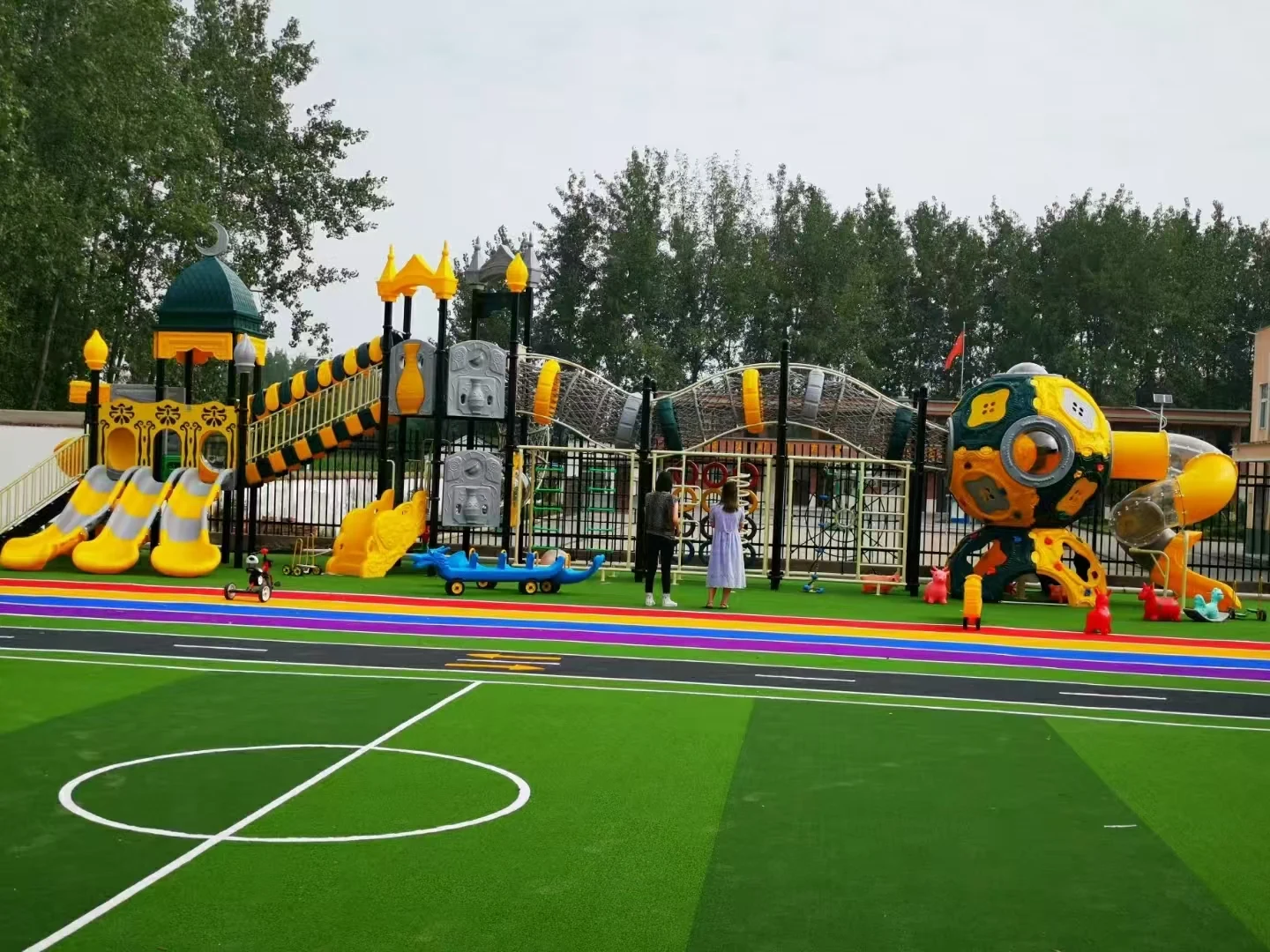
A kids playground equipment manufacturer should help the buyer match products to the users, setting and activity level instead of treating every children’s product as interchangeable. A preschool play corner, a school activity area, a residential courtyard and a public park can all serve children, but they do not need the same equipment mix. The purchasing decision should begin with the age groups, the site and the kind of movement the project is expected to support.
Xinjiu manufactures indoor and outdoor playground equipment in Wenzhou and offers several product families for children’s play: early-years ride-on equipment, modular balance paths, molded and PE-panel spring riders, timber playsets, climbing systems, combination slides, themed custom playgrounds and indoor soft-play structures. The playground equipment range gives buyers different starting points for younger-user zones, school movement areas, community playgrounds and larger destination projects.
A kids playground equipment manufacturer should separate early-years play from higher-challenge equipment
One of the easiest ways to create a weak playground is to choose products only by appearance. A bright character rider and a three-dimensional climbing net may both appeal to children, but they create very different levels of challenge and require different placement decisions.
Early-years products work best when the movement is simple and easy to understand
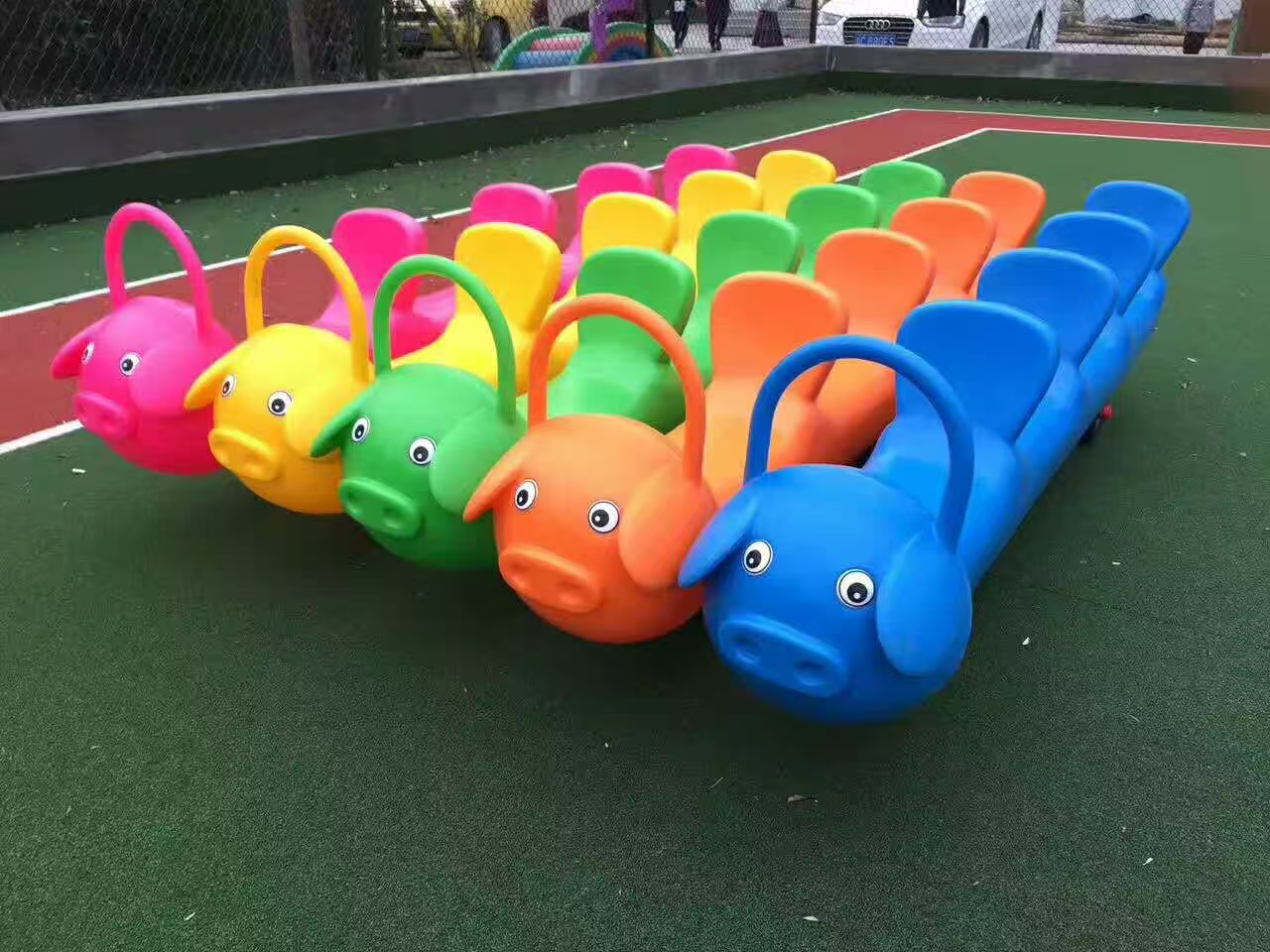
Xinjiu’s Ride-On Car Fleet, Caterpillar Balance Walker Set and Modular Balance Path are designed around lower-level movement, supervised group activity and gross-motor play. The molded Horse, Frog and Airplane Spring Riders and the PE-panel Deer, Car and Dolphin riders add compact rocking play.
These products can be useful in kindergartens, preschool areas and supporting zones beside a larger playground. Their value comes from approachability rather than height or complex routing.
Climbing systems create a different level of challenge
The Circular Net Climbing System, Spider Web Climbing Course and Timber Climbing and Net Course create more demanding movement routes. They belong in projects where the intended users and surrounding layout support that challenge.
A school or public park may use these systems as a separate activity destination, while a preschool-focused site may rely more heavily on lower-level equipment. The manufacturer should help the buyer keep those zones distinct rather than assuming every product is suitable for the same age allocation.
Kids playground equipment should be selected by setting as well as age
The same age group can behave differently in a school, community courtyard or destination park because the site size, supervision pattern and time spent in the space are different.
Schools can combine structured movement with imaginative play
A school may use a Modular Activity Training Course for balance, stepping and coordination alongside a timber playset or a combination slide. The activity course creates a more structured movement sequence, while the playset supports climbing, crossings and imaginative use.
The buyer should review how those activities sit together. If both products create the same kind of challenge, the project may gain more by adding a different activity rather than another similar route.
Residential communities often need one clear main structure plus smaller supporting play
A Nature Theme Combination Slide or Robot Theme Combination Playground can act as the visual and activity center of a residential playground. Smaller spring riders or balance equipment can support younger children without competing with the main route.
This is useful in courtyards where the playground shares space with paths and landscaping. The manufacturer should help the buyer keep the main structure proportionate to the usable footprint.
Public parks and leisure destinations can justify a stronger landmark
The Bird’s Nest Custom Playground and larger nature-themed custom systems can become visible landmarks in a park or destination project. These structures make more sense when the site has enough room for elevated routes, bridges and supporting activities.
A landmark solution may be unnecessary for a small neighborhood corner. Product scale should follow the role the playground is expected to play in the wider site.
Indoor kids playground equipment needs a separate room-based decision
Xinjiu’s indoor soft-play range includes Macaron, Castle, Clock and Vintage themes, Twin-Tower Soft Play and larger Open-Plan Indoor Play Centers. These products are not selected only by age; the room dimensions and building constraints strongly influence the final configuration.
A compact indoor venue should focus on a complete but controlled activity mix
The Macaron Soft Play Playground combines pastel towers, a tube crawl and a ball pool. The Compact Carousel Soft Play uses twin slides, a central carousel and floor-level soft activities. These concepts can work well where the operator wants several activities without a very large footprint.
The manufacturer should still check ceiling height, columns and entrances before the layout is approved.
Larger indoor centers should separate activity zones by movement type
The Open-Plan Indoor Play Center can combine multi-level structures, ball pools, slides and activity tables. A larger venue may also include trampoline activity, but the soft-play and trampoline systems should remain distinct in the project plan.
ASTM F1918 specifically covers soft contained play equipment, which is a reminder that indoor soft play is a separate technical category from public outdoor playground equipment.
A kids playground manufacturer should make product roles visible in the quotation
A mixed children’s playground order may contain very different products. The buyer should be able to see which items form the central structure, which serve younger children and which create climbing or movement challenges.
| Product role | Xinjiu examples | Typical project use |
|---|---|---|
| Early-years movement | Ride-On Cars, Balance Walker, Modular Balance Path | Preschool, kindergarten and supervised low-level activity |
| Compact rocking play | Molded and PE-panel Spring Riders | Supporting zones in schools, communities and parks |
| Central combination play | Robot, Castle and Nature themed combination systems | Schools, residential communities and public playgrounds |
| Climbing challenge | Circular Net, Spider Web and Timber Climbing Courses | Open adventure zones and higher-challenge areas |
| Indoor soft play | Macaron, Twin-Tower, Castle, Clock and Open-Plan layouts | Shopping malls and family entertainment venues |
This structure helps contractors and distributors avoid the phrase “kids equipment” becoming too broad to guide purchasing. It also gives the buyer a clearer way to compare proposals that contain very different activity levels.
Public playground layout should account for age separation and conflicting activities
The CPSC Public Playground Safety Handbook identifies age separation, conflicting activities, sight lines, accessibility and supervision among the considerations for playground layout. Those principles are useful for buyers because they show why equipment for younger children should not simply be mixed randomly with higher-challenge activities.
A manufacturer can support the buyer by making age and activity roles visible in the layout, while the project team remains responsible for local requirements and final site approval.
A younger-user zone should not become the shortcut through a high-energy route
If spring riders and balance pieces are intended for younger children, they should not sit in the main circulation path leading to a large climbing structure. The layout should allow the smaller zone to function without constant cross-traffic from older users.
Supporting products should add a different activity rather than duplicate the main structure
If a Robot Theme Combination Playground already includes climbing and several slide exits, the next product might add rocking, balance or a lower-level activity. Adding another large slide nearby may increase equipment count without improving the variety of play.
Two purchasing scenarios show why age alone is not enough
A kindergarten buyer with a compact outdoor court
The buyer may prefer early-years balance equipment, ride-on products, spring riders and a smaller combination structure. The project should prioritize clear movement, lower-level activities and straightforward supervision rather than trying to recreate a large public park in a limited court.
A community developer serving several age groups
The developer may need a main combination playground for older children plus a separate supporting zone for younger users. A Nature Theme or Robot Theme structure can anchor the site, while PE-panel riders and balance products support a lower-intensity area.
The manufacturer should help the buyer distinguish those zones in the plan instead of mixing every product into one cluster.
Before approving a kids playground equipment order
- Define the intended age groups before choosing the main product family.
- Identify whether the project is a school, preschool, residential, park or indoor venue.
- Give each product a clear role: central play, climbing, early-years movement, rocking or indoor soft play.
- Check whether supporting products add a new activity rather than repeating the main structure.
- For indoor projects, confirm floor dimensions, clear ceiling height, columns and entrances.
- For international projects, state the destination and project-documentation requirements early.
Xinjiu’s company and manufacturing overview describes a Wenzhou-based manufacturer established in 1999 with support for planning, non-standard development, OEM/ODM, production and export coordination. Buyers can use that project approach to move from a broad “kids playground” request toward a product mix that matches the actual users and setting.
Build the children’s equipment mix from the lowest-challenge zone outward
For a site serving several age groups, start by identifying what the youngest intended users need. That may be ride-on cars, a Modular Balance Path, Caterpillar Balance Walker or compact spring riders. Place those products where the younger-user zone can remain understandable without becoming the shortcut to a larger climbing system.
Then add the main structure for the next activity level. In a residential community, that might be a Nature Theme or Robot Theme Combination Playground. In a school, it may be a timber playset plus a Modular Activity Training Course. In a park, a Circular Net or Spider Web system may provide a distinct climbing destination. The key is that the larger equipment should add challenge without forcing younger children into the same route.
Finally, check whether every supporting product still adds something new. If the main combination structure already provides several slides and climbing routes, use smaller equipment to add rocking, balance or lower-level movement. This produces a more varied project than adding another large structure simply because the site still has empty space.
For mixed indoor and outdoor projects, keep the user logic consistent but the technical route separate
A buyer may operate both an indoor soft-play venue and an outdoor playground. The age groups can inform both projects, but the equipment requirements are not interchangeable. Indoor soft play is shaped by room dimensions, clear ceiling height, columns and enclosed routes; outdoor equipment is shaped by site layout, circulation and the surrounding environment. The manufacturer should help the buyer carry the user strategy across both projects without pretending the products follow one identical specification.
A kids playground equipment manufacturer is most useful when it helps the buyer say no to the wrong products. Age, activity level, site type and available space should narrow the range until every item has a clear reason to be in the project. Buyers planning outdoor mixed-age sites can also use the outdoor playground manufacturer project guide to connect age zoning with the overall site plan.