Blog
China Playground Equipment Supplier: How to Compare Product Range and Project Support

A China playground equipment supplier should make it easier for an overseas buyer to decide what belongs in the order and what still needs project development. The supplier relationship is different from simply finding a product image. Contractors need site coordination, distributors need repeatability, developers need visual and project consistency, and indoor operators need room-based planning. A useful supplier should know which information matters for each of those buyers.
Xinjiu is based in Wenzhou, China and supplies custom outdoor playgrounds, combination slides, timber structures, climbing equipment, activity courses, spring riders, early-years play, indoor soft play and trampoline products. Its current service pages also describe 2D layouts, 3D visualization, OEM/ODM development, export-document coordination, logistics support, installation manuals and online technical guidance. For international buyers, the value of that range depends on how clearly the supplier can organize it around the project.
A China playground equipment supplier should separate quick product orders from site-led projects
Not every inquiry should begin with the same amount of design work. A distributor ordering PE-panel spring riders can work from a clearer product reference than a contractor developing a Bird’s Nest landmark for a public park. Good supplier communication begins by identifying which type of order the buyer actually has.
Compact repeat products should stay easy to identify
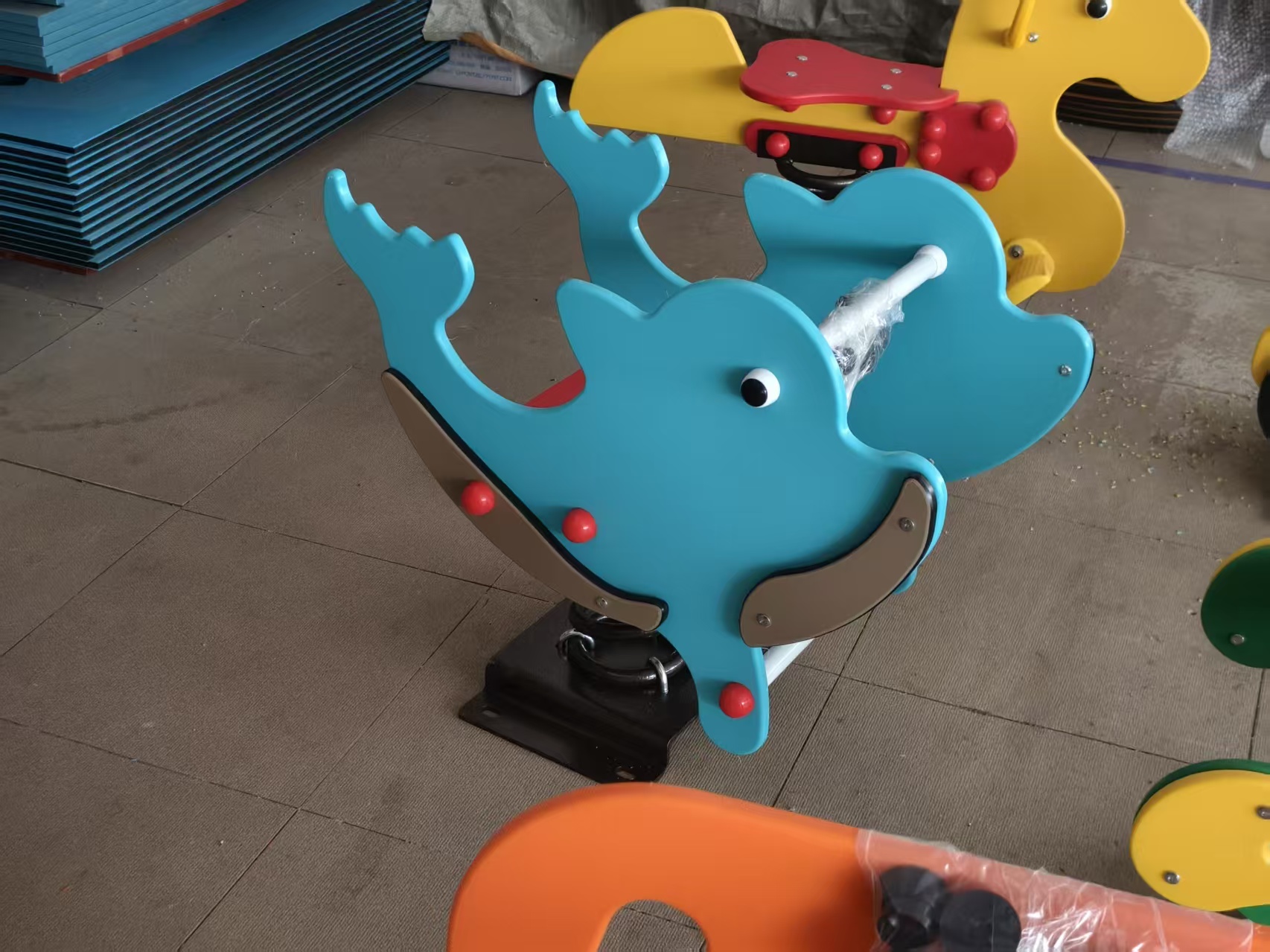
Xinjiu’s Horse, Frog and Airplane molded spring riders and Deer, Car and Dolphin PE-panel riders are examples of products with clear individual identities. The Ride-On Car Fleet and Modular Balance Path also fit a lower-complexity sales route. The supplier should preserve model naming, quantity, material direction and destination information so repeat purchasing remains straightforward.
Large structures should trigger a site discussion before confirmation
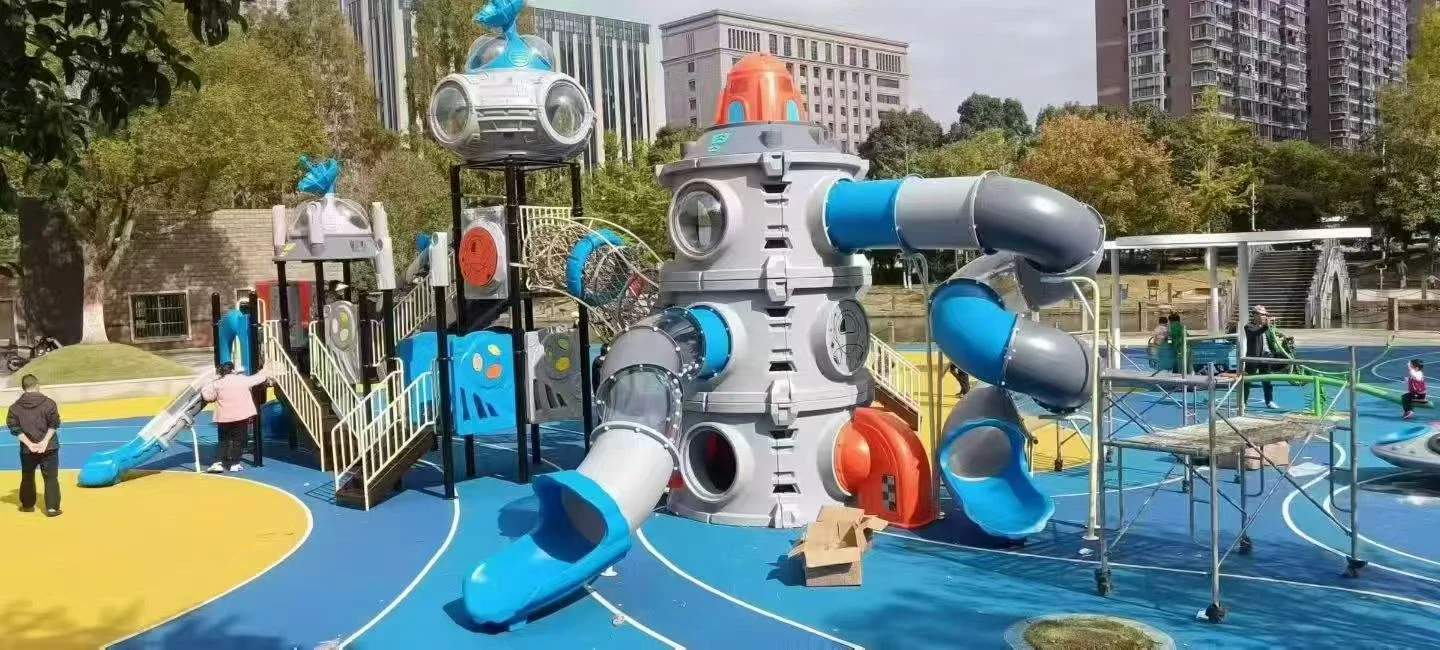
The Robot Theme Combination Playground, Nature Theme Combination Slide, Timber Climbing and Net Course and Bird’s Nest Custom Playground all interact strongly with the site. A supplier should ask for usable dimensions, intended age groups, preferred activities and destination before the buyer treats the configuration as final. Sending a product image without that discussion can create false confidence that the same structure will fit every project.
Product breadth should reduce sourcing complexity, not increase it
A supplier with many product families can be useful to a contractor or distributor if the buyer can build one coordinated project rather than dealing with several disconnected sources. The risk is that a broad catalog becomes a shopping list with no site logic.
Outdoor mixed orders should give each product a clear role
A residential community might use a Nature Theme Combination Slide as the main structure, Dolphin PE Panel Spring Riders for younger users and a Modular Balance Path for lower-level movement. A school might combine a Timber Rope Bridge Playset with a Modular Activity Training Course. A park may use a custom landmark plus a Circular Net Climbing System. The supplier should help the buyer see which product is central, which is supporting and which introduces a new activity.
Indoor products need a separate qualification route
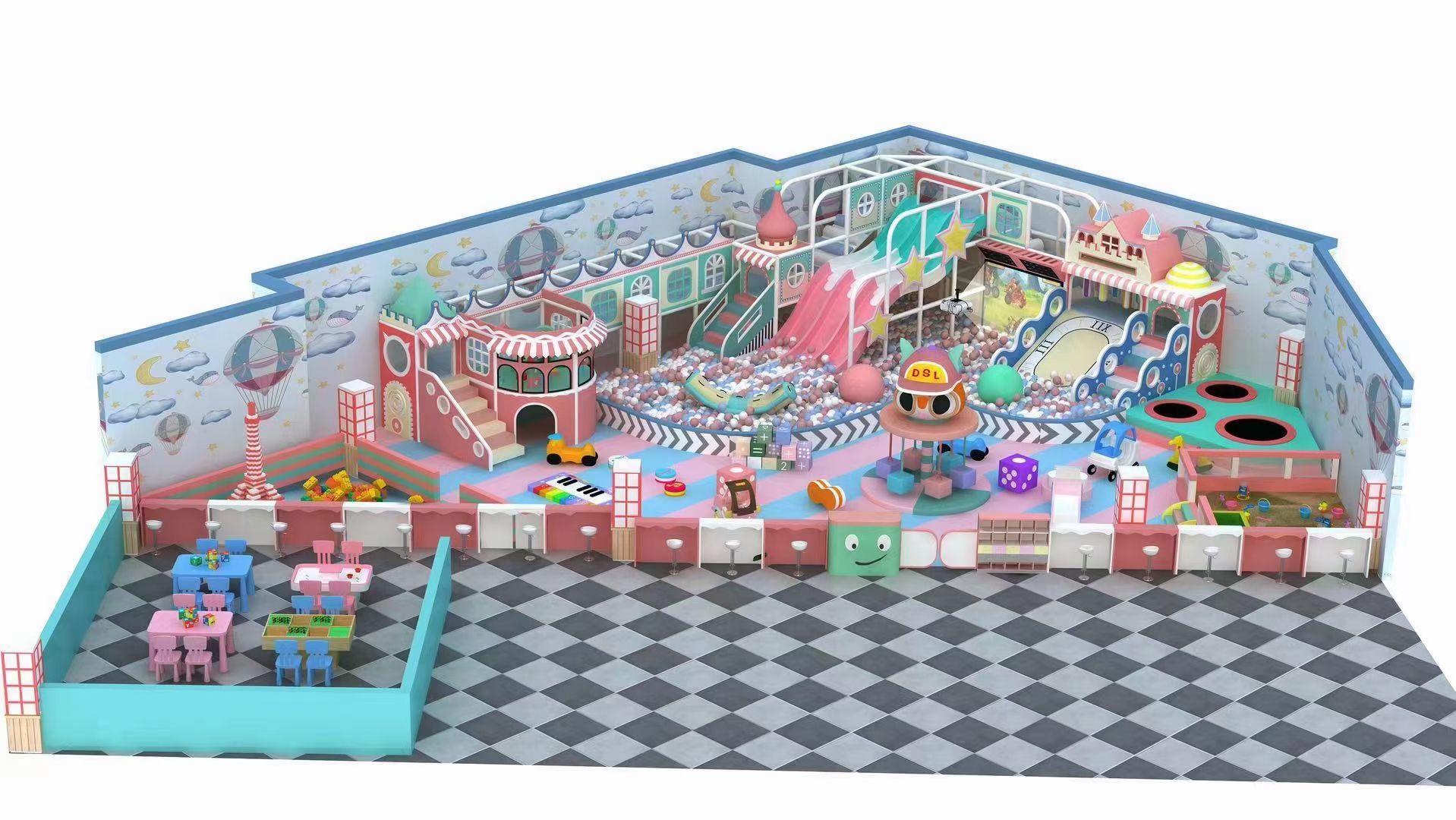
Macaron Soft Play, Twin-Tower Indoor Soft Play, Clock Theme Soft Play and Open-Plan Indoor Play Center concepts depend on floor area, clear ceiling height, columns and entrances. A China supplier serving indoor venues should request room information before confirming the layout. Trampoline zones should remain a distinct activity system rather than being treated as one more soft-play module.
A China playground supplier should make customization specific
International buyers often ask for OEM or custom service, but the request can range from a color change to a completely non-standard structure. Xinjiu states that it supports theme, color, function and configuration development as well as non-standard playground design. The supplier should help the buyer name the level of change.
Visual OEM can keep the underlying route familiar
A distributor may want a different color palette, themed panels or branded visual details on a known product family. If the tower arrangement, bridge connections and slide routes remain the same, the project can follow a more controlled customization path. The supplier should document the visual changes so repeat orders remain consistent.
Structural customization should move into project development
If the customer changes the footprint, tower positions, bridge route or major slide geometry, the supplier is no longer coordinating only a cosmetic change. The 2D layout and 3D concept should be updated and the equipment list reviewed again. This distinction protects both the buyer and the manufacturer from treating a new structure like a simple color variation.
Supplier evaluation should include how revisions are handled
Projects change. A site dimension is corrected, a product is removed, a theme changes or the destination is updated. A strong supplier should be able to carry those revisions into the latest layout and commercial scope instead of allowing several conflicting versions to circulate.
A contractor should test whether the supplier can keep one current project version
If a Robot Theme Combination Playground is replaced with a Castle Theme system, the supplier should update the drawing, equipment list and supporting information together. The contractor should not have to compare old screenshots to discover which product the factory is actually preparing.
A distributor should test whether repeat orders remain stable
If the distributor reorders PE-panel riders, the supplier should be able to identify the product and confirmed specification from the prior order without starting from an ambiguous image. Repeatability is a supplier capability in its own right.
Material language should be product-specific in international sourcing
Xinjiu’s range includes PE panels, molded plastic, timber structures, metal frameworks and rope networks. A buyer should avoid asking the supplier for one “best material” across all categories. The relevant question is which material route belongs to the selected product and environment.
The Timber Rope Bridge Playset and Timber Climbing and Net Course use timber and rope relationships. PE-panel riders rely on shaped panels. Large custom systems can combine metal framing, platforms, tubes and nets. Xinjiu also states that anti-UV, anti-corrosion and eco-conscious options can be considered according to equipment type, environment and confirmed specification. The supplier should connect those options to real components in the order.
A China playground equipment supplier should make export responsibilities visible
Overseas buyers need more than a production completion date. They need to understand the export-document scope, logistics coordination, packing preparation and installation information associated with the order. Xinjiu states that it supports those areas, but the exact responsibilities should be agreed for the specific transaction.
Custom project exports need the final layout at destination
If a Bird’s Nest Custom Playground or Linear Custom Play Circuit was revised after the first concept, the receiving contractor should get the final project information. The supplier should not allow an early visual reference to become the installation reference by accident.
Repeat product exports need a clean order record
A wholesale shipment of spring riders or early-years pieces may not need the same project documentation as a custom landmark. It still benefits from clear product names, quantities, confirmed specifications and destination details. The supplier process should become simpler where the product is simpler, without becoming vague.
How can an overseas buyer compare China playground suppliers?
| Buyer question | What a strong supplier response should show |
|---|---|
| Can you work from my site? | A request for dimensions, users and project conditions before final selection |
| Can I buy different product families together? | Clear roles for combination play, climbing, timber, riders, indoor soft play and activity courses |
| Can you customize? | A distinction between visual changes, configuration changes and non-standard development |
| Can I reorder products? | Stable product identity and confirmed specification for repeat items |
| Can you support export? | Defined documentation, logistics, packing and installation-support responsibilities |
| What happens if the project changes? | Updated layouts and order information that preserve one current version |
Buyer scenarios that should produce different supplier conversations
Contractor: focus on site fit, revision control and project handover. Distributor: separate repeat products from site-specific systems and protect product identity. Developer: focus on design language, 3D communication and custom structure fit. Indoor operator: begin with the room, then select soft-play and trampoline systems separately.
- Do not treat a broad catalog as a reason to add unnecessary products.
- Do not treat OEM as one single level of customization.
- Do not mix indoor and outdoor planning inputs.
- Do not apply one technical statement to every product category.
- Do not allow early drawings to remain active after the project has changed.
Overseas buyers can review the Xinjiu product range, the custom supplier handover guide, and the outdoor supplier project-order guide to understand how different types of orders are handled. A China playground equipment supplier should make international sourcing clearer by reducing ambiguity: the buyer knows what is being selected, what still needs design work, what will be produced and what information will move with the order to its destination.
What should a buyer send in the first message to a China playground supplier?
A useful first inquiry can be concise without being vague. For an outdoor project, include the site dimensions or plan, intended age groups, project type, preferred product family or theme, destination and approximate timeline. For an indoor project, add clear ceiling height, columns and entrances. If the request is a repeat product order, provide the exact model or an identifiable product reference rather than a broad category name.
Use the supplier response to decide whether the inquiry needs design work
If the customer asks for a Bird’s Nest landmark or a custom combination playground, the supplier should move the discussion toward site information and drawings. If the customer needs several known spring riders, the process should remain simpler. The response should reflect the order type rather than force every buyer through one sales script.
For overseas buyers, this makes the first inquiry more efficient and provides an early test of supplier judgment. The goal is not to send every detail immediately; it is to send enough real project information for the supplier to demonstrate whether it understands the difference between a product order and a project solution.
Before selecting a supplier, overseas buyers can also compare how quickly the conversation becomes specific. A useful response should move from the broad category into real products, site constraints, user groups and destination information. If the discussion remains generic after the buyer has supplied those details, the sourcing process is still too vague for a project-led order.