Blog
Outdoor Playground Equipment Supplier: Project Ordering Guide

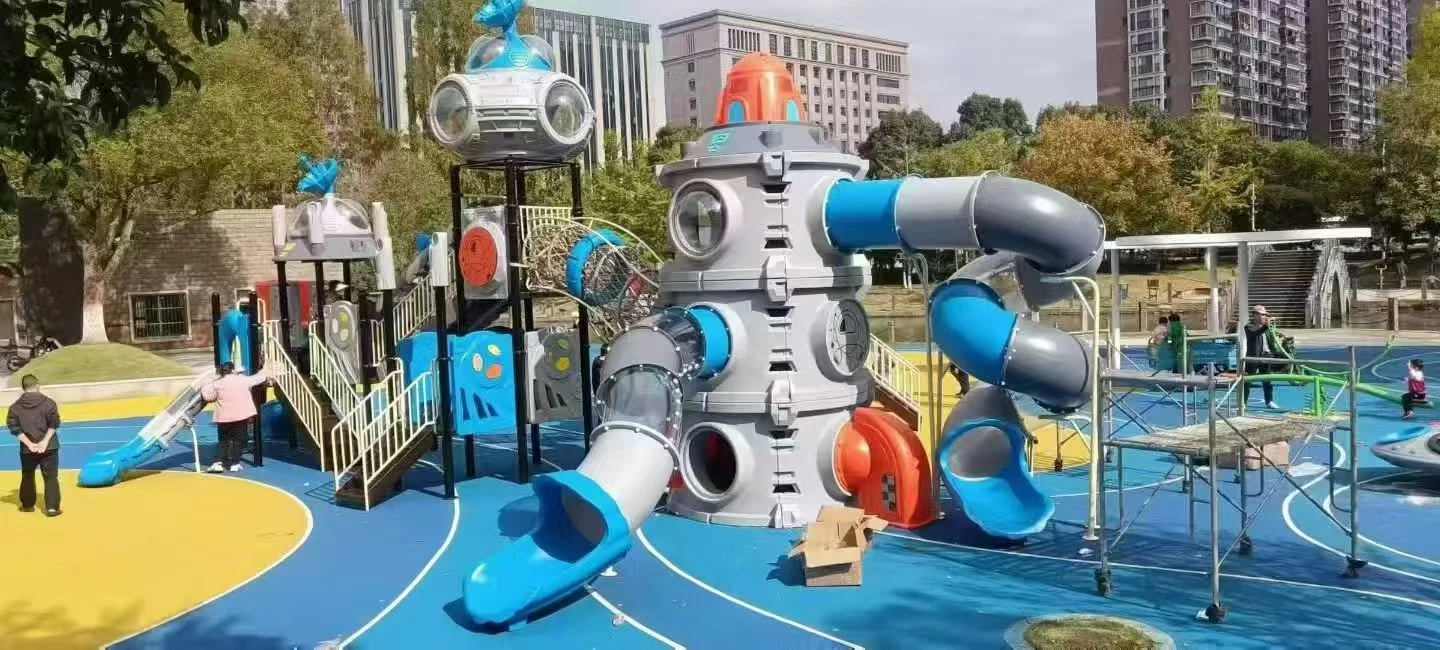
For an outdoor playground buyer, a supplier is valuable when the order becomes easier to define, not merely larger. A school, residential community, park contractor or distributor may need several different product families in one purchase: a central combination structure, smaller early-years equipment, climbing elements, timber play, spring riders or activity courses. The supplier’s job is to help the buyer separate what belongs in the same project from what only looks compatible in a catalog.
Xinjiu’s outdoor playground equipment range includes combination slides, custom playground systems, timber playsets, rope and net climbing equipment, outdoor activity courses, molded spring riders and PE-panel riders. For sites that cannot be solved with a standard selection, the company’s custom playground service adds 2D layout support, 3D visualization, non-standard development, OEM/ODM options and factory-direct production.
An outdoor playground equipment supplier should organize the order by project role
A mixed commercial order is easier to control when every product has a reason to be there. One item may be the visual and activity center of the playground. Another may support younger children. A third may add balance or climbing without duplicating what the main structure already provides.
This approach matters because public playground planning is not only about equipment count. The current CPSC Public Playground Safety Handbook identifies layout considerations such as age separation, conflicting activities, sight lines, accessibility and supervision. A supplier does not replace the project designer or local compliance review, but the equipment proposal should still respect the fact that different activities need different space and user expectations.
Use the central structure to define what supporting products are still missing
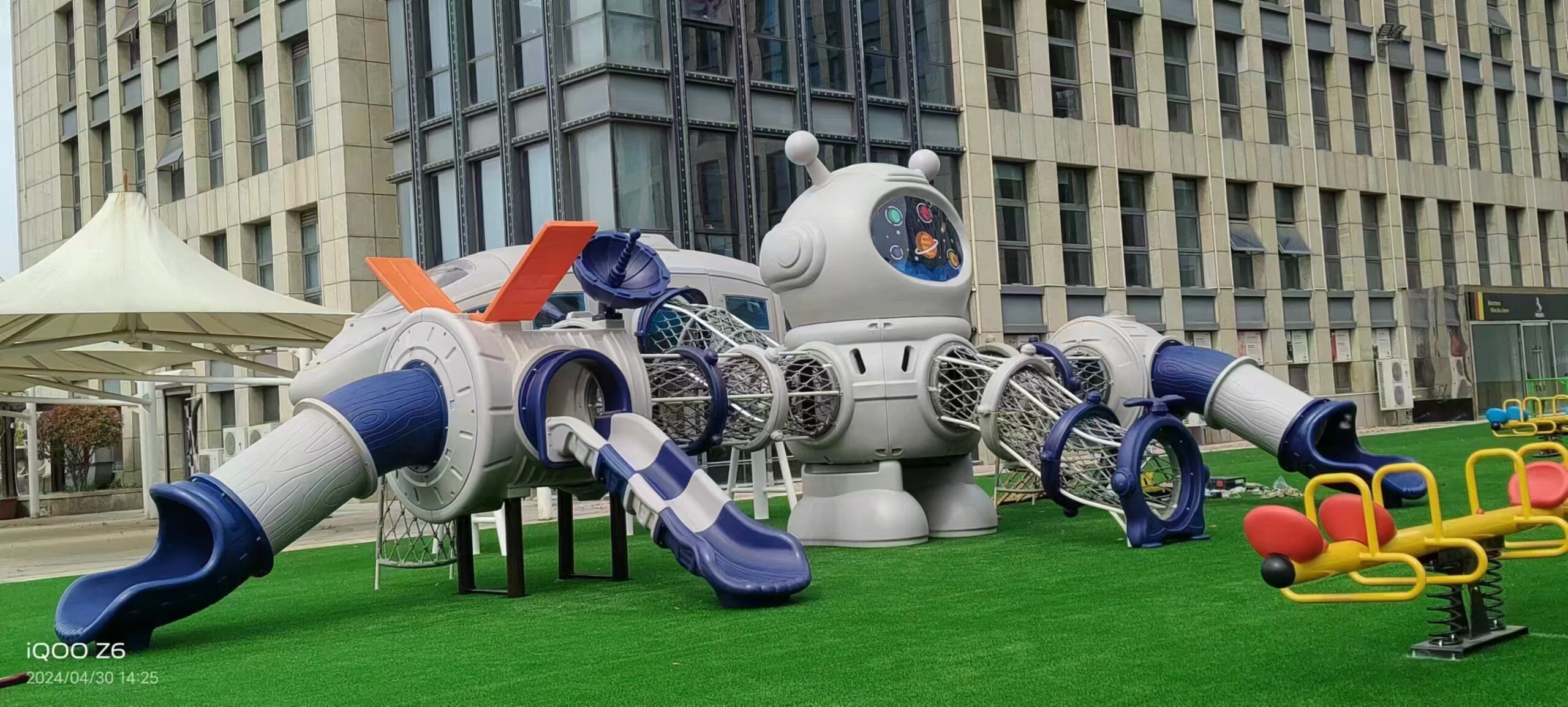
A Robot Theme Combination Playground already brings together towers, net connections and several slide exits. A Castle Theme Combination Slide creates another kind of central structure through linked towers, climbing panels and both open and enclosed slides. If one of these systems becomes the core of a residential or school playground, every additional product should add a different type of play rather than repeat the same route.
A contractor might add a Dolphin PE Panel Spring Rider for a compact younger-user area or a modular balance path for low-level movement. That creates a more deliberate activity mix than simply adding another slide because the catalog has space on the page.
Separate project-led products from repeatable individual items
Distributors often need a different purchasing logic from contractors. A contractor may be buying for one known site, while a distributor may supply many smaller customers. Some products are easier to discuss as individual repeat items: molded Horse, Frog and Airplane Spring Riders, or PE-panel Deer, Car and Dolphin riders. Their role is compact and their product identity is clear.
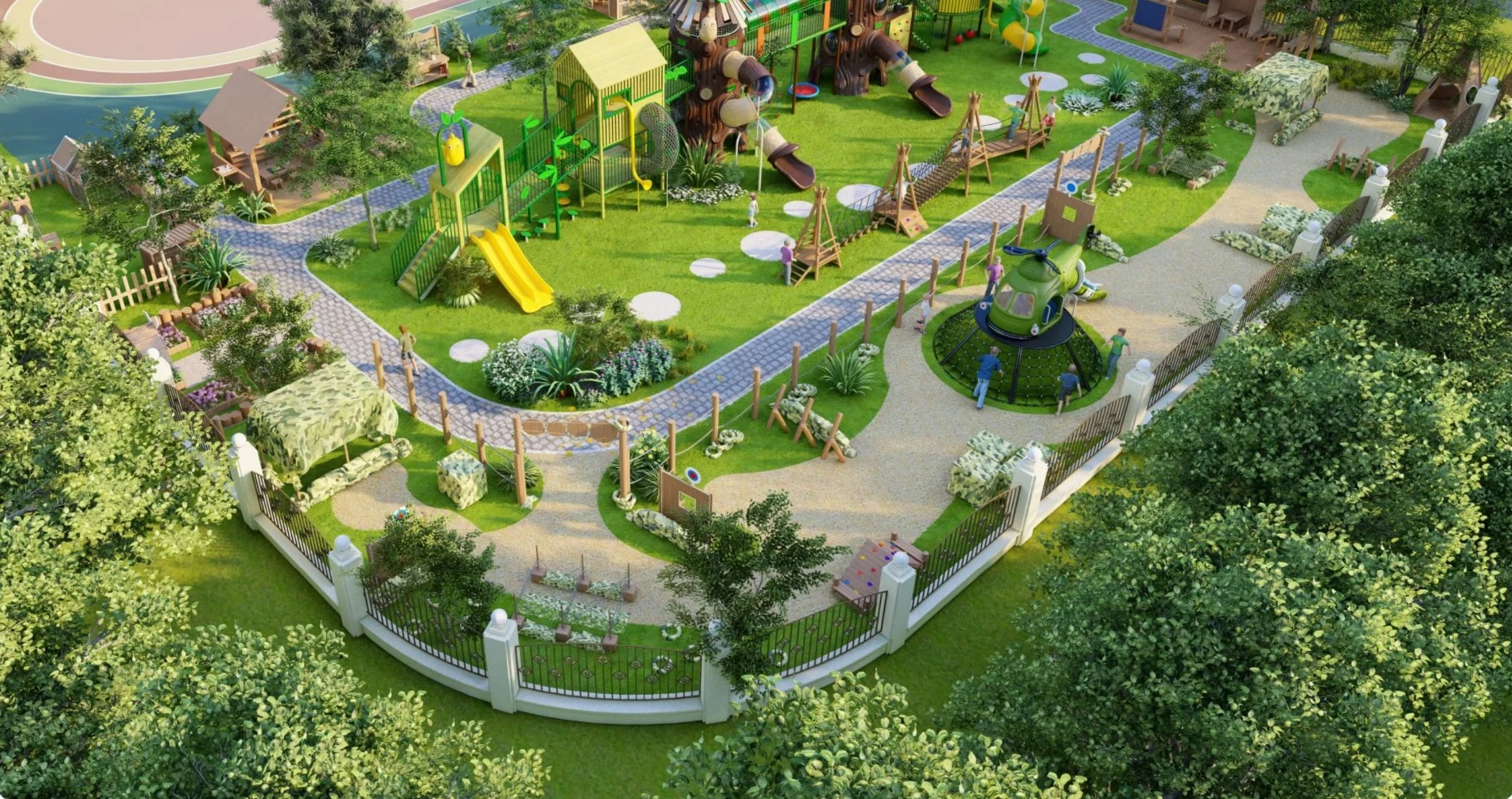
Large custom systems, timber courses and themed combination playgrounds are more project-led. A Nature Theme Custom Playground uses leaf-roof towers, themed climbing elements and linked walkways; a Timber Climbing and Net Course combines walls, net tunnels and bridge movement in a longer challenge route. These products make more sense when site dimensions, circulation and intended users are part of the conversation.
A distributor who separates those two purchasing routes can ask better questions. Repeat items need stable product identification and confirmed specifications. Project-led systems need drawings, site information and a clearer handover.
What information should move with an outdoor playground supply order
Product pictures help with selection, but they are not enough to control a B2B order. The buyer needs a consistent trail from the project brief to the final equipment list. Xinjiu’s current pages recommend confirming site size, users, project type, preferred theme, quantities, destination, certification needs and target timeline. Those inputs are especially useful when several product families are ordered together.
The latest layout should control the equipment list
Imagine a school renovation that starts with a timber structure, then adds an outdoor obstacle course and several small riders after internal review. If the drawing is updated but the quotation is not, the buyer can end up approving two different versions of the same project. The supplier should keep the final layout and final order scope aligned.
Xinjiu supports 2D layouts and 3D visualization for project development. Those tools are most useful when they are treated as working project documents rather than decorative renders. A contractor can use them to check the relationship between a Modular Activity Training Course, a timber playset and surrounding smaller pieces before the order is confirmed.
Material descriptions should stay attached to specific products
A useful supplier should not describe an entire catalog with one material claim. Xinjiu’s range includes PE panels, molded plastic elements, timber structures, metal frameworks and rope systems. Each belongs to different products and visual directions.
The Timber Rope Bridge Playset uses a natural-look structure and rope crossings. The Dolphin PE Panel Spring Rider uses shaped panels on a compact spring base. Molded riders use rounded character bodies. Large custom playgrounds can combine metal frames, platforms, enclosed slides and rope connections. Xinjiu also notes that anti-UV, anti-corrosion and eco-conscious options can be considered according to the equipment type, project environment and confirmed specification.
For a wholesaler, that means the question should be “what is confirmed for this product?” rather than “does the supplier use one material everywhere?” This reduces the risk of carrying a general marketing statement into a quotation where it does not apply.
Outdoor playground supply decisions change with the buyer’s business model
The same product range can be used very differently by a developer, contractor or wholesaler. A supplier should understand which kind of buyer is placing the order because the information needed at approval is not the same.
A contractor needs site coordination before quantity optimization
A contractor delivering a residential project usually has a fixed footprint and a construction schedule. The first priority is not maximizing the number of units in the order. It is making sure the chosen equipment can be coordinated with the site.
For example, a Nature Theme Combination Slide can become the main structure in a landscaped residential setting. A few spring riders may support younger children nearby. If a climbing system is added, the contractor should ask whether it creates a useful new route or simply crowds the same area. The supplier should help keep the equipment package consistent with the usable site and the approved visual direction.
A wholesaler needs a product mix that can be explained to different customers
A wholesaler may want breadth, but not every product family should be stocked or promoted in the same way. Compact spring riders and early-years pieces can be presented as simpler individual products. Combination slides, timber courses and custom systems should be sold with a stronger project brief because site conditions influence the final configuration.
A practical wholesale range might therefore separate products into three groups: easy-to-identify repeat items, standard project structures and custom-developed systems. That gives sales teams a clearer way to decide when a customer can choose from a product reference and when a layout discussion should begin.
Outdoor playground suppliers should make destination requirements visible early
International orders add another layer of coordination. The buyer needs to know what project documents are expected in the destination market and whether a particular requirement applies to the chosen equipment family.
ASTM F1487 covers public-use playground equipment within its scope and addresses areas including materials, performance, access and egress, layout, installation and maintenance. It does not cover soft contained play. This is a useful reminder for buyers who source both outdoor playground equipment and indoor soft play from the same company: one standard should not be assumed to cover every product type.
Xinjiu’s inquiry process asks for destination and certification needs, and its service pages describe export-document coordination, logistics support, installation manuals and online technical guidance. Those capabilities are useful when the buyer raises destination requirements before production rather than at dispatch.
Export documentation and packing should follow the confirmed product mix
A shipment that contains a large combination playground, a timber course and several spring riders is not the same handover as a repeat order of compact riders. The buyer should therefore confirm what project information and packing preparation apply to the actual order.
For a custom site, installation information should correspond to the approved layout. For repeat products, model identity and quantity consistency become more important. In both cases, the equipment list should remain the reference point from production through shipping coordination.
How to compare two outdoor playground suppliers without relying on slogans
Statements such as “high quality,” “professional service” or “factory price” are too broad to help a B2B buyer make a serious comparison. A more useful comparison is based on what the supplier can show and coordinate for the actual project.
| Buyer question | What to compare | Why it matters |
|---|---|---|
| Can the supplier work from my site? | 2D layout, 3D visualization, site-specific product selection | Prevents the catalog from driving the project instead of the site |
| Can one order include different product families? | Combination slides, climbing, timber, riders, activity courses | Helps organize a mixed playground around complementary roles |
| Can products be customized? | Theme, colors, activities, configurations and non-standard development | Important for branded, landscape-led or unusual footprints |
| Can the order move internationally? | Export documents, logistics coordination, packing preparation | Connects factory completion with the receiving project team |
| What happens after dispatch? | Installation manuals and online technical guidance | Helps the site team interpret the approved equipment package |
Xinjiu’s company overview describes a Wenzhou-based manufacturer established in 1999, with an internal design function supporting 2D planning, 3D visualization and non-standard product development. Its stated project model connects manufacturing with OEM/ODM, export preparation and remote technical guidance.
A practical way to build the first outdoor playground shortlist
Start by deciding the role of the main structure. If the site needs several activities in one footprint, compare the Robot, Castle and Nature themed combination systems. If the site needs a stronger destination identity, compare custom systems such as the Bird’s Nest or architectural spiral-slide concepts. If climbing is the priority, review the Circular Net and Spider Web systems. If the project needs a warmer landscape character, compare the timber playsets and timber climbing course.
Then add supporting products only where they create a clear new activity or serve a different age group. Spring riders and balance pieces are useful when they support a younger zone or add movement at a smaller scale. They are less useful when they simply fill leftover space without a planning reason.
- For schools: compare timber play, combination structures and modular activity courses around supervision and movement zones.
- For residential communities: use one clear main structure, then add smaller products where they support different users.
- For parks: decide whether the project needs a visual landmark, a climbing destination or a mixed family-play layout.
- For distributors: separate repeatable individual products from site-specific systems that require drawings and project information.
Buyers can use the Xinjiu playground equipment manufacturer homepage for the overall product and project approach, then move into the category range or custom design page depending on how defined the project already is.
The right outdoor playground equipment supplier does not simply offer more choices. The useful supplier helps the buyer reduce those choices until the equipment list, site plan and delivery scope describe the same project. For the factory-side view of that process, the outdoor playground manufacturer guide explains how the site plan moves toward production.