Blog
Outdoor Play Equipment Manufacturer: Matching Product Families to the Site

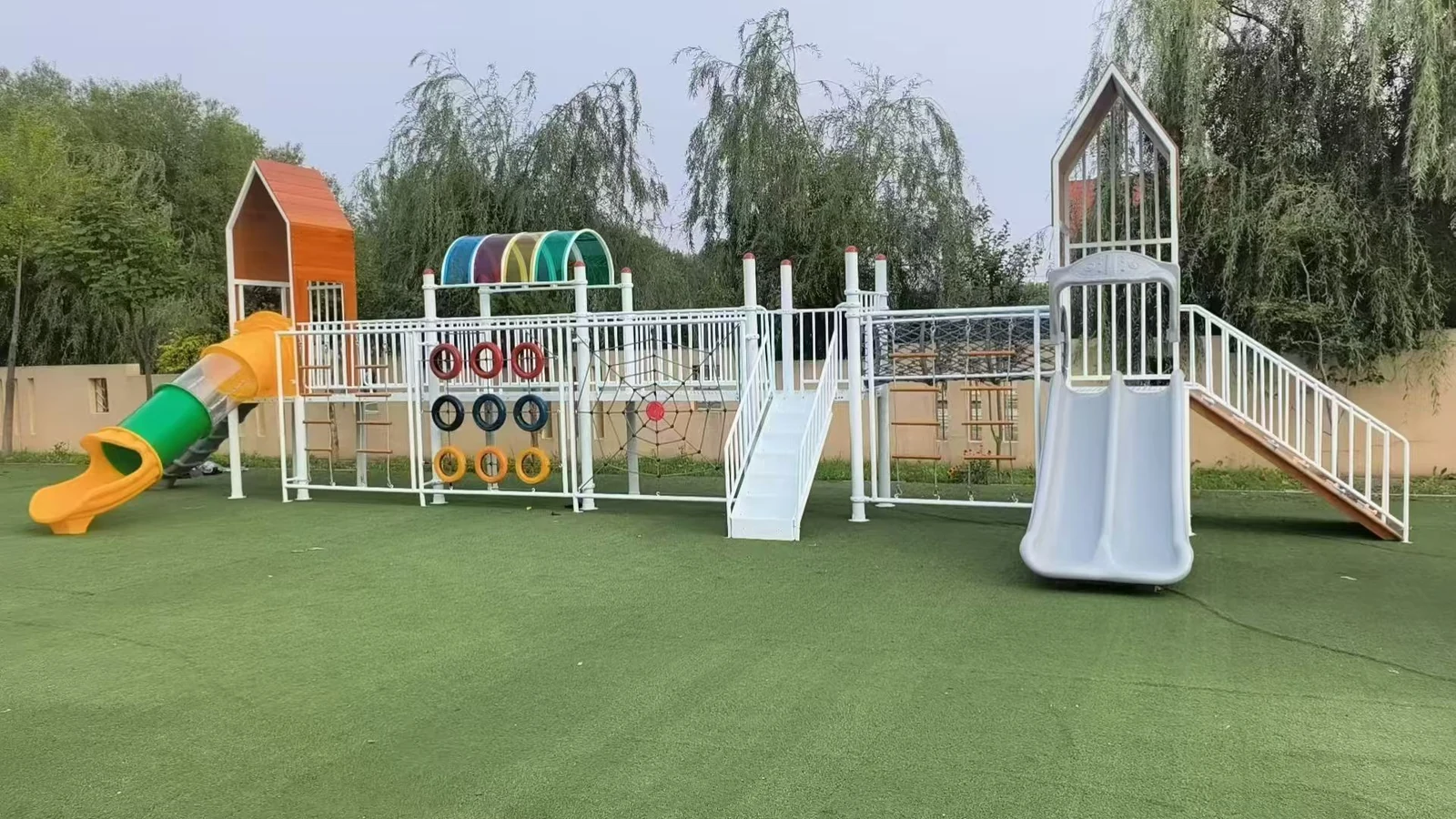
An outdoor play equipment manufacturer should help the buyer choose a product family that matches the site before discussing how many pieces to purchase. Outdoor play can mean a compact early-years corner, a school movement route, a residential combination playground, a timber climbing area or a destination-scale custom landmark. Those settings should not be solved with the same equipment mix.
Xinjiu manufactures outdoor playground equipment in Wenzhou and its current range includes custom playground systems, large combination slides, timber playsets, rope and net climbing systems, outdoor activity courses, spring riders and early-years equipment. The company also supports 2D layouts, 3D visualization, non-standard development, OEM/ODM manufacturing, export coordination and installation guidance. For outdoor buyers, the strongest first question is which product family should control the site plan.
Outdoor play equipment manufacturing should begin with the role of the main activity
A playground usually becomes easier to plan when one activity family is treated as the anchor. A residential site may need a combination structure. A school may prioritize movement and balance. A park may want a climbing destination or visual landmark. Smaller riders and early-years equipment can then support the main activity instead of competing with it.
Combination playgrounds work when several activities need to share one footprint
The Robot Theme Combination Playground, Castle Theme Combination Slide and Nature Theme Combination Slide combine towers, climbing routes and multiple slide exits in one organized structure. These products can work well in schools, communities and parks where a central piece needs to deliver several forms of play without spreading each activity into a separate unit.
Activity courses work when the movement sequence matters more than a themed landmark
The Modular Activity Training Course, Full Circuit Obstacle Course and Outdoor Fitness Skills Course are organized around balance, crawl, step and coordination activities. A school or supervised community space may prefer this route when the project goal is progressive movement rather than one visually dominant play tower.
Outdoor climbing equipment should be selected by challenge type
Xinjiu shows several climbing approaches. The Circular Net Climbing System uses a ring-shaped frame and three-dimensional rope network. The Spider Web Climbing Course creates a sculptural net-and-frame challenge. The Timber Climbing and Net Course uses timber, climbing walls, net tunnels and bridge movement. These systems can all be described as climbing equipment, but the user experience and site character are different.
Open net systems suit sites that want climbing to become the visible activity
A Circular Net or Spider Web system can stand as a distinct challenge zone in a park or larger playground. The buyer should consider the surrounding circulation and whether younger-user products are separated from the higher-challenge route. Adding a net system directly beside a compact early-years zone may create conflicting activity patterns even if both products fit dimensionally.
Timber climbing creates a warmer landscape relationship
The Timber Rope Bridge Playset and Timber Climbing and Net Course bring a more natural visual character through timber-led structures and rope elements. They can fit landscaped schools, parks and family destinations where the equipment should feel more integrated with the environment. They are less useful when the project specifically needs a bright sculptural landmark or a highly graphic theme.
Outdoor play materials should be discussed by equipment family, not as one universal specification
Xinjiu’s outdoor range uses PE panels, molded plastic forms, timber, metal frameworks and rope networks. The buyer should ask which material route belongs to the selected product rather than search for one “best material” for the entire playground.
PE panels are useful for graphic shapes and compact character products
The Deer, Car and Dolphin PE-panel spring riders use shaped layered panels to create recognizable silhouettes. PE panels also appear in activity and combination equipment where color and shaped forms are part of the visual identity. A buyer should confirm the specific panel construction and finish for the selected product.
Molded plastic forms create a different character and touch experience
Horse, Frog and Airplane Spring Riders use rounded molded forms rather than layered panel silhouettes. These products can add compact rocking activity to an outdoor playground and are easier to treat as individual items than a large combination system.
Large structures often combine several material families
A custom or combination playground can use metal framing, platforms, slides, panels and rope components in one structure. Xinjiu states that anti-UV, anti-corrosion and eco-conscious options may be considered according to the equipment type, project environment and confirmed specification. Outdoor buyers should record these choices against the actual components they describe.
Outdoor play equipment should be matched to the setting, not only the age group
Age matters, but the same children use equipment differently in a school, residential courtyard or park. The site size, supervision pattern and time spent in the space change the product decision.
Schools can use a mix of structured movement and imaginative play
A school may combine a Modular Activity Training Course with a Timber Rope Bridge Playset or a compact combination slide. The movement course can provide balance and coordination, while the playset adds climbing and imaginative routes. The manufacturer should help the school avoid repeating the same activity under different product names.
Residential projects often benefit from one clear centerpiece
A Nature Theme or Robot Theme combination system can anchor a residential courtyard. Smaller spring riders and balance activities can support younger users. The buyer should protect circulation around the main structure rather than fill every available gap with another product.
Parks can justify larger climbing or custom destinations
A public park may have enough space for the Bird’s Nest Custom Playground, an Architectural Spiral Slide System or a large net-climbing feature. These products can become visible destinations, but they should be developed as part of the landscape and circulation rather than simply enlarged versions of neighborhood equipment.
Outdoor site planning should account for age separation and conflicting activities
Public-playground guidance such as the CPSC Public Playground Safety Handbook highlights age separation, conflicting activities, sight lines, accessibility and supervision among layout considerations. These principles are useful for buyers because they show why a spring-rider zone, a high-challenge climbing area and a large slide structure should not be placed randomly simply because the site has room.
A manufacturer can support the project by making product roles visible in the layout. The final site design and local compliance review remain project responsibilities, but a sensible equipment proposal should not make those tasks harder.
Outdoor play equipment manufacturers should make custom work proportionate to the project
Not every outdoor playground needs a custom landmark. A standard combination slide may already solve the activity and visual brief. Custom development becomes useful when the site geometry, theme or destination role cannot be addressed well with the standard range.
A narrow footprint may justify a linear custom route
The Linear Custom Play Circuit can organize bridges, panels and slides along a longer, narrower site. This is a different custom problem from creating a large central sculpture. The manufacturer should treat the site geometry as part of the creative brief.
A destination project may justify a landmark system
The Bird’s Nest and Architectural Spiral concepts make sense where visual identity is part of the project. They may be excessive for a small school or community renewal. A good outdoor play manufacturer should be able to recommend when a standard system is sufficient and when non-standard development is justified.
How to shortlist Xinjiu outdoor play equipment by project role
| Project role | Product examples | Best starting question |
|---|---|---|
| Central multi-activity structure | Robot, Castle and Nature combination systems | How many activities need to share one main footprint? |
| Climbing destination | Circular Net, Spider Web, Timber Climbing and Net Course | What challenge type and visual character suit the users and site? |
| Movement course | Modular Activity Training, Full Circuit Obstacle Course | Is progressive balance and coordination a project goal? |
| Early-years support | Molded and PE-panel Spring Riders, Balance Path | Where can lower-level activity remain separate from higher-challenge play? |
| Custom landmark | Bird’s Nest, Linear Custom Play Circuit, Architectural Spiral Slide | Does the site need a non-standard geometry or visual identity? |
Before approving an outdoor play equipment order
- Choose the product family that should anchor the site.
- Give supporting products a different activity role rather than duplicating the centerpiece.
- Separate early-years equipment from higher-challenge climbing in the layout.
- Confirm materials and finishes for the actual products selected.
- Use custom development only where the site or design brief genuinely needs it.
- State the destination and required project information before production is frozen.
Buyers can compare the Xinjiu outdoor product families, review the outdoor playground manufacturer project guide, and use the custom development page when the site needs non-standard work. An outdoor play equipment manufacturer adds value when it helps the buyer narrow the range until each product has a clear role in the same outdoor environment.
How should an outdoor project team sequence equipment decisions?
Start with the main activity family, then test supporting products against it. If the project is centered on a combination playground, confirm the tower-and-slide footprint first. If the site is climbing-led, place the major net or timber route before adding riders. If the goal is an activity course, preserve the length and order of the movement stations. This sequencing prevents small supporting items from dictating the layout before the primary equipment has been resolved.
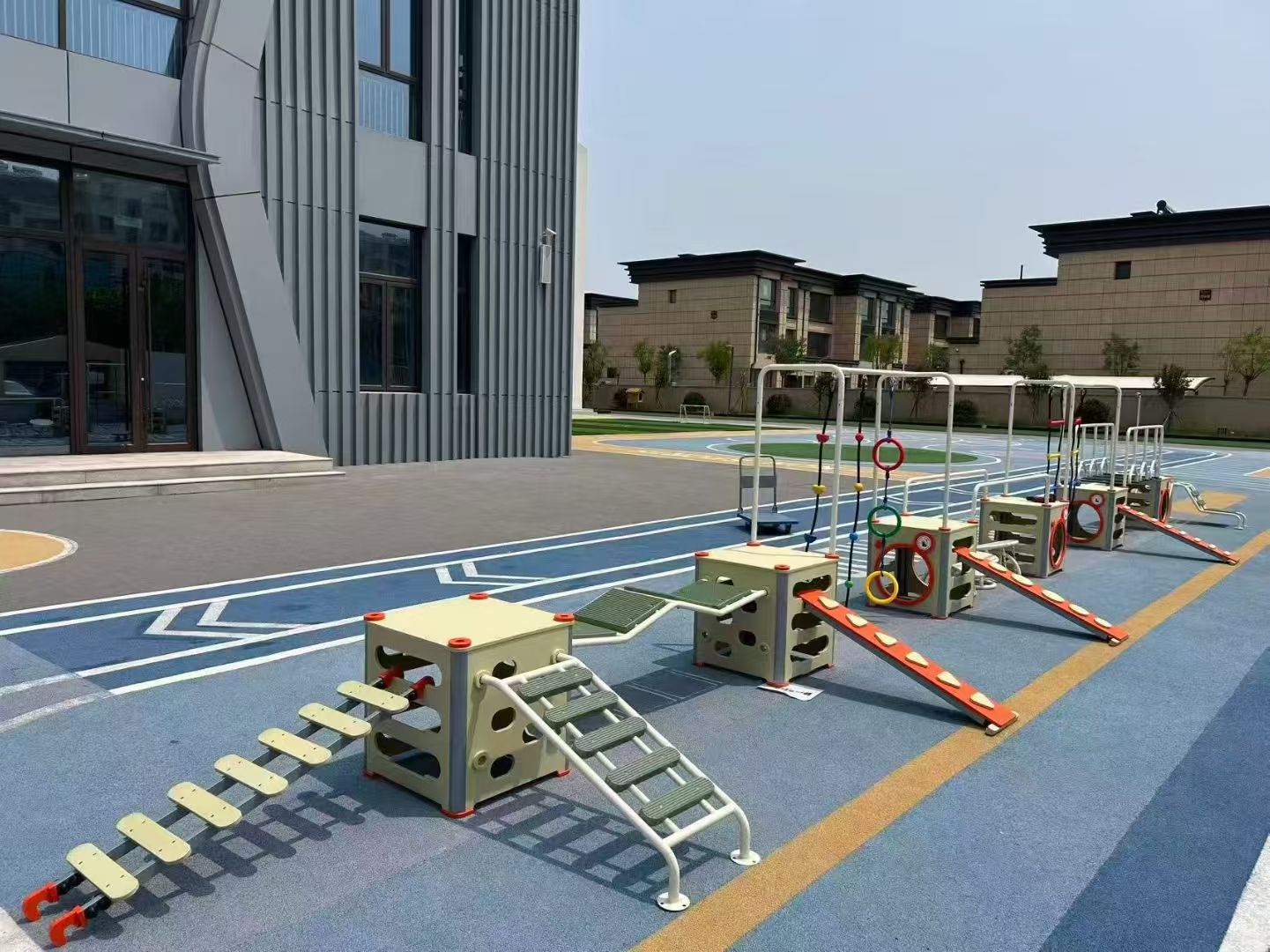
Use a second product family only when it adds a different play value
A Timber Climbing and Net Course beside a combination slide can make sense if the site needs a distinct climbing zone. Another large slide structure may simply repeat what the centerpiece already provides. Likewise, spring riders can add low-level rocking for younger users without competing with the main route. The manufacturer should help the buyer articulate this difference before the quote expands.
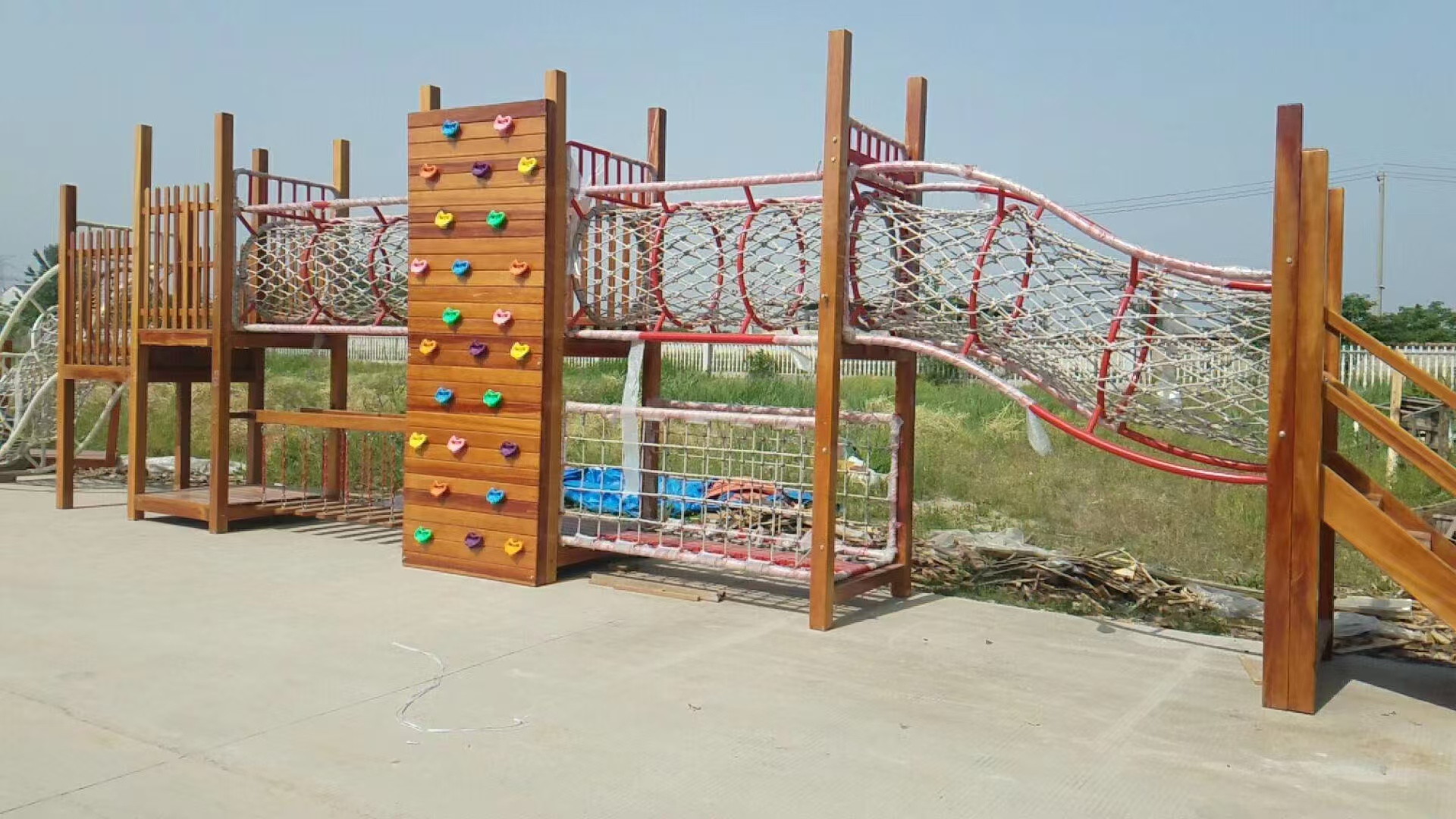
This sequence also gives the 2D plan a clearer hierarchy. The project team can check the largest footprints, circulation and age-zone relationships first, then use smaller products to refine the experience instead of using them to repair an already crowded layout.
That hierarchy also makes later revisions easier: when the main product family changes, the project team knows which supporting choices need to be reviewed again.