Blog
Combination Slide Manufacturer: Comparing Robot, Castle and Nature Play Systems

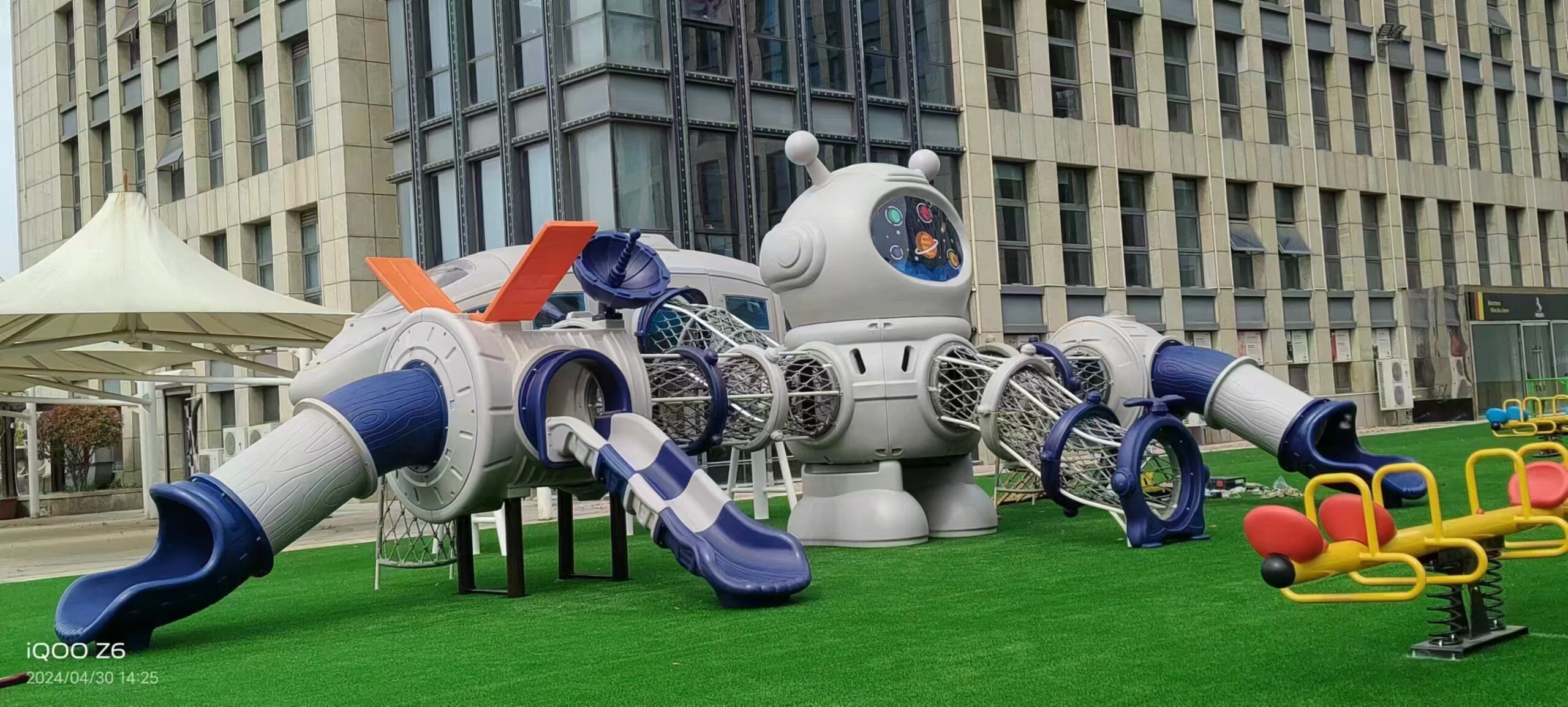
A combination slide should be evaluated as a complete play system, not as a slide with extra decoration around it. Towers, climbing panels, bridges, nets, open slides and enclosed slides work together to create the route. For schools, residential communities and parks, a combination slide manufacturer should help the buyer compare the entire system against the site, users and visual brief before deciding which theme looks best.
Xinjiu’s current outdoor range includes the Robot Theme Combination Playground, Castle Theme Combination Slide and Nature Theme Combination Slide, alongside timber playsets, custom playground systems, climbing equipment and spring riders. The company also supports 2D layouts, 3D visualization, OEM/ODM customization, production coordination and export support. The three combination systems are useful examples because they show how similar product families can create very different project identities.
A combination slide manufacturer should compare the play route before the theme
The theme is the most visible difference, but the buyer first needs to understand how children move through the structure. How many towers are connected? Where are the climbing activities? Which slides return users to the ground? Does the route offer several choices or one repeated path? These questions determine the activity value more directly than color or decorative forms.
Robot Theme combination play suits projects that want a modern centerpiece
The Robot Theme Combination Playground uses robot-inspired towers, net connections and varied slide exits. It can work well in a residential development, public playground or school where the client wants a strong contemporary identity. The manufacturer should show how the nets, towers and slides work as one route so the buyer can judge whether the site has enough room around the structure.
Castle Theme combination play suits projects that want a recognizable story structure
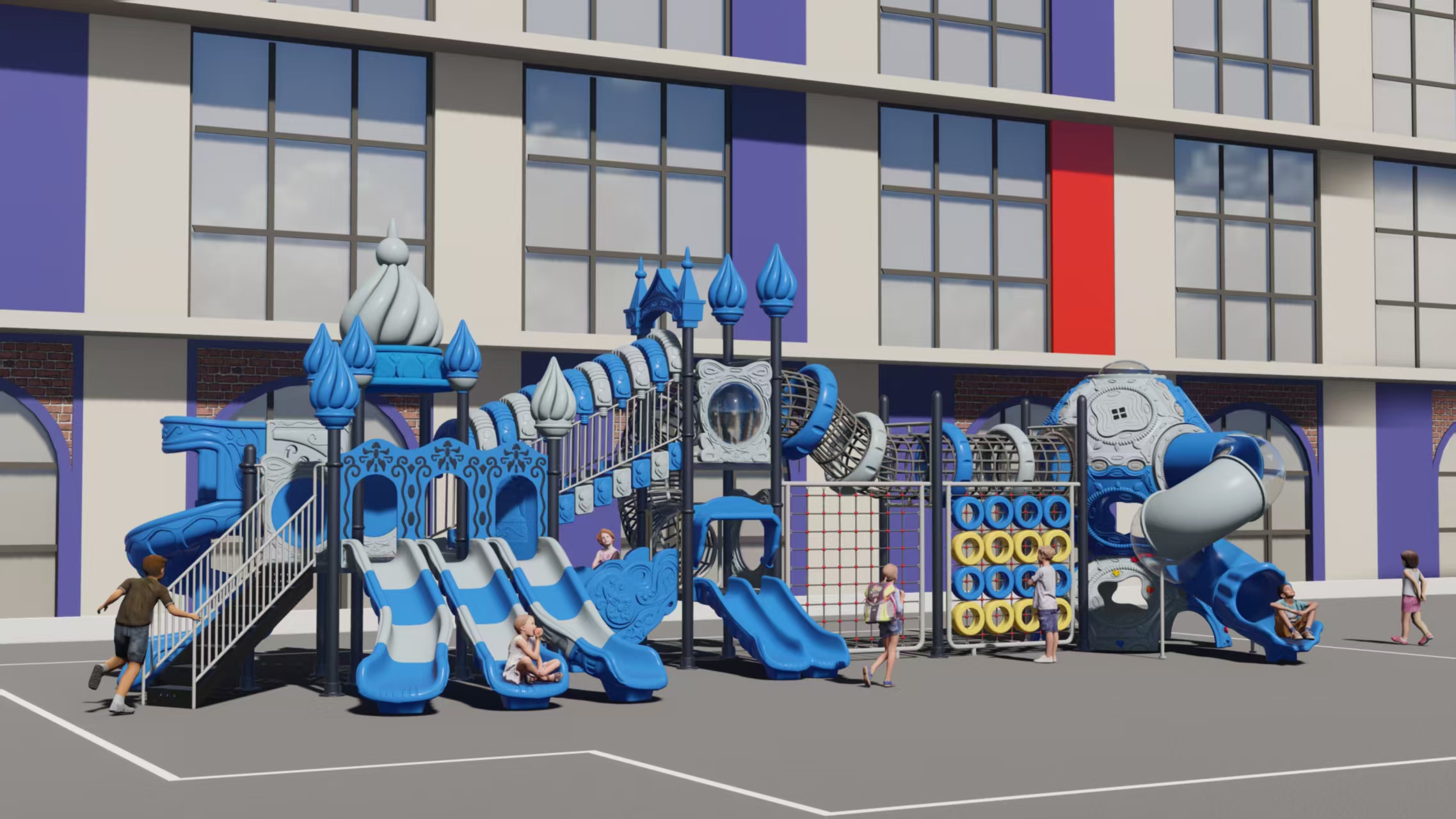
The Castle Theme Combination Slide uses connected castle towers, climbing panels and both open and enclosed slide experiences. The facade gives the playground an immediate theme, while the route depends on how children move between towers and exits. A buyer should review the castle scale against surrounding buildings and landscape rather than choose it only because the theme is familiar.
Nature Theme combination play fits landscape-led residential and park settings
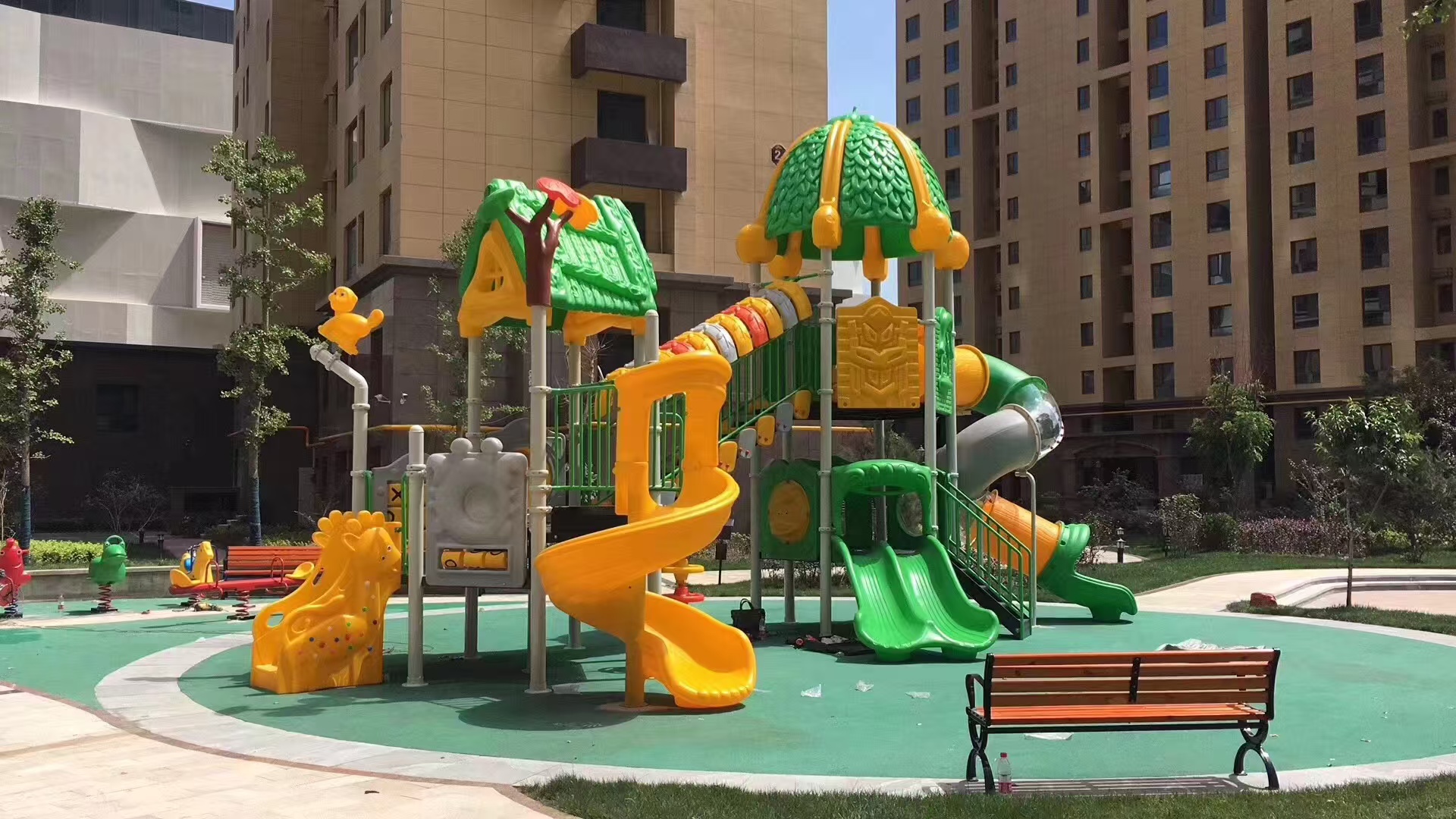
The Nature Theme Combination Slide uses leaf-style roofs and coordinated green slides. It can sit more quietly within a landscaped community or park while still providing a central multi-activity structure. The buyer should compare this visual character with the stronger graphic presence of Robot or Castle themes and decide which direction supports the wider site.
Combination slides are strongest when one structure needs to deliver several activities
A combination system can be more efficient than purchasing several isolated pieces when the buyer needs climbing, elevated movement and sliding inside one main footprint. This can be useful in schools and residential courtyards where open space is limited.
A compact site benefits when the structure carries more than one play function
If the combination playground already includes climbing panels, net connections and multiple slide exits, the project may not need a second large climbing structure nearby. Smaller spring riders, balance pieces or early-years equipment can provide supporting activity without duplicating the same experience.
A large park may need more than one zone even if the combination structure is substantial
In a larger park, the Robot, Castle or Nature system can become one activity zone rather than the entire playground. A Circular Net Climbing System, Timber Climbing and Net Course or custom landmark may form another zone if the site and user mix justify it. The manufacturer should help the buyer avoid both under-planning and unnecessary duplication.
The slide exits should be checked against the site circulation
Combination slides often use several exits around different sides of the structure. A system may fit inside the property boundary while still creating awkward circulation if the slide returns point toward paths, entrances or other high-activity equipment.
Open and enclosed slides create different return patterns
Open slides make the descent and exit easier to read from the surrounding playground. Enclosed slides can create a longer, more dramatic route and a stronger visual form. When both appear in the same combination system, the 2D layout should show where each exit lands so the project team can review the surrounding floor area.
Changing one slide position can affect the rest of the structure
If a buyer moves an enclosed slide from one tower to another, the change may affect tower geometry, bridge relationships and the ground-level footprint. A combination slide manufacturer should update the drawing and equipment scope instead of treating the change as a simple accessory swap.
Combination slide materials should be discussed as a coordinated system
Large playground structures can combine metal frameworks, platforms, molded slide elements, PE panels, nets and other components. The buyer should confirm the materials and finish for the selected system rather than apply a general statement across every component.
Xinjiu states that anti-UV, anti-corrosion and eco-conscious options can be considered according to equipment type, environment and confirmed specification. The project team should record which options are being used on the Robot, Castle or Nature system selected for the actual site.
Theme customization should not hide structural changes
A distributor or developer may want a custom color palette, themed panel or branded variation. If the tower and slide arrangement remains familiar, the OEM work can stay visually focused. If the buyer changes the footprint, adds another tower or alters the activity package, the manufacturer should treat it as a configuration or structural revision.
Visual OEM is useful for branded residential and school projects
A known Nature or Castle combination system can be adapted visually to a property brand or school color direction without rebuilding the entire route. The buyer should approve the new color and panel choices while preserving a stable base-product reference.
Structural customization needs a new layout review
If the customer asks for a taller tower, an additional bridge or a different enclosed slide route, the project should return to 2D/3D review. The buyer needs to see how the change affects the site and whether supporting products still make sense.
When is a combination slide the wrong choice?
A combination slide is not automatically the best centerpiece. A narrow site may work better with a Linear Custom Play Circuit. A climbing-focused adventure zone may benefit more from a Circular Net or Spider Web system. A landscape-led project may prefer the Timber Rope Bridge Playset or Timber Climbing and Net Course. A destination project may need a custom sculptural landmark instead of a themed combination structure.
A manufacturer should be willing to move the buyer into another product family when the combination slide no longer fits the site role.
Combination slide selection by project type
| Project | Possible starting direction | What to check first |
|---|---|---|
| Residential community | Nature or Robot Theme Combination Playground | Landscape character, circulation and younger-user support |
| School playground | Castle, Robot or a compact combination route | Age groups, supervision, activity mix and open space |
| Public park | Nature, Castle or Robot as one main zone | Relationship to climbing, custom or early-years zones |
| Destination project | Combination slide only if it supports the destination identity | Whether a custom landmark would better serve the brief |
Before approving a combination slide order
- Compare Robot, Castle and Nature themes by route and site character, not theme alone.
- Review all slide exits against paths and neighboring activities.
- Check whether supporting equipment adds a new type of play.
- Confirm material and finish choices for the selected structure.
- Separate visual OEM changes from structural configuration changes.
- Use a different product family when the site is too narrow, climbing-led or destination-focused for a standard combination system.
Buyers can compare the Xinjiu combination playground range, review the playground slide selection guide, and use the outdoor product-family guide to decide whether a combination slide should anchor the project. A combination slide manufacturer adds the most value when it helps the buyer choose the right complete system for the site rather than simply increasing the number of towers or slides.
How should a buyer choose between Robot, Castle and Nature before requesting customization?
Use the existing systems as three different design languages. Robot Theme is the stronger modern and technological direction; Castle Theme is a story-led architectural direction; Nature Theme is the softer landscape-led direction. The buyer should first decide which language belongs to the site, then discuss colors or customized panels. Starting with customization before selecting the right base character can create unnecessary design work.
Use Nature Theme where the playground should sit closer to the landscape
Leaf-style roofs and coordinated green slides create a different relationship with planting and residential surroundings than the Robot or Castle systems. That does not make Nature Theme more suitable for every park; it simply gives the project team another visual route when the landscape brief is important.
Use the supporting-product plan as a final test of the base combination system
If the selected combination playground already delivers most of the climbing and sliding needed, the supporting products can focus on early-years rocking, balance or a separate challenge. If the team still feels it needs another large structure to make the playground complete, the base combination system may not be solving the right brief. This test helps buyers evaluate the whole project instead of the centerpiece in isolation.
A combination-slide order is ready when the theme, route, slide exits, material direction and supporting equipment all reinforce the same site plan. At that point, customization can refine the project rather than compensate for a weak base choice.
Before production, the project team should also trace the combination system from each major entry point to each major exit. This simple route review can reveal whether one tower receives all the traffic while another activity becomes difficult to reach. If the structure is being customized, repeat the review after every meaningful configuration change so the final system remains balanced rather than merely larger.
For contractors, this final route review also makes site handover easier. The installation team can understand which tower is the main access point, where each slide returns users and which supporting products belong outside the combination structure.