Blog
Playground Equipment Exporter: What Overseas Buyers Should Confirm Before Shipment

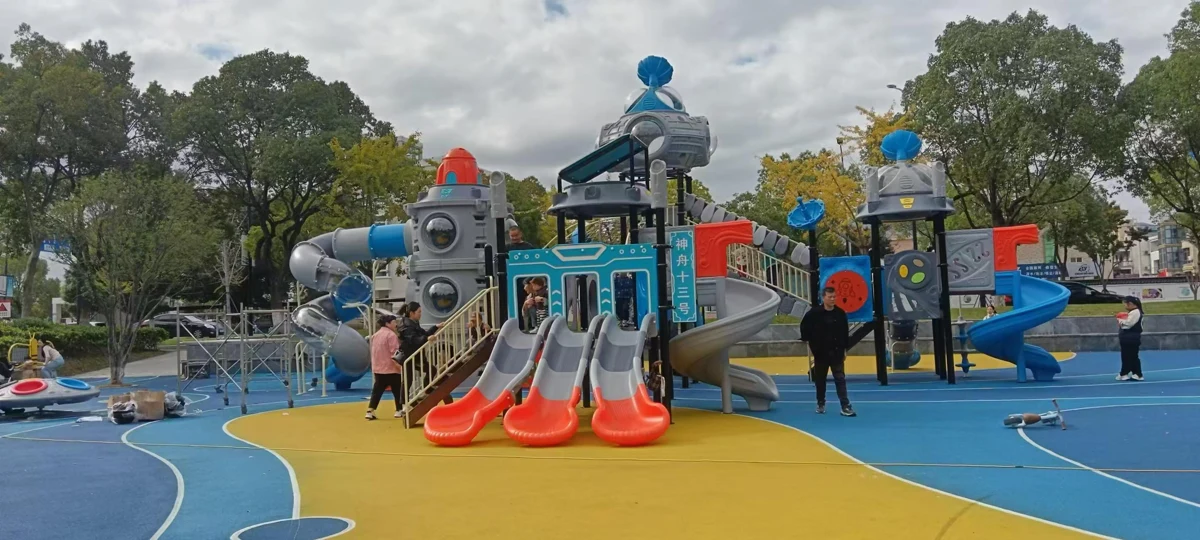
An overseas playground order is not finished when the equipment leaves the production floor. For contractors, distributors and project owners, the export stage is where drawings, product identity, packing, destination documentation, logistics coordination and installation information have to line up. A playground equipment exporter is useful when the receiving team can understand what was shipped and how it relates to the project that was approved.
Xinjiu is a Wenzhou-based playground equipment manufacturer established in 1999. Its current project pages describe export-document support, logistics coordination, installation manuals and online technical guidance alongside 2D planning, 3D visualization, non-standard development and OEM/ODM manufacturing. The company supplies custom outdoor playground systems, combination slides, timber playsets, climbing equipment, spring riders, indoor soft play and trampoline products. Because these categories are not packed, installed or documented in exactly the same way, buyers should organize export questions around the actual product mix.
A playground equipment exporter should know the destination before production is finalized
Destination information affects more than freight. The buyer may need project documents, market-specific review or different handover information depending on where the equipment will be installed and which product family is being supplied. Xinjiu’s inquiry process asks for the destination and certification needs at the project-brief stage. That is the right time to raise these questions rather than waiting until the shipment is being prepared.
Public outdoor equipment and indoor soft play should not share one documentation assumption
ASTM F1487 addresses public-use playground equipment within its scope, while ASTM F1918 addresses soft contained play. Commercial trampoline systems follow another technical route. If an order contains a Robot Theme Combination Playground, an Indoor Soft Play system and an Indoor Trampoline Park, the buyer should not ask for one generic “playground certificate” and assume it covers all three categories. The exporter should know which product family the destination requirement applies to and what information the buyer expects to receive.
A destination change should trigger another documentation check
Distributors sometimes redirect stock or project equipment to a different market. If the destination changes after the order is already being prepared, the buyer should recheck the documentation requirements before shipment. A product that was discussed for one market should not automatically inherit the same paperwork expectations in another market. The exporter’s role is to keep the commercial order and destination information synchronized.
The export equipment list should match the project the buyer approved
International projects often contain several product families. A residential development may use a Nature Theme Combination Slide, PE-panel spring riders and a small balance zone. A destination park may use the Bird’s Nest Custom Playground with a Circular Net Climbing System. An indoor family venue may combine Macaron Soft Play with a separate trampoline area. Before export preparation, the equipment list should describe the same combination shown in the final layout.
Custom systems need a shipment reference that preserves the final configuration
The Bird’s Nest Custom Playground uses sculptural towers, elevated bridges and enclosed slides. The Linear Custom Play Circuit organizes bridges, panels and slides along a longer route. If the layout changes during project review, the export preparation should follow the revised version. The receiving team should not be asked to interpret which packed components belong to an obsolete concept.
Repeat products need clear quantity and model identification
Compact products such as Horse, Frog and Airplane Spring Riders or PE-panel Deer, Car and Dolphin riders can be easier to reorder. Export clarity still matters. A distributor should be able to compare the packing information with the confirmed model and quantity without depending on informal names or old chat messages. Repeat purchasing is more efficient when product identity remains stable from order to shipment.
Export packing should be discussed against the real equipment type
Xinjiu’s website states that it supports export packing and logistics coordination, but it does not publish one universal packing method for every product. That is appropriate because a large custom tower, a timber climbing system, a PE-panel rider and an indoor soft-play structure are physically different. Buyers should confirm what packing preparation applies to the selected equipment rather than copy a description from another product or another order.
Large combination systems create a component-identification problem
A Castle Theme Combination Slide or Robot Theme Combination Playground can contain towers, slides, climbing elements and connecting parts. When packed, those components no longer present themselves as a complete playground. The buyer should ask how the shipment will be identified against the final equipment list and what installation information will accompany it.
Timber and rope structures need their own handover logic
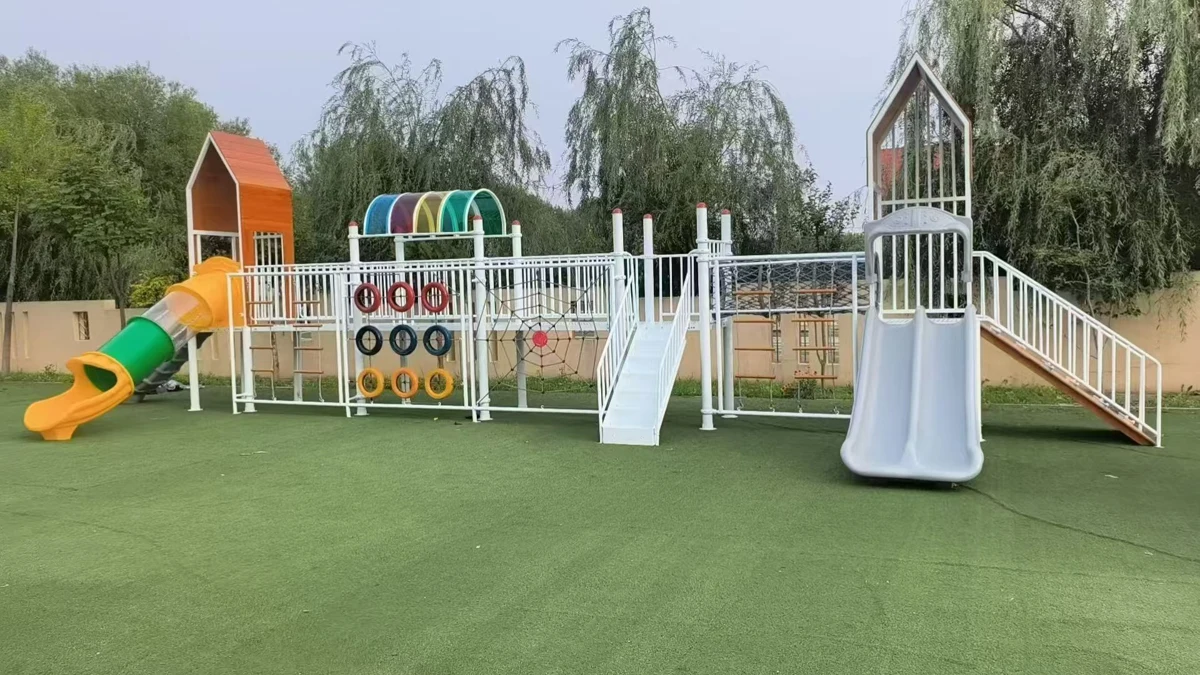
The Timber Rope Bridge Playset and Timber Climbing and Net Course combine structural pieces with rope crossings, nets and activity elements. The receiving team should be able to distinguish the relevant groups and connect them to the final project information. The exporter does not need to turn the shipment into a finished playground at the factory gate, but it should make the next handover understandable.
A playground equipment exporter should define logistics responsibilities before dispatch
“Logistics support” can mean different things in different transactions. The buyer should clarify which side is responsible for the freight arrangement, which destination information the manufacturer needs, and what documents or shipment details will be supplied. Xinjiu states that it supports logistics coordination; the exact scope should be confirmed for the order rather than assumed from a previous project.
Contractors need delivery information that can be handed to the site team
A contractor may have a separate logistics provider and a separate installation team. The export handover should therefore be readable by people who did not participate in the design meetings. If the project includes a Nature Theme Combination Slide plus Dolphin PE Panel Spring Riders, the site team should receive information that still distinguishes the main structure from the smaller supporting products.
Distributors need a repeatable export record for future orders
A distributor may order the same spring-rider family several times or supply similar combination structures to different customers. Keeping model names, quantities, destination details and shipment references consistent makes later comparison easier. The exporter should help the distributor build a traceable order history rather than relying on image recognition.
Installation support should be connected to the exported configuration
Xinjiu’s current service pages mention installation manuals and online technical guidance. These are most useful when they relate to the version that actually shipped. A generic manual or early concept cannot replace project-specific information for a non-standard structure.
A custom landmark needs the latest drawing at the receiving end
If a Bird’s Nest or Architectural Spiral Slide project was revised before production, the installer should receive the revised project information. A bridge removed from the final design should not remain in an old drawing circulating at destination. The exporter should help ensure the handover points to the approved version.
Indoor soft play needs room context as well as component information
An Open-Plan Indoor Play Center, Twin-Tower Soft Play or Castle Theme Soft Play was developed around floor dimensions, ceiling height, columns and entrances. The receiving team should understand the intended room relationship, not just the component list. If the operator changed the room during fit-out, that change should be resolved before the equipment is shipped rather than treated as an installation problem later.
Two export scenarios require different levels of project control
| Export scenario | Products involved | Main handover priority |
|---|---|---|
| One-off custom destination project | Bird’s Nest, Nature Theme Custom Playground, Architectural Spiral Slide | Final layout, custom configuration, component identity and installation information |
| Distributor repeat order | Molded spring riders, PE-panel riders, early-years products | Stable model naming, quantities, confirmed specification and shipment record |
| Mixed school or community order | Combination slide, timber play, activity course and riders | Clear separation of product groups and alignment with the approved site plan |
| Indoor entertainment project | Soft play plus separate trampoline activity | Room-based layout, separate product-system documentation and installer handover |
Before a playground export order is released, check these project-specific points
- Confirm the final destination and any project documentation the buyer requires.
- Match the export equipment list to the latest approved layout.
- Confirm product names and quantities for repeat items and supporting equipment.
- Clarify the packing and logistics-coordination scope for the actual product mix.
- Make sure installation manuals and remote guidance relate to the version being shipped.
- Keep indoor soft play, public outdoor equipment and trampoline systems separate when discussing technical requirements.
Buyers can review the Xinjiu equipment range, the custom design and manufacturing workflow, and the supplier project-order guide before finalizing an export brief. A reliable playground equipment exporter should make the international handover clearer at each step: the factory knows what is being shipped, the buyer knows what documents and support are included, and the receiving team can connect the delivered components back to the project it expects to install.
How should buyers prepare the receiving side before the shipment moves?
Export success depends partly on what happens before the equipment arrives. A contractor should know who will receive the shipment, who will check the package information and who will be responsible for installation. If those roles are unclear, even a well-prepared shipment can reach a site where no one knows which drawing, equipment list or manual should be used.
A mixed shipment should be separated conceptually before it is separated physically
If a project contains a Robot Theme Combination Playground, timber climbing equipment and spring riders, the buyer should already understand those as separate product groups before packing begins. The same principle applies to an indoor venue that includes soft play and a trampoline area. The exporter can coordinate packing and documentation more clearly when the commercial order has already separated the systems by role.
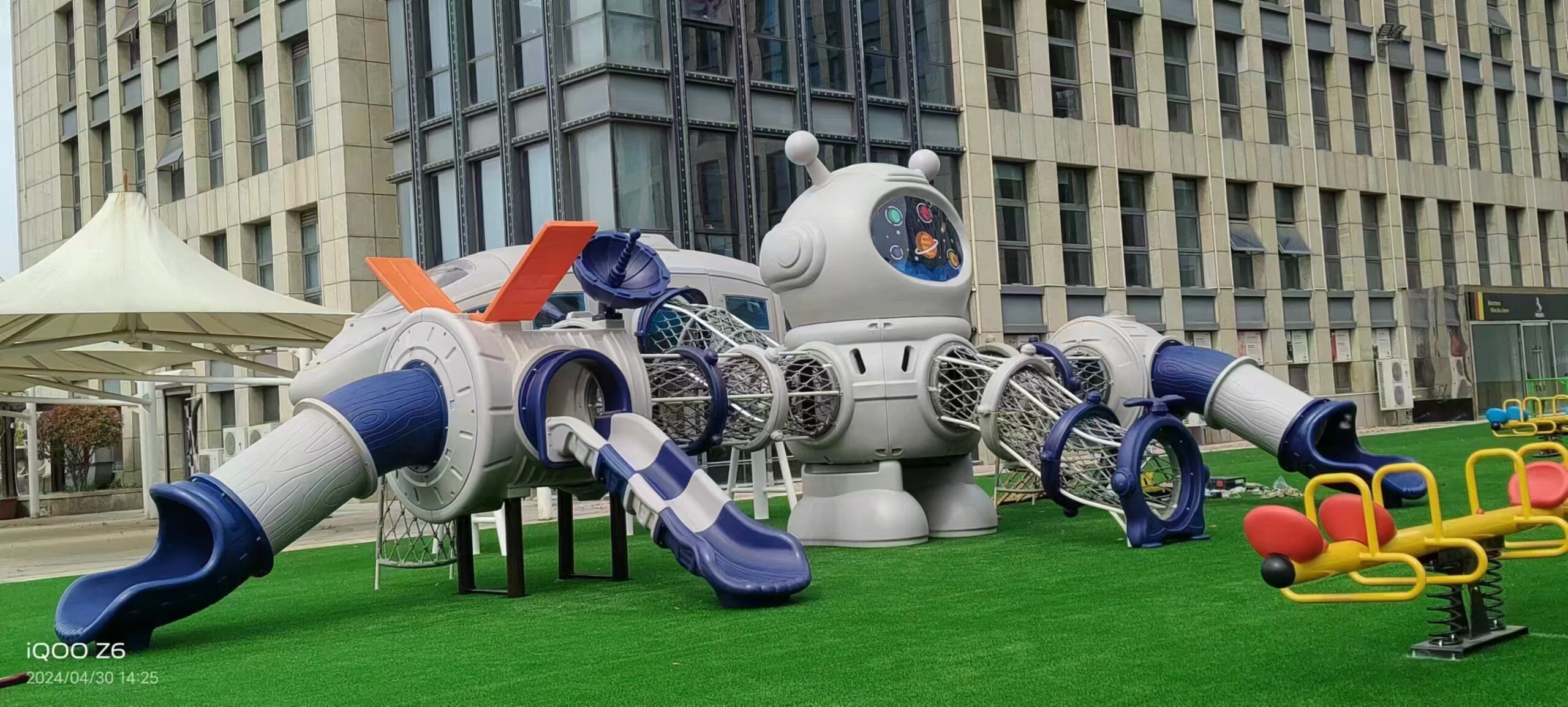
Overseas buyers should therefore prepare the destination team before the shipment is released: identify the current project version, confirm who receives manuals and shipping information, and make sure the local installer knows which documents are final. That preparation reduces the chance that export support becomes a last-minute search for information after the equipment has already arrived.
For buyers comparing exporters, one final question is useful: could the receiving contractor understand the order without access to the original sales conversation? If the answer is yes, the export handover is doing its job. The final layout, product list, shipment references and installation information should be clear enough to travel with the project.