Blog
Spring Rider Manufacturer: Molded Plastic or PE Panel for Your Project?

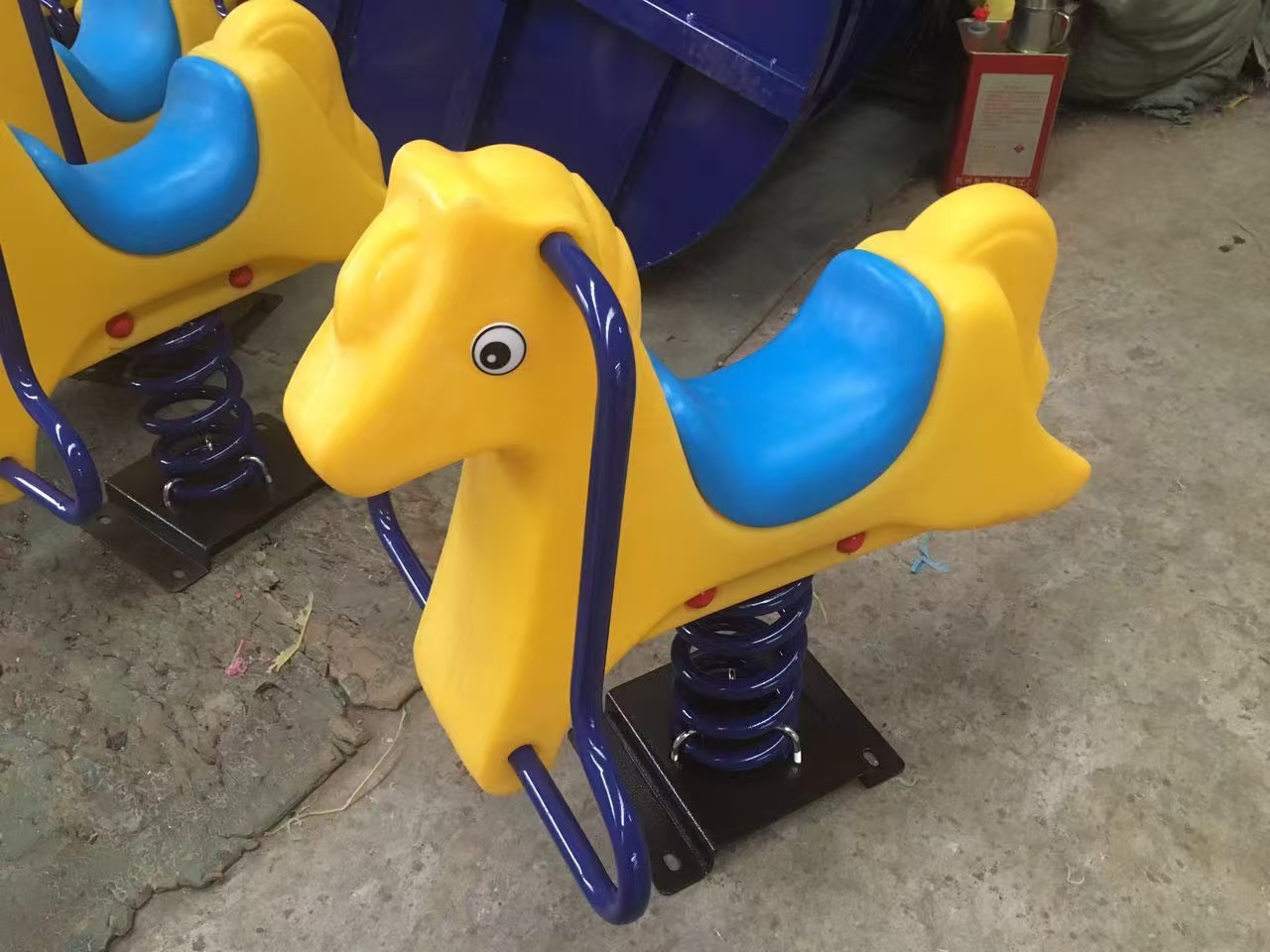
Spring riders are small products, but the purchasing decision still changes with the project setting, visual direction and sales model. A molded character rider and a PE-panel rider can both provide compact rocking play, yet they create different silhouettes, construction routes and merchandising opportunities. A spring rider manufacturer should help contractors, schools, residential projects and distributors understand those differences instead of treating every rider as the same product with a different animal shape.
Xinjiu’s current range includes molded Horse, Frog and Airplane Spring Riders as well as PE-panel Deer, Car and Dolphin riders. The wider early-years collection also includes Ride-On Cars, Caterpillar Balance Walkers and Modular Balance Path pieces, while combination playgrounds and timber playsets can provide the main structure around a smaller rider zone. This makes spring riders especially useful as supporting equipment rather than as a substitute for a full playground.
A spring rider manufacturer should explain the difference between molded and PE-panel formats
The two formats solve a similar play need through different product expressions. Molded forms create rounded three-dimensional characters, while PE-panel riders use shaped layered panels to create a graphic silhouette. The buyer should choose between them based on the desired look, product range and project context.
Molded spring riders create a rounded character form
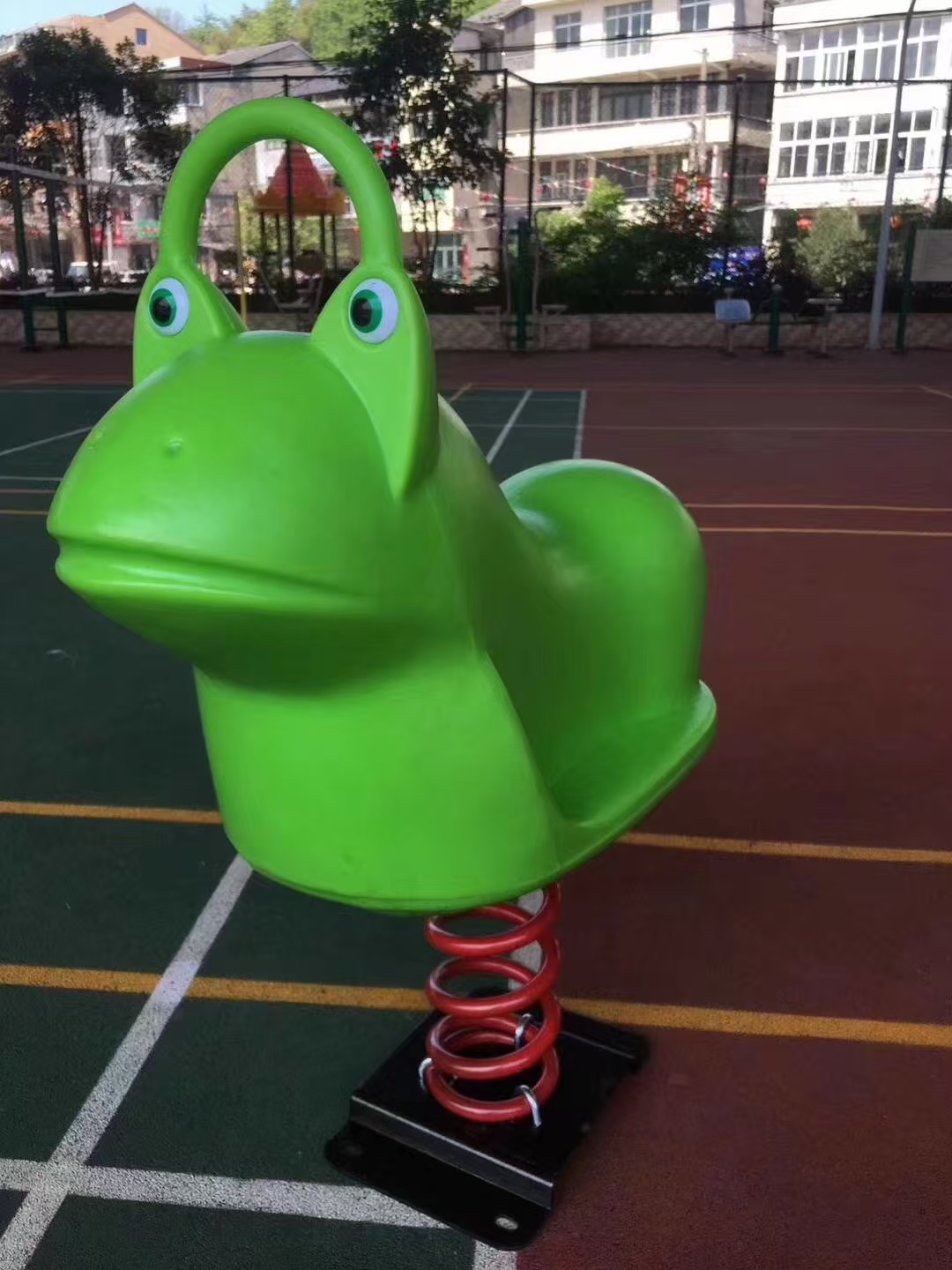
The Horse Spring Rider, Frog Spring Rider and Airplane Spring Rider use molded bodies with integrated seating and handhold areas. Their forms can feel friendly and toy-like, which can suit preschool areas, kindergarten play zones and compact community spaces.
PE-panel riders create a flatter graphic silhouette
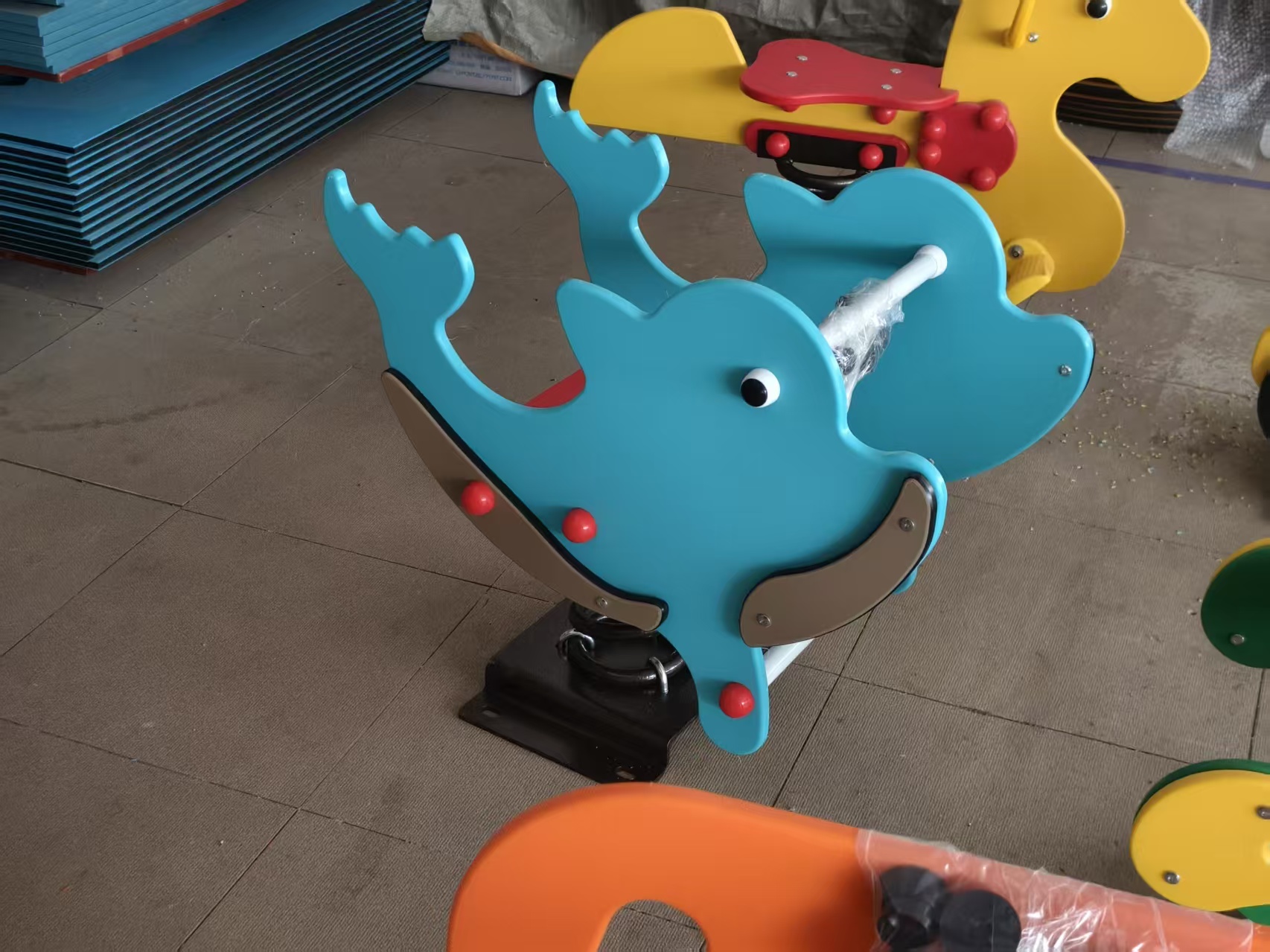
The Deer PE Panel Spring Rider, Car PE Panel Spring Rider and Dolphin PE Panel Spring Rider use shaped panels to define the character. The panel format can create strong color blocking and recognizable outlines, which can work well beside other PE-panel playground elements.
Spring riders should be used as supporting play where their compact role makes sense
A spring rider adds rocking movement in a relatively small footprint. That can make it useful around a larger combination playground, beside early-years balance equipment or inside a small play corner. It should not be expected to provide the activity depth of a climbing course or multi-tower structure.
Residential playgrounds can use riders to create a younger-user zone
A residential community might use a Nature Theme Combination Slide as the main structure and place a Deer or Dolphin PE Panel Spring Rider in a separate lower-intensity area. The rider adds a different type of movement and gives younger users an option without forcing them into the same route as older children.
Schools and kindergartens can combine riders with balance and gross-motor equipment
Ride-On Cars, Caterpillar Balance Walkers, Modular Balance Path pieces and spring riders can form a varied early-years zone. The school should compare how rocking, stepping and free movement complement one another instead of buying several riders simply because the products are compact.
A spring rider is an easier repeat product for distributors than a large playground system
For wholesale buyers, spring riders have a clear advantage: the product identity is more contained. A distributor can keep stable references for Horse, Frog, Airplane, Deer, Car and Dolphin models without needing a full site design for every repeat order.
Repeat orders still need exact model naming and specification control
A distributor should not order “three animal riders” and assume the factory knows which product was used previously. Molded and PE-panel products are different families. Keeping the product name, image reference, quantity and confirmed specification attached to each order makes reordering more reliable.
Color or graphic OEM changes should remain tied to the base rider
A distributor may want a different color direction or a customized panel treatment. If the spring base and main product format remain the same, the OEM route can remain relatively controlled. The buyer should record the change against the base product so later reorders do not depend on screenshots or memory.
Spring riders should not be placed where high-energy circulation dominates
The compact size of a rider can tempt designers to put it into whatever space remains. That can create a poor user experience if the rider sits in the main route between a large slide exit and a climbing structure.
Younger-user riders work better when the zone is understandable
A small cluster of spring riders or balance pieces can form a clear early-years area. The zone should not become a shortcut through the main playground. Public playground guidance emphasizes age separation, conflicting activities and supervision, which supports keeping lower-intensity play legible within the site plan.
Do not use riders to fill space that should remain open
Empty space can support circulation and supervision. A buyer should not assume every gap needs another product. If a Robot Theme Combination Playground already controls the center of a courtyard, leaving enough room around its slide exits can be more useful than inserting a spring rider into the return path.
Molded and PE-panel spring riders should be compared by project character
| Rider family | Examples | Project character |
|---|---|---|
| Molded character riders | Horse, Frog, Airplane | Rounded toy-like forms for compact early-years play |
| PE-panel animal riders | Deer, Dolphin | Graphic silhouettes and strong color blocking |
| PE-panel vehicle rider | Car | Vehicle-themed imaginative rocking play |
The “better” family depends on the visual direction and the surrounding equipment. A timber-led playground may use riders as a small contrasting zone, while a colorful PE-panel combination playground can visually coordinate with panel riders more directly.
A spring rider manufacturer should keep material claims product-specific
Xinjiu’s wider range uses PE panels, molded plastics, timber, metal frameworks and rope networks. Buyers should not assume statements made about one product family apply automatically to every rider or playground. The exact material and finish for the selected rider should be confirmed as part of the order.
Xinjiu states that anti-UV, anti-corrosion and eco-conscious options can be considered according to equipment type, environment and confirmed specification. For spring riders, the buyer should ask what applies to the actual model rather than relying on a general outdoor-equipment claim.
When should a buyer choose spring riders instead of another small-play product?
Spring riders are useful when the project needs compact rocking movement and recognizable character. A Modular Balance Path is better when the goal is route-building and stepping. Ride-On Cars support supervised free movement. A Caterpillar Balance Walker supports group balance activity. The buyer should choose based on the movement the zone is missing rather than the product with the most colorful image.
Two purchasing scenarios show how spring riders fit differently
A kindergarten building an early-years activity mix
The buyer may combine Horse or Frog Spring Riders with a Modular Balance Path and Caterpillar Balance Walker. This creates rocking, balance and stepping in one lower-level zone. The selection is more useful than buying several similar riders when the goal is varied gross-motor activity.
A distributor building a repeatable outdoor accessories range
The distributor may carry molded and PE-panel rider families because different customers prefer different visual styles. Stable naming and clear separation between the two construction routes are more important here than site-specific 3D development. Larger combination playgrounds can remain in a separate project-sales channel.
Before approving a spring rider order
- Choose molded or PE-panel format based on project character and product range.
- Give the rider a clear role inside the site rather than using it to fill leftover space.
- Keep early-years rider zones separate from high-energy circulation where possible.
- Preserve exact model names for repeat and wholesale orders.
- Record visual OEM changes against the correct base product.
- Confirm product-specific materials and finishes for the destination project.
Buyers can compare the Xinjiu molded and PE-panel spring riders, review the kids playground equipment selection guide, and use the wholesale product-mix guide when building a distributor range. A spring rider manufacturer adds value when the buyer understands exactly which rider family is being purchased, where it belongs in the playground and how it should remain identifiable across repeat orders.
How should a distributor merchandise molded and PE-panel riders?
Keep the two formats visible as separate product families. A customer comparing Horse, Frog and Airplane molded riders is choosing among rounded three-dimensional forms. A customer comparing Deer, Car and Dolphin PE-panel riders is choosing among graphic panel silhouettes. Mixing both families under one generic “spring rider” thumbnail makes repeat ordering harder and hides a useful product distinction.
Use PE-panel riders when the surrounding playground already uses strong panel graphics
The Dolphin, Deer and Car panel riders can visually coordinate with colorful panel-led combination equipment. This does not make them the automatic choice; it simply gives designers a way to repeat color blocking and graphic shapes across a smaller supporting zone.
Spring riders are useful when the buyer needs a small but distinct movement type
Rocking is different from stepping, free riding, climbing or sliding. A rider earns its place when that movement adds variety to the zone. If the playground already has several compact rocking products, the next purchase may be more useful as a balance path or another early-years activity. A manufacturer should help the buyer build a mixed activity set rather than simply increase the number of rider characters.
This is especially important for schools and distributors because small products are easy to add to an order. Product variety should improve the play mix and sales range, not create unnecessary duplication.
For project buyers, it is also useful to decide whether riders will be purchased as a matched group or as individual supporting pieces. A matched molded family can create one visual language, while mixing molded and PE-panel formats can deliberately add variety. Neither route is inherently better. The important point is that the visual decision should support the surrounding playground rather than happen accidentally because several rider images were added to the quotation.
When riders are exported as part of a larger project, the buyer should keep their product identity separate from the main combination or climbing structure in the order record. This makes quantity checks and later replacements easier and prevents small accessories from disappearing inside a broad “playground equipment” description.