Blog
Wholesale Playground Equipment: How Distributors Can Build a Practical Product Mix

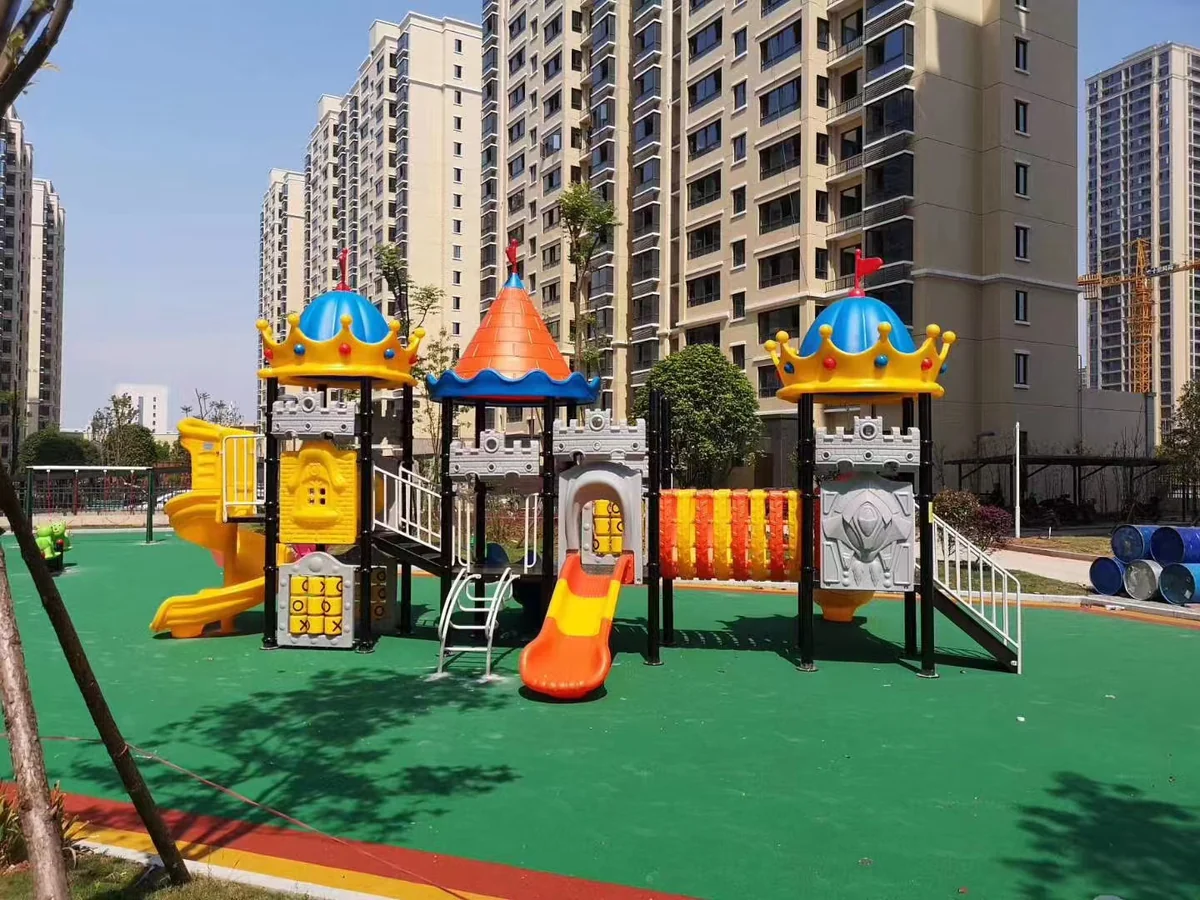
Wholesale playground equipment should be organized around how products are sold, specified and reordered—not around the idea that every item belongs in one giant catalog. A distributor serving schools, residential projects, parks and family entertainment venues needs a range that combines repeatable products with project-led systems. The challenge is deciding which equipment can be sold from a clear model reference and which products require a site plan, design discussion or custom configuration before an order makes sense.
Xinjiu manufactures indoor and outdoor playground equipment in Wenzhou, including spring riders, early-years pieces, timber playsets, outdoor activity courses, large combination slides, custom playground systems and indoor soft play. Its current project support includes 2D layouts, 3D visualization, OEM/ODM development, manufacturing, export-document coordination, logistics support and installation guidance. For wholesale buyers, that breadth is useful when the range is separated into practical sales routes instead of presented as one undifferentiated assortment.
Wholesale playground equipment should be divided into repeatable items and project-led systems
A distributor can lose time when every inquiry is treated like a custom project. The opposite mistake is just as costly: treating a large site-specific system like a stock item. The product mix should reflect how much site information is needed before the order can be confirmed.
Spring riders and early-years pieces are easier to explain as individual products
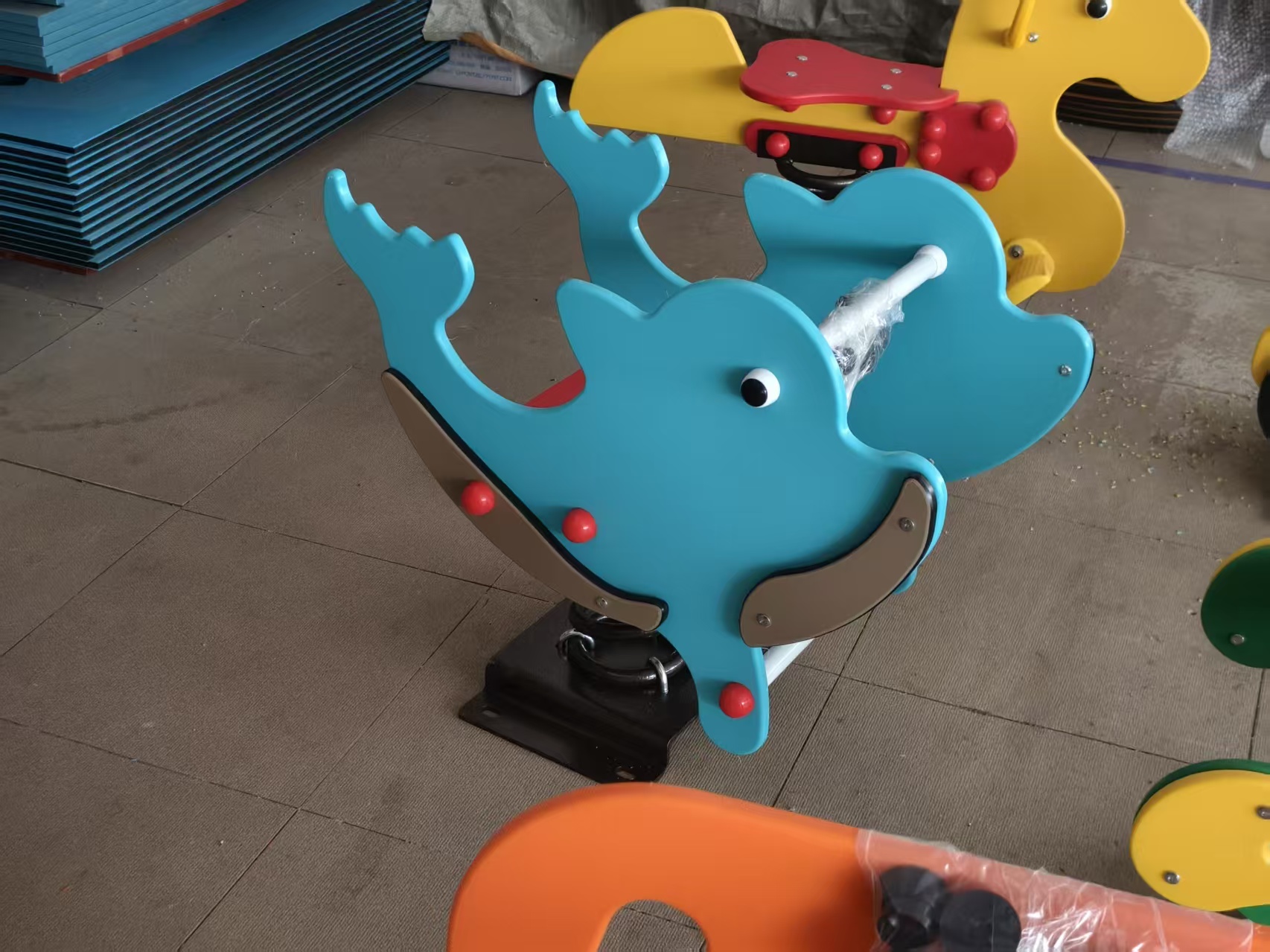
Xinjiu’s molded Horse, Frog and Airplane Spring Riders and PE-panel Deer, Car and Dolphin riders have clear product identities and compact roles. The Ride-On Car Fleet, Caterpillar Balance Walker Set and Modular Balance Path also fit an early-years sales route where the buyer is often selecting individual activities rather than developing a landmark playground. A distributor can present these products with stable naming, imagery and confirmed specifications, while still asking where and how the customer intends to use them.
Combination slides and custom playgrounds need site information before final pricing
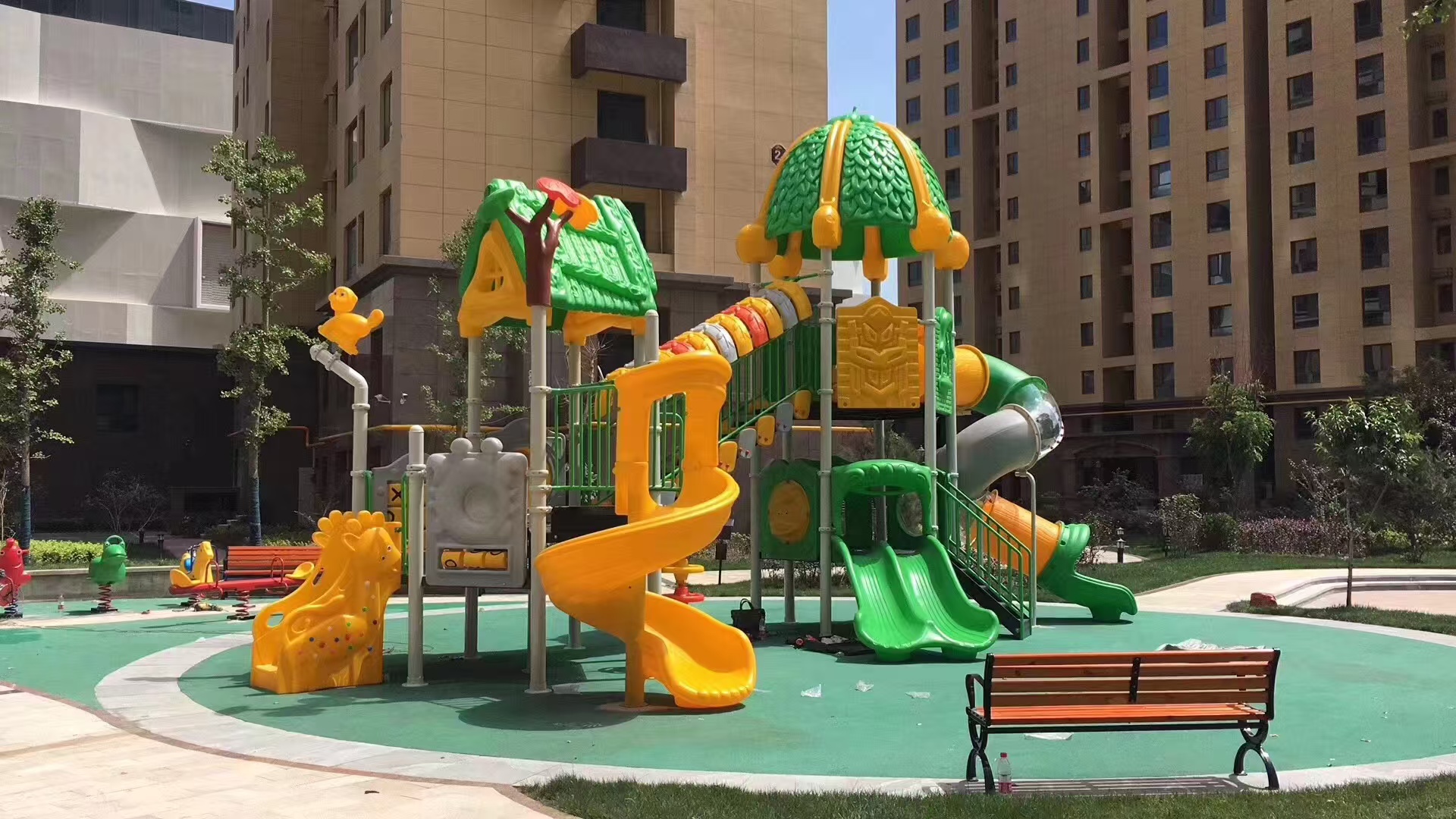
The Robot Theme Combination Playground, Castle Theme Combination Slide and Nature Theme Combination Slide bring together towers, climbing panels, net connections and slide routes. The Bird’s Nest Custom Playground and Architectural Spiral Slide System go further by making the structure itself part of the site identity. These products should not be treated like shelf stock. The distributor should request usable dimensions, intended age groups, destination and visual direction before asking the manufacturer to freeze a configuration.
A wholesale playground range works better when each product family has a sales job
Distributors do not need every product to solve the same customer problem. A spring rider can fill a small add-on order. A timber playset can support a school or landscaped park. A combination slide can anchor a residential playground. A custom structure can become a destination project. An indoor soft-play system can open a separate business channel for malls and family entertainment centers.
Use smaller repeat products to support frequent, lower-complexity orders
PE-panel riders, molded spring riders and selected early-years products are useful when customers need recognizable activities in compact areas. They can also be added to a larger project as supporting equipment. A distributor can build repeat business around these products more easily if model naming, images and specifications remain consistent from one order to the next.
Use project structures to create higher-value solutions rather than stock pressure
Large combination playgrounds, timber climbing systems and custom landmarks should be approached differently. The distributor does not need to hold the full structure as “inventory” in the same way as a compact rider. Instead, the sales team can use project references to show the customer possible directions, collect the site information and then work with the manufacturer on the final configuration.
Wholesale buyers should separate school, community, park and indoor product routes
A strong wholesale range becomes easier to sell when the customer segment is clear. Schools may respond to activity courses, timber climbing and combination play. Residential communities may need one central themed structure with smaller supporting products. Parks may justify larger climbing destinations or custom landmarks. Indoor family venues require room-based soft-play and trampoline planning.
School customers need products that can be explained by activity level
The Modular Activity Training Course, Full Circuit Obstacle Course and Outdoor Fitness Skills Course provide balance, crawl, stepping and coordination routes. The Timber Rope Bridge Playset and Timber Climbing and Net Course add imaginative and climbing activity. A distributor can help schools compare these families by the type of movement they create instead of presenting everything as generic “kids equipment.”
Residential customers often need one strong center plus supporting play
The Nature Theme Combination Slide or Robot Theme Combination Playground can provide the main structure. Smaller spring riders, balance pieces or early-years equipment can support younger users. The distributor should avoid filling the quote with several large structures that compete for the same footprint unless the site genuinely supports separate zones.
Indoor customers need a different sales qualification process
Macaron Soft Play, Twin-Tower Indoor Soft Play, Castle Theme Soft Play and Open-Plan Indoor Play Center concepts depend on floor area, clear ceiling height, columns and entrances. A wholesale customer selling to indoor venues should request a dimensioned room plan before treating the design as final. Indoor trampoline products should also remain a separate activity-system discussion rather than being folded automatically into the soft-play specification.
OEM and private-label discussions should begin with what the distributor is actually changing
Wholesale buyers often use “OEM” to describe several different requests. One distributor may want a different color palette. Another may want a themed panel. A third may need a non-standard combination of activities or a site-specific custom structure. Xinjiu states that it supports OEM/ODM, theme, color, function and configuration development. The distributor should define which layer is changing so the manufacturer can respond accurately.
A color change is not the same as a new structure
Changing colors on a known spring rider or combination system may leave the product route largely familiar. Changing tower positions, bridge connections or slide geometry can alter the structure and the site relationship. A wholesaler should keep those projects in separate internal categories so the sales team does not promise “simple OEM” when the customer is actually asking for non-standard development.
Wholesale playground equipment needs repeat-order discipline
Repeat orders are valuable only when the product being repeated is clear. A distributor should keep a record of the model name, image reference, agreed materials or finishes, quantity and destination of each repeatable product. This is particularly useful for Deer, Car and Dolphin PE-panel riders, Horse, Frog and Airplane molded riders, Modular Balance Path components and other compact product families.
Do not rely on screenshots as the only repeat-order reference
Images are useful for recognition, but they should not become the only product identifier. If the buyer sends a screenshot from a previous order, the distributor should reconnect it to the product name and confirmed specification before submitting the new order. That reduces confusion when several visually similar products exist in the same category.
Project-led products should be repeated only after the new site is checked
A distributor may have sold a Robot Theme Combination Playground successfully once, but a second customer may have a different footprint, age group or access condition. Reusing the previous design without checking the new site turns a successful reference into a potential mismatch. The manufacturer can use the earlier project as a starting point, but the new site should still drive the final configuration.
Wholesale buyers should treat export and destination information as part of product setup
For international distribution, destination requirements should be collected early. Public outdoor playground equipment, soft-contained play and trampoline systems do not share one universal technical framework. A distributor selling several categories should not use one generic compliance statement across all products.
Xinjiu’s inquiry process asks for destination and certification needs, and the company describes export-document support, logistics coordination, installation manuals and online technical guidance. Wholesale buyers should confirm which support applies to the selected product family and destination before turning a sales reference into a final order.
A distributor can organize wholesale playground equipment into four practical tiers
| Wholesale tier | Xinjiu examples | Typical sales process |
|---|---|---|
| Repeat compact products | Spring Riders, Ride-On Cars, Modular Balance Path | Stable model reference, quantity, specification and destination |
| Standard project structures | Robot, Castle and Nature combination systems; timber playsets | Site dimensions, user group and layout check before confirmation |
| Custom landmark systems | Bird’s Nest, Linear Custom Play Circuit, Architectural Spiral Slide | Site brief, 2D/3D development, configuration approval and project handover |
| Indoor venue systems | Macaron, Twin-Tower, Open-Plan Soft Play, trampoline zones | Room plan, clear height, columns, entrances, activity zoning and destination requirements |
How should a wholesaler decide what to promote first?
Start with the customer base, not the largest product. A distributor serving schools may promote modular activity courses, timber play and combination slides first. A distributor serving residential developers may lead with themed combination playgrounds and supporting riders. A partner serving parks may emphasize custom and climbing systems. A business serving family entertainment centers needs room-based indoor concepts. The best wholesale range is the one the sales team can explain accurately to real customers.
- Keep repeat products easy to identify and reorder.
- Keep project structures tied to site information.
- Keep OEM requests separated into visual changes, configuration changes and true non-standard development.
- Keep indoor soft play and trampoline systems distinct from outdoor product requirements.
- Keep destination and export information attached to the actual product family.
Distributors can compare the Xinjiu product categories, review the playground supplier project-order guide, and use the custom playground supplier guide when a customer moves beyond a repeat product into a site-specific system. Wholesale playground equipment becomes easier to sell when the range is structured around real purchasing behavior: repeat products stay repeatable, project systems stay site-led, and the distributor knows exactly when to bring the manufacturer into the conversation.
How can a distributor prevent the wholesale catalog from becoming too broad?
A wholesale range becomes harder to sell when the sales team cannot explain the difference between products. The distributor should periodically remove duplicate sales routes from its own catalog logic even if the manufacturer offers more choices. Six spring riders can be useful because the forms are clearly different; six large structures that solve nearly the same site problem may simply make customer selection slower.
Use project products as solution examples instead of pretending they are inventory
A Nature Theme Combination Slide, Bird’s Nest Custom Playground or Open-Plan Indoor Play Center can be promoted as a project direction. The distributor can show what the product family can become, then collect the new customer’s dimensions and requirements before confirming the actual order. This keeps the sales catalog useful without implying that every visual reference is a fixed off-the-shelf configuration.
A practical distributor range therefore needs two kinds of discipline: simple products should remain easy to reorder, while complex products should remain tied to new project information. That distinction lets the wholesaler expand its offer without turning every sales inquiry into either an oversized custom-design process or an oversimplified stock order.